Tartar on Dentures: Why It Forms and How to Keep Your Dentures Clean
February 25, 2026 | by Ingredients
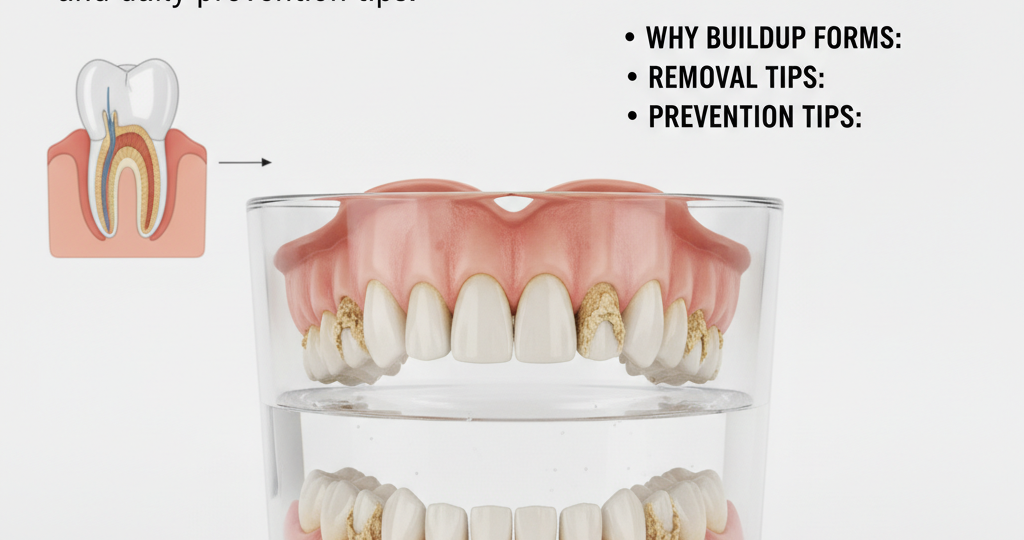
Tartar on dentures is more common than many people think.
Because dentures are removable, some people assume they cannot develop hardened buildup. That is not true. Just like natural teeth, dentures can collect plaque. If plaque is not removed, it hardens into tartar.
Understanding how tartar forms on dentures helps you maintain comfort and oral health.
 See how Dental Pro 7 supports complete tartar control

Can Dentures Really Develop Tartar?
Yes.
Dentures are exposed to:
Food particles
Bacteria
Saliva minerals
Biofilm buildup
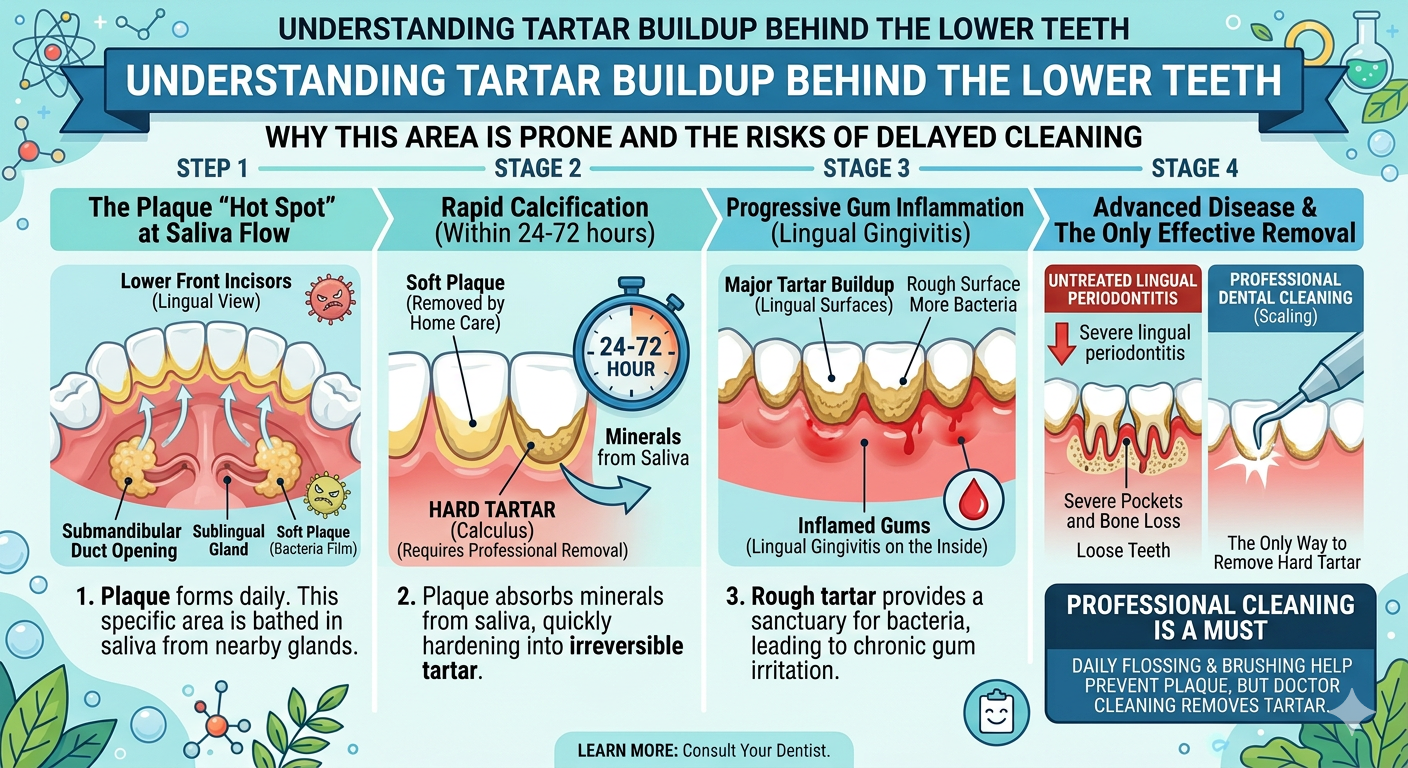
When plaque remains on denture surfaces, minerals in saliva can harden it within 24 to 72 hours.
Over time, this leads to visible tartar deposits.
Both full and partial dentures are at risk.
Why Tartar on Dentures Is a Problem
Hardened buildup on dentures can cause:
Unpleasant odor
Yellow or brown staining
Rough texture
Gum irritation
Increased fungal growth
Reduced comfort
Tartar creates a rough surface that attracts even more plaque. This cycle makes cleaning harder over time.
If ignored, it may affect overall oral health.
What Does Tartar on Dentures Look Like?
Common signs include:
Hard yellow or brown patches
Chalky or crusted areas
Surface staining that does not brush away
Lingering bad smell even after rinsing
Some people also notice their dentures feel rough against the tongue.
In advanced cases, gum redness may develop underneath the denture.
How Fast Can It Form?
Plaque begins forming daily.
If dentures are not cleaned thoroughly, plaque can harden within a few days.
Irregular cleaning increases the speed of buildup.
Sleeping with dentures in place may also increase plaque accumulation.
Can You Scrape Tartar Off Dentures?
No.
Using sharp objects can scratch denture materials.
Scratches create tiny grooves. These grooves trap even more plaque in the future.
Damaged surfaces also reduce the lifespan of the denture.
Safe removal methods are essential.
See how Dental Pro 7 supports complete tartar control
How to Remove Tartar on Dentures Safely
If buildup is mild:
Soak dentures in a denture-cleaning solution
Brush gently with a soft denture brush
Use non-abrasive cleansers
Rinse thoroughly after soaking
If tartar is thick or hardened:
Professional cleaning is required. Dental professionals use special tools designed for denture materials.
This ensures effective removal without surface damage.
Daily Denture Care Routine
Consistent cleaning prevents tartar formation.
1. Remove Dentures at Night
This allows oral tissues to rest.
2. Rinse After Meals
Water removes loose debris.
3. Brush Gently Every Day
Use a soft denture brush, not a regular toothbrush.
4. Soak in Cleaning Solution
Follow manufacturer instructions carefully.
5. Clean Your Gums and Tongue
Even without natural teeth, oral tissues need hygiene.
Routine care reduces odor and buildup.
Common Mistakes That Increase Buildup
Sleeping with dentures without cleaning
Using regular toothpaste (too abrasive)
Skipping daily soaking
Scraping with metal tools
Not visiting a dentist regularly
Avoiding these mistakes helps extend denture life.
When Should You See a Dental Professional?
Schedule an appointment if you notice:
Thick hard deposits
Persistent odor
Gum soreness
White patches under dentures
Denture looseness
Professional evaluation ensures proper fit and hygiene.
Can Tartar Affect Denture Fit?
Yes.
Heavy buildup may interfere with how dentures sit on the gums.
Inflamed gum tissue can also change how dentures feel.
Regular cleaning and checkups help maintain proper fit.
Long-Term Outlook
With proper care, dentures can remain comfortable and hygienic for many years.
Preventing tartar on dentures protects oral tissues and improves overall comfort.
Daily cleaning combined with routine dental visits provides the best results.
See how Dental Pro 7 supports complete tartar control
FAQ
1. Is tartar on dentures harmful?
Yes. Tartar can cause odor, gum irritation, and fungal growth. Removing buildup promptly helps maintain oral comfort and hygiene.
2. How often should dentures be cleaned?
Dentures should be cleaned daily. Rinsing after meals and soaking overnight reduces plaque and prevents tartar formation.
3. Can denture tablets remove tartar?
Denture tablets help reduce plaque and stains. However, thick hardened tartar usually requires professional cleaning.
4. Should I remove dentures at night?
Yes. Removing dentures allows gums to rest and reduces plaque buildup, lowering the risk of tartar formation.
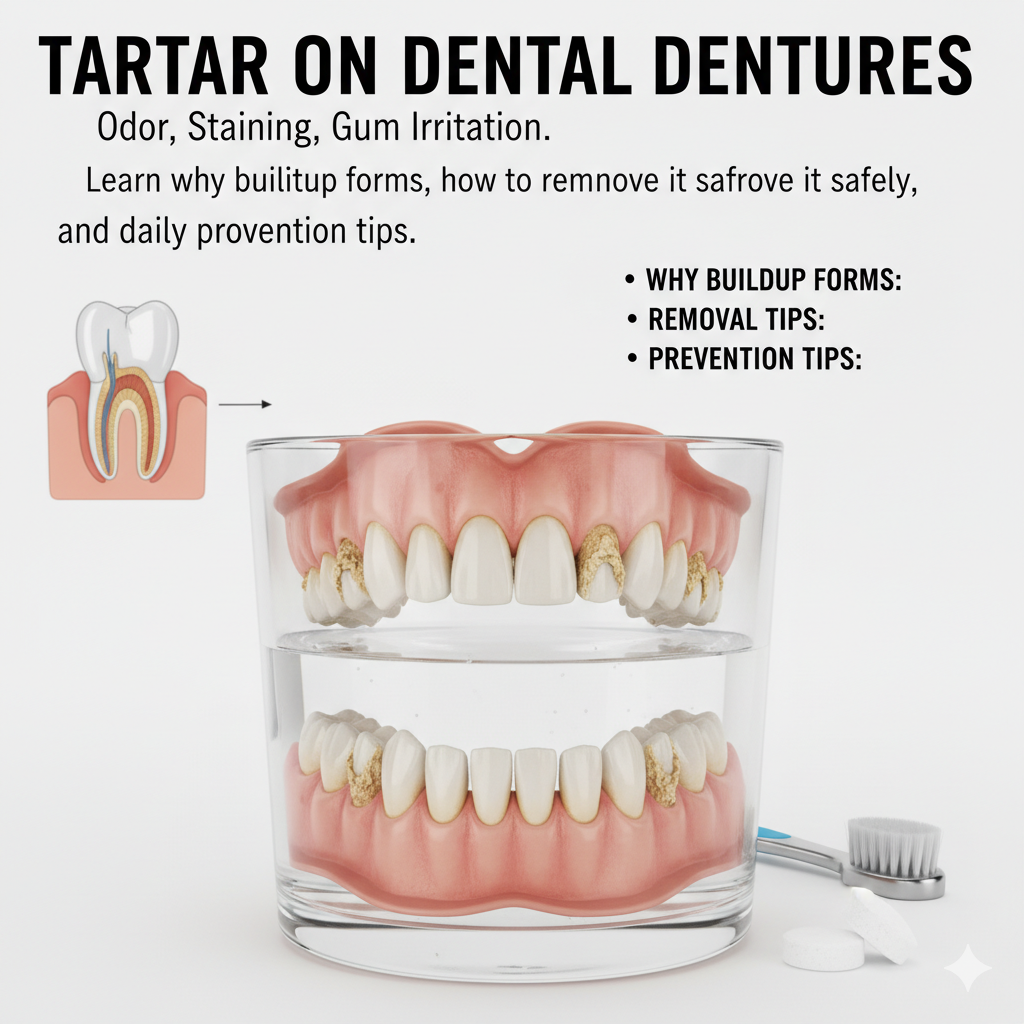
Maintaining clean dentures is essential for oral health, as tartar (calculus) buildup can lead to persistent odors, unsightly staining, and painful gum irritation. Just like natural teeth, dentures collect a sticky film of bacteria called plaque that, if not removed, hardens into tartar within 24 to 72 hours.
Why Buildup Forms
- Mineralization: Plaque is a biofilm of food particles, bacteria, and saliva. When this film isn’t cleaned away, minerals in your saliva cause it to calcify into hard tartar.
- Porous Surfaces: Denture materials are more porous than tooth enamel, making it easier for plaque to adhere and harden if daily cleaning is skipped.
- Dietary Factors: Frequent consumption of sugary foods, coffee, tea, or smoking can accelerate plaque formation and lead to deeper staining.
How to Remove Tartar Safely
- Vinegar Soak: For dentures without metal parts, soaking them in a 50/50 mixture of white vinegar and warm water for 15–30 minutes can help dissolve mineral deposits.
- Baking Soda Paste: A gentle paste of baking soda and water can be used with a soft brush to lift light stains and soften buildup without scratching the denture surface.
- Cleaning Tablets: Use specialized effervescent denture cleaning tablets as directed to eliminate bacteria and break down tough stains.
- Professional Cleaning: If tartar is heavily calcified, it should be removed by a dental professional using specialized tools to avoid damaging the denture.
Daily Prevention Tips
- Rinse After Meals: Always rinse your dentures under running water after eating to remove loose food debris.
- Brush Daily: Use a soft-bristled denture brush and a non-abrasive cleanser or mild soap. Avoid standard toothpaste, which can create microscopic scratches where bacteria hide.
- Overnight Soaking: Most dentures must stay moist to keep their shape. Soak them overnight in water or a mild denture-soaking solution to disinfect them and loosen plaque.
- Clean Your Mouth: Even without natural teeth, gently brush your gums, tongue, and the roof of your mouth daily to reduce overall bacteria and stimulate circulation.
RELATED POSTS
View all