Tartar Below the Gumline: Why It’s More Dangerous and How to Treat It
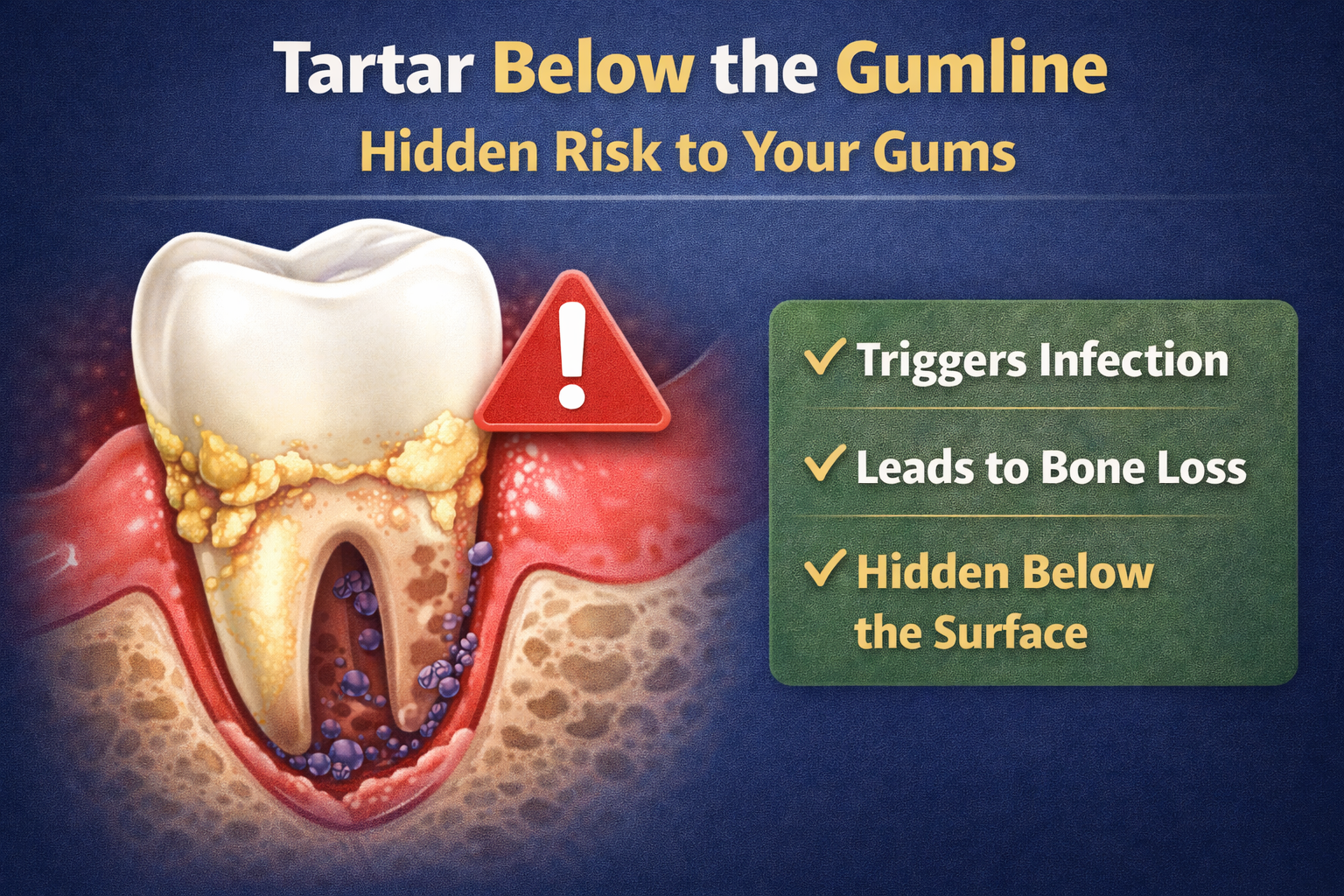
Tartar below the gumline is more serious than visible surface buildup. Also known as subgingival tartar, it forms in areas that are difficult to see and even harder to clean.
Unlike tartar on the surface of teeth, this type develops beneath the gums, where it can silently damage supporting structures without obvious early symptoms.
Because of its hidden nature, many people are unaware of the problem until it progresses into gum disease or causes noticeable discomfort.
👉 What is tartar and how it forms: Tartar buildup prevention
👉 Related article: Does tartar hurt? Symptoms explained: Does Tartar Hurt? A Complete Guide to Symptoms and Solutions
What Is Subgingival Tartar?
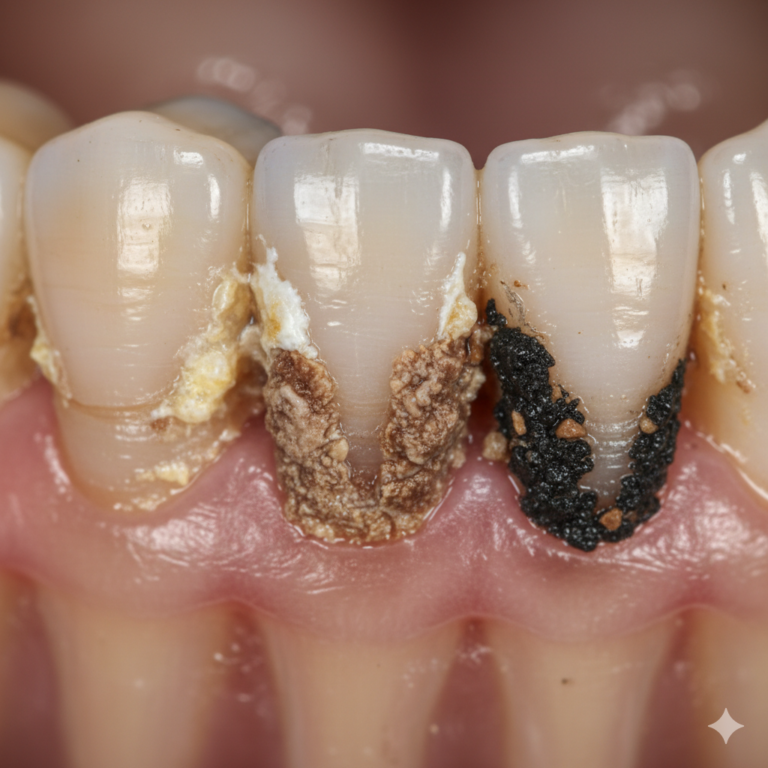
Subgingival tartar is hardened plaque that forms below the gumline, attaching to the root surface of teeth.
It develops when plaque accumulates along the gum margin and is not properly removed. Over time, minerals in saliva cause it to harden into tartar.
Once formed it:
- cannot be removed by brushing or flossing
- creates a rough surface for more bacteria to attach
- promotes deeper infection below the gums
This makes it significantly more dangerous than supragingival (visible) tartar.
How Subgingival Tartar Forms
The process begins with plaque buildup near the gumline.
If oral hygiene is insufficient:
- Plaque accumulates along the gums
- Bacteria begin to irritate gum tissue
- Plaque extends below the gumline
- Minerals harden it into tartar
As tartar forms on root surfaces, it creates a protected environment where bacteria multiply rapidly.
These deep deposits are difficult to detect and even harder to remove without professional tools.
Why Tartar Below the Gumline Is More Dangerous
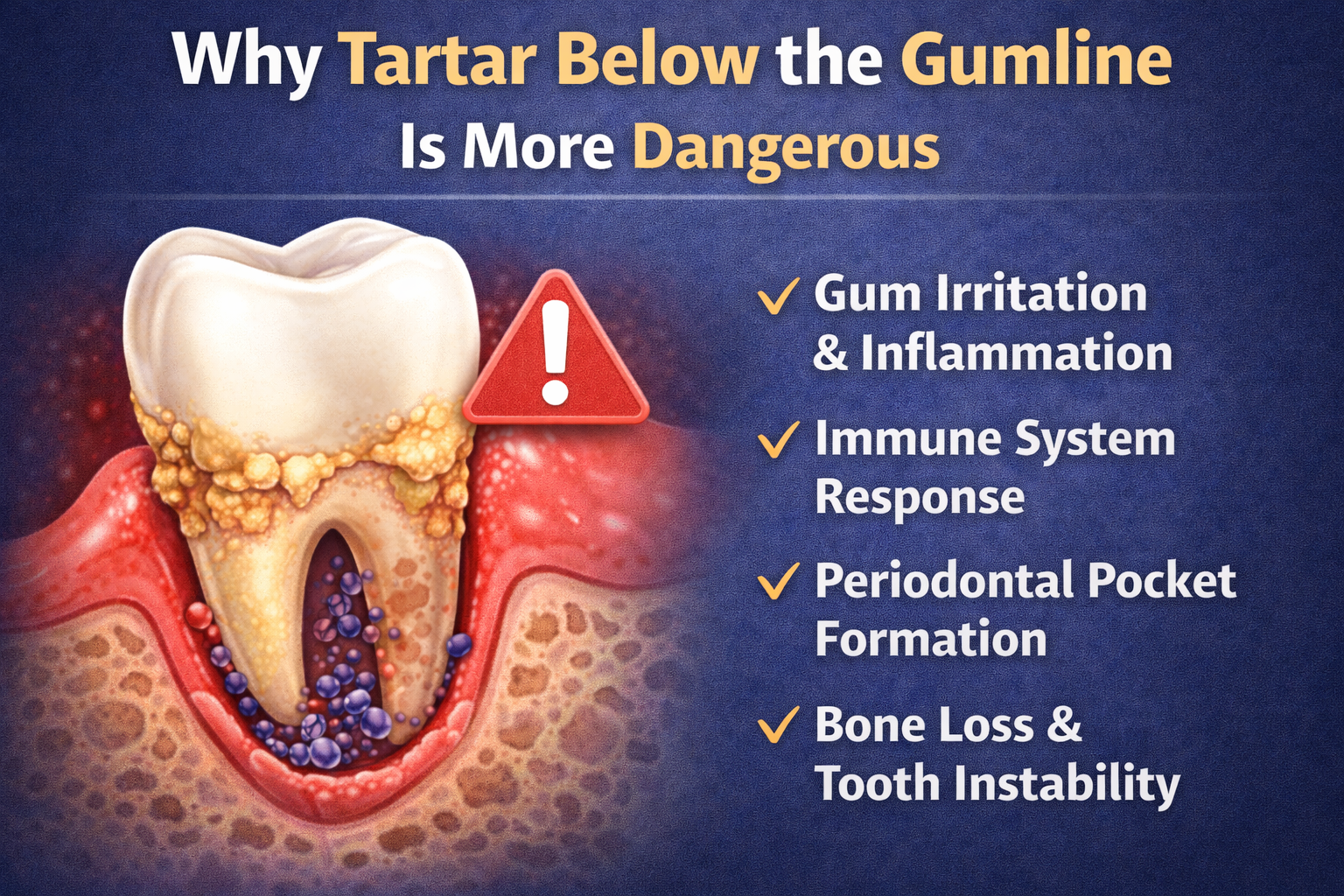
Subgingival tartar is not just a cosmetic issue—it directly affects gum and bone health.
1. Gum Irritation and Inflammation
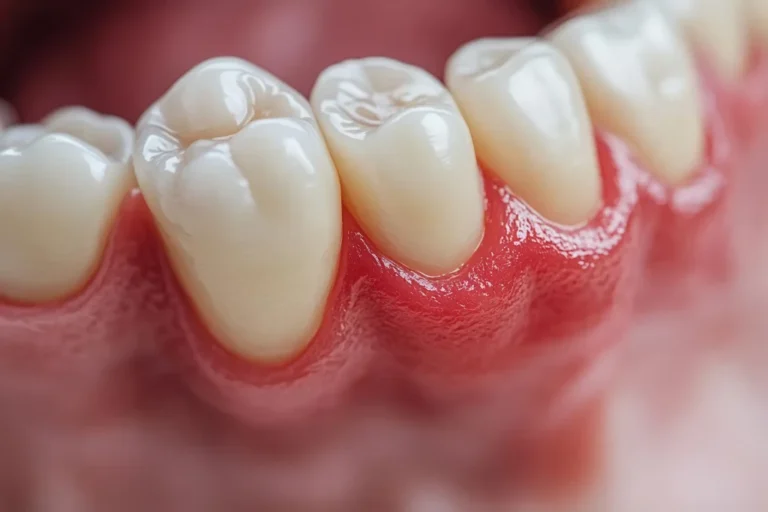
The presence of bacteria triggers inflammation, causing redness, swelling, and bleeding.
2. Immune System Response
Your body reacts to bacterial infection by releasing inflammatory substances, which can damage surrounding tissue.
3. Periodontal Pocket Formation
As gums detach from teeth, pockets form where bacteria thrive. These pockets deepen over time.
4. Bone Loss and Tooth Instability
Untreated infection can destroy bone that supports teeth, eventually leading to tooth mobility or loss.
Because this process occurs below the surface, it often progresses without noticeable symptoms in the early stages.
Symptoms to Watch For
Although subgingival tartar is hidden, your body often gives warning signs:
- Bleeding gums during brushing or flossing
- Persistent bad breath (halitosis)
- Gum recession (teeth appear longer)
- Swollen or tender gums
- Deep periodontal pockets
- Loose teeth in advanced cases
Early detection is critical to prevent irreversible damage.
Diagnosis and Detection
Dentists use specialized tools to detect tartar below the gumline.
1. Periodontal Probing
A small probe measures the depth of pockets between teeth and gums.
2. Dental X-rays
X-rays reveal bone loss and deeper structural damage.
3. Clinical Examination
Dentists check for inflammation, bleeding, and gum recession.
These methods help determine the severity of the condition and guide treatment.
👉 Popular option: Dental Pro 7 – formulated to support gum health
Treatment Options for Subgingival Tartar
Unlike surface tartar, subgingival deposits require professional care.
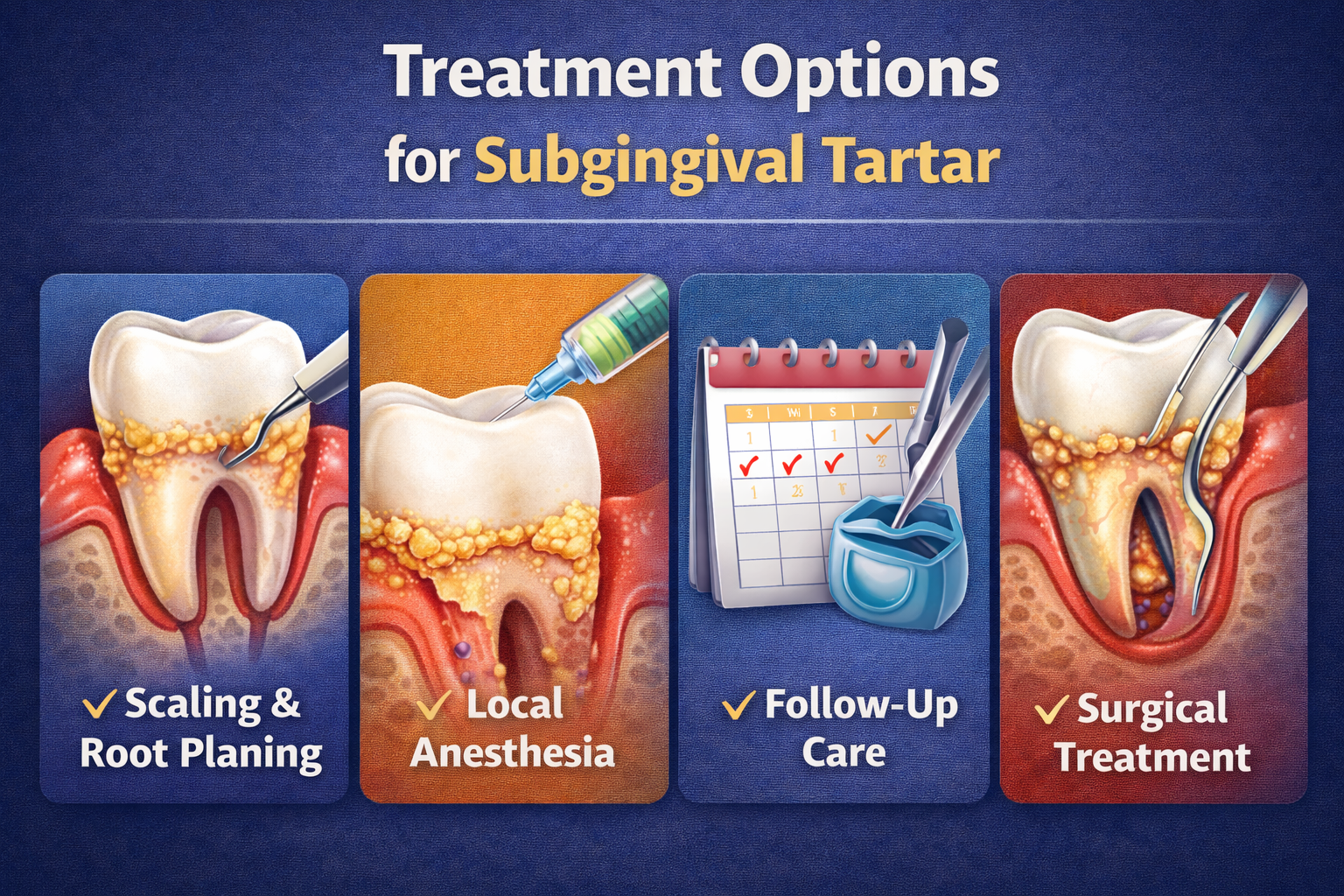
1. Scaling and Root Planing
This deep cleaning procedure removes tartar from below the gumline and smooths root surfaces to prevent further buildup.
2. Local Anesthesia
In some cases, anesthesia is used to ensure comfort during deep cleaning.
3. Follow-Up Care
Regular monitoring is necessary to ensure healing and prevent recurrence.
4. Surgical Treatment (Advanced Cases)
If pockets are too deep, surgical procedures may be required to access and clean affected areas.
Support Your Gum Health Daily
Maintaining gum health between dental visits is essential—especially if you are prone to tartar buildup.
💡 Many people combine professional care with oral health products designed to target harmful bacteria.
👉 Check availability on Amazon
👉 Learn more: Dental Pro 7 Ingredients
How to Prevent Tartar Below the Gumline
Prevention is always easier than treatment.
Here’s a simple but effective routine:
1. Brush Properly Twice Daily
Use proper technique to clean along the gumline.
2. Floss Every Day
Flossing removes plaque between teeth and below the gum margin.
3. Use Antibacterial Mouthwash
This helps reduce bacteria in hard-to-reach areas.
4. Schedule Regular Dental Cleanings
Professional cleanings remove tartar before it becomes severe.
5. Treat Gingivitis Early
Stopping inflammation early prevents progression into deeper gum disease.
Long-Term Risks If Left Untreated
Ignoring subgingival tartar can lead to:
- Chronic periodontitis
- Progressive bone loss
- Tooth mobility
- Tooth loss
- Systemic health risks linked to inflammation
The earlier you act, the better your chances of preserving your natural teeth.
Conclusion – Tartar Below the Gumline
Tartar below the gumline is a hidden but serious threat to oral health.
Because it forms in areas you cannot see or clean easily, it often goes unnoticed until damage has already begun.
The key takeaway:
Early detection and consistent prevention are essential.
If you suspect symptoms, do not delay—professional evaluation can prevent long-term complications.
FAQ – Tartar Below the Gumline
1. Can I see tartar below the gumline?
No. Subgingival tartar is usually not visible and requires professional detection.
2. Is subgingival tartar painful?
It may not hurt at first, but discomfort can develop as inflammation worsens.
3. Can deep tartar be removed without anesthesia?
Some mild cases can be treated without anesthesia, but deeper cleaning often requires it for comfort.
4. Does subgingival tartar always lead to tooth loss?
No. With early treatment and proper care, tooth loss can be prevented.
5. How fast does subgingival tartar develop?
It can begin forming within days if plaque is not removed, but damage occurs over time.



One Comment