7 Signs Your Plaque Removal Routine Is Actually Working
7 Signs Your Plaque Removal Routine: Last Updated: July 7, 2026. Reading Time – ⏱️ 8 min read
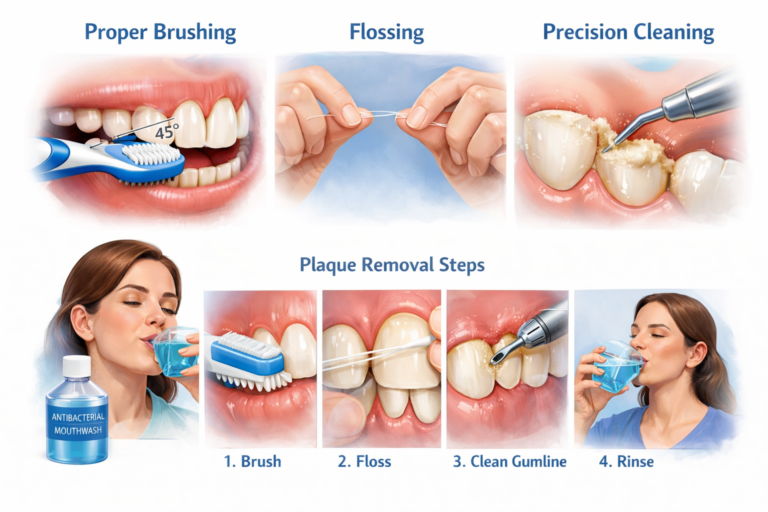
Plaque is one of the most common dental problems affecting both children and adults. It forms naturally on the teeth every day as bacteria mix with food particles and saliva inside the mouth. At first, plaque may seem harmless because it often appears as a soft, invisible film. However, when it is not removed consistently, it can contribute to a variety of oral health problems including bad breath, gum irritation, tooth sensitivity, cavities, and tartar buildup.
Many people brush their teeth daily but still wonder whether their routine is truly effective. Since plaque is not always easy to see, it can be difficult to know if your oral hygiene habits are actually improving your dental health.
Fortunately, there are several signs that may indicate your plaque removal routine is working properly. Understanding these signs can help you build better habits and maintain healthier teeth and gums over time.
What Is Plaque and Why Does It Matter?
Plaque is a sticky layer of bacteria that constantly forms on the surface of the teeth. After eating or drinking, especially sugary or starchy foods, oral bacteria feed on leftover particles and begin producing acids.
Over time, this buildup can:
- irritate the gums
- weaken tooth enamel
- create unpleasant odors
- increase the risk of cavities
- harden into tartar
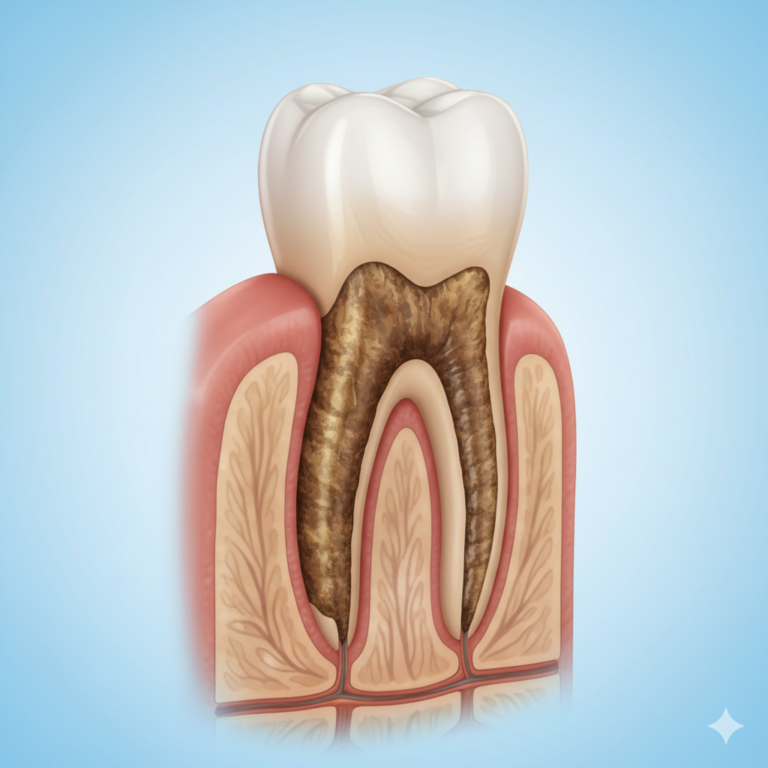
Unlike plaque, tartar cannot usually be removed through brushing alone. Once plaque hardens, professional dental cleaning is often required.
Because of this, recognizing the early signs of effective plaque control is important for maintaining long-term oral health.
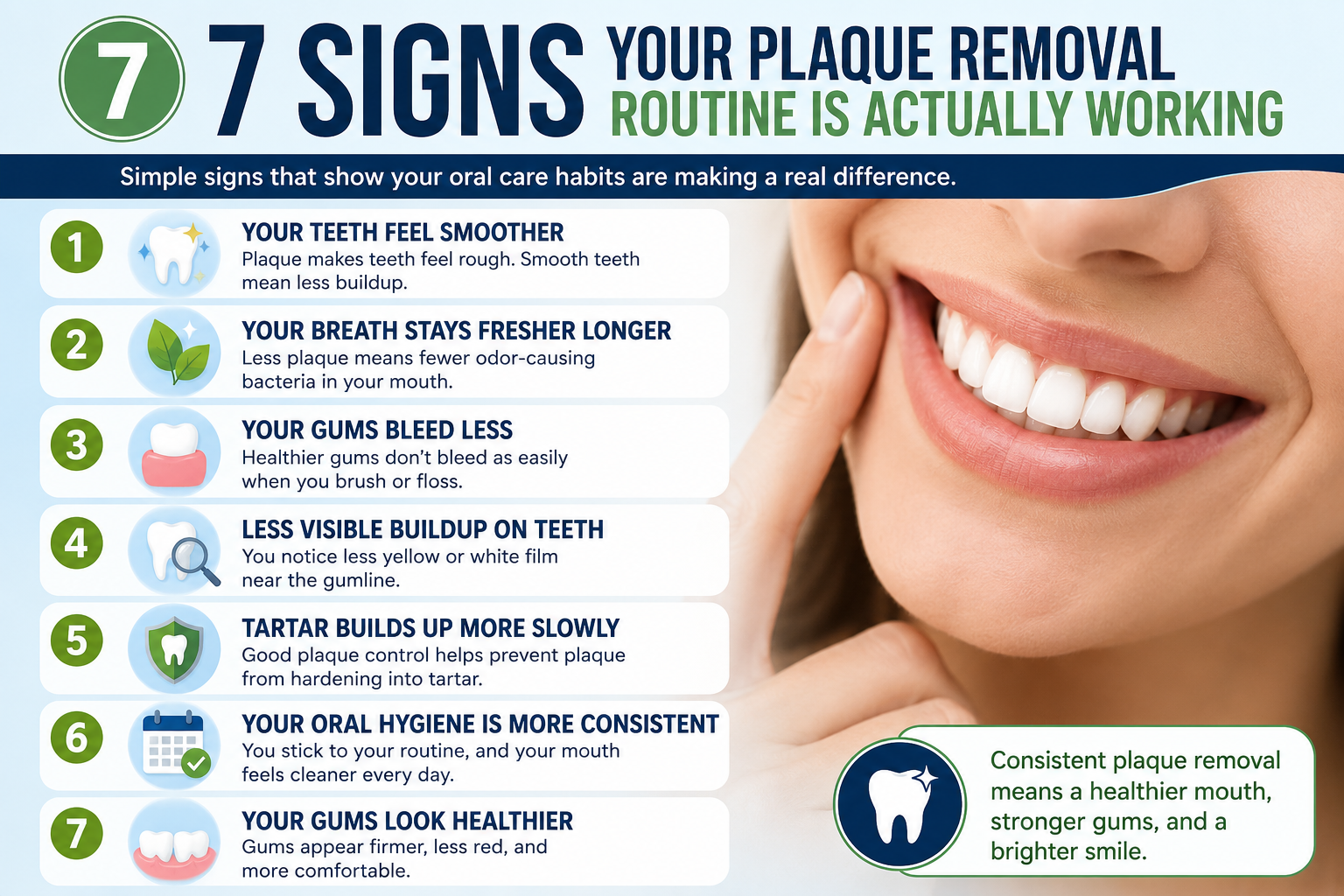
1. Your Teeth Feel Smoother Throughout the Day
One of the easiest ways to tell whether plaque removal is working is by paying attention to how your teeth feel.
When plaque accumulates, teeth often feel:
- fuzzy
- rough
- coated
- sticky
This sensation is especially noticeable near the gumline or on the back surfaces of the teeth.
After improving your brushing and flossing routine, your teeth may begin to feel noticeably smoother. Many people describe the sensation as feeling “clean” when they slide their tongue across the teeth.
If your teeth continue feeling smooth several hours after brushing, it may indicate that plaque buildup is decreasing effectively.
2. Your Breath Stays Fresher Longer
Persistent bad breath is commonly linked to bacterial buildup inside the mouth.
Plaque contains bacteria that release sulfur compounds responsible for unpleasant odors. Even if you brush regularly, bacteria can continue thriving if plaque is not removed thoroughly.
As plaque control improves, many people notice:
- fresher breath in the morning
- less unpleasant taste in the mouth
- improved confidence while speaking
- reduced odor after meals
Cleaning the tongue and flossing daily may also help improve breath quality because bacteria often hide between teeth and on the tongue surface.
If your breath remains consistently fresher throughout the day, this may be a strong sign that your oral hygiene routine is becoming more effective.
3. Your Gums Bleed Less During Brushing or Flossing
Healthy gums should not bleed regularly.
One of the most common causes of bleeding gums is plaque accumulation along the gumline. When bacteria irritate the gums, inflammation may develop. This can cause:
- redness
- swelling
- tenderness
- bleeding during brushing
Many people mistakenly stop flossing when bleeding occurs, but gentle and consistent cleaning is often necessary to reduce inflammation caused by plaque.
As plaque removal improves, you may gradually notice:
- reduced bleeding
- less gum tenderness
- healthier gum color
- tighter gum appearance
Improvement may take several days or even weeks depending on the severity of irritation.
4. There Is Less Visible Buildup on the Teeth
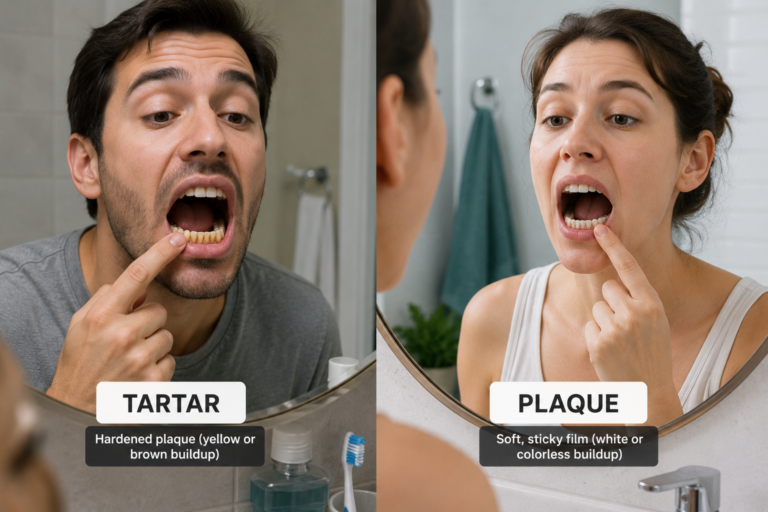
Plaque can sometimes appear as a pale yellow or whitish film on the teeth.
It commonly accumulates:
- near the gums
- behind the lower front teeth
- around crowded teeth
- between teeth
If your oral hygiene habits are effective, visible buildup may become less noticeable over time.
You may observe:
- cleaner tooth surfaces
- less discoloration near the gumline
- fewer rough areas
- improved overall appearance
This is especially important because plaque that remains untreated can eventually harden into tartar.
5. Your Mouth Feels Cleaner After Eating
Plaque tends to trap bacteria and food particles throughout the mouth.
When plaque levels are high, the mouth may quickly feel coated or uncomfortable after meals. Some people notice a sticky feeling shortly after eating sugary foods or snacks.
As plaque control improves, many people report:
- a fresher feeling after meals
- less sticky sensation
- easier cleaning during brushing
- reduced food accumulation around the teeth
This cleaner feeling throughout the day can be a helpful indicator that your oral hygiene routine is becoming more successful.
6. Tartar Builds Up More Slowly
Tartar develops when plaque remains on the teeth long enough to harden.
Unlike plaque, tartar attaches strongly to the teeth and cannot usually be removed at home. It often appears as yellow or brown deposits near the gumline.
Although tartar formation varies from person to person, effective plaque control may help slow down its development significantly.
People who improve their oral hygiene habits often notice:
- less tartar between dental visits
- fewer rough spots
- cleaner feeling teeth
- reduced staining near the gums
Daily plaque removal is one of the best ways to reduce long-term tartar buildup.
7. Your Oral Hygiene Routine Becomes More Consistent
Consistency is one of the most important factors in plaque management.
Many people brush regularly but still struggle with plaque because their routine is incomplete or inconsistent.
Successful plaque removal often improves when people:
- brush for at least two minutes
- floss daily
- clean the tongue
- replace toothbrushes regularly
- avoid excessive sugary snacks
- drink more water
Small habits repeated consistently usually produce better long-term results than aggressive brushing done occasionally.
Over time, these habits may support healthier gums, cleaner teeth, and fresher breath.
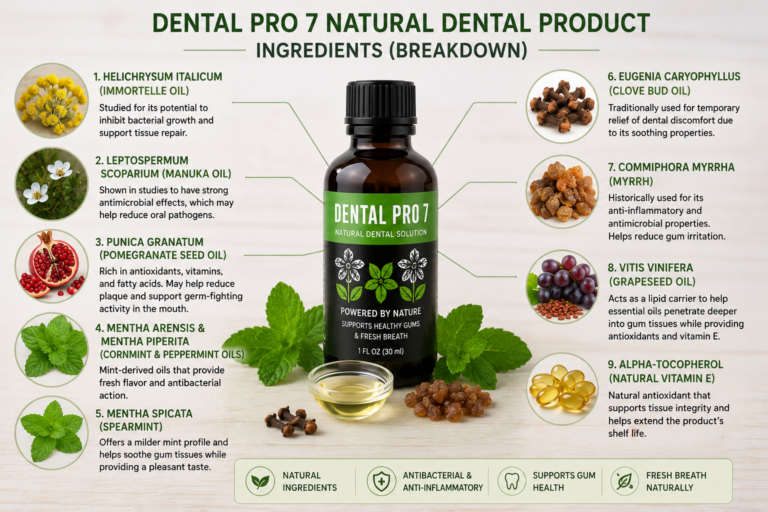
Readers exploring supportive oral care options may also benefit from this Dental Pro 7 review, covering customer experiences, ingredient analysis, and realistic expectations for daily gum support.
Common Mistakes That Prevent Effective Plaque Removal
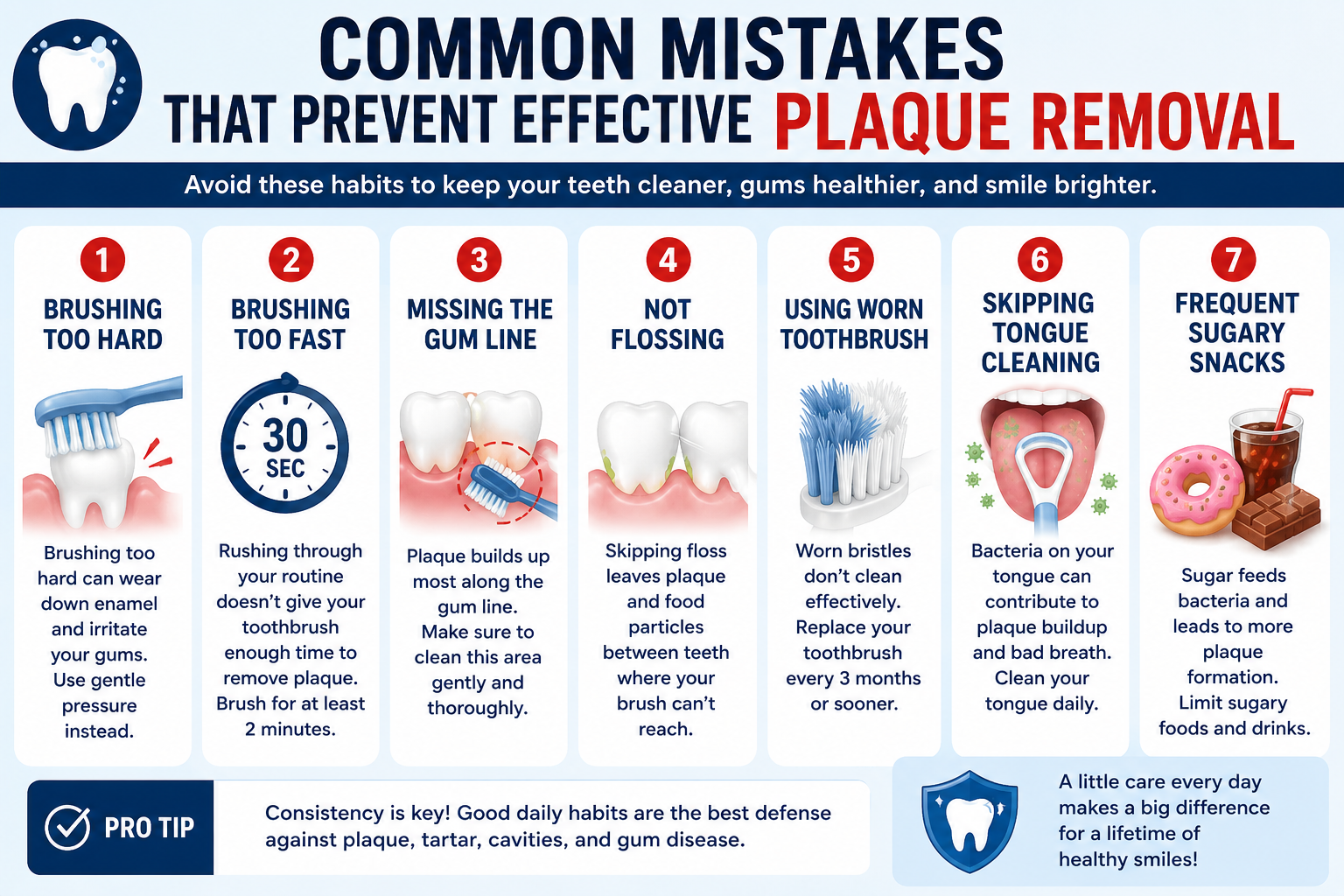
Even people who brush every day can still experience plaque buildup if certain habits are overlooked.
Some of the most common mistakes include:
- brushing too quickly
- skipping flossing
- missing the gumline
- using worn toothbrush bristles
- brushing too aggressively
- neglecting tongue cleaning
- eating sugary snacks frequently
Improving even one or two of these habits may lead to noticeable improvements over time.
How Long Does It Take to See Improvement?
The timeline varies depending on the amount of plaque buildup and the condition of the gums.
Some people notice smoother teeth and fresher breath within a few days. Others may require several weeks before bleeding and inflammation improve.
Consistency is more important than perfection. A simple routine performed every day is usually more effective than occasional deep cleaning efforts.
Choosing Oral Care Products That Support Plaque Control
Alongside consistent brushing and flossing, selecting oral care products with transparent ingredient information may help support healthier gums and better long-term plaque management.
When Professional Cleaning May Be Necessary
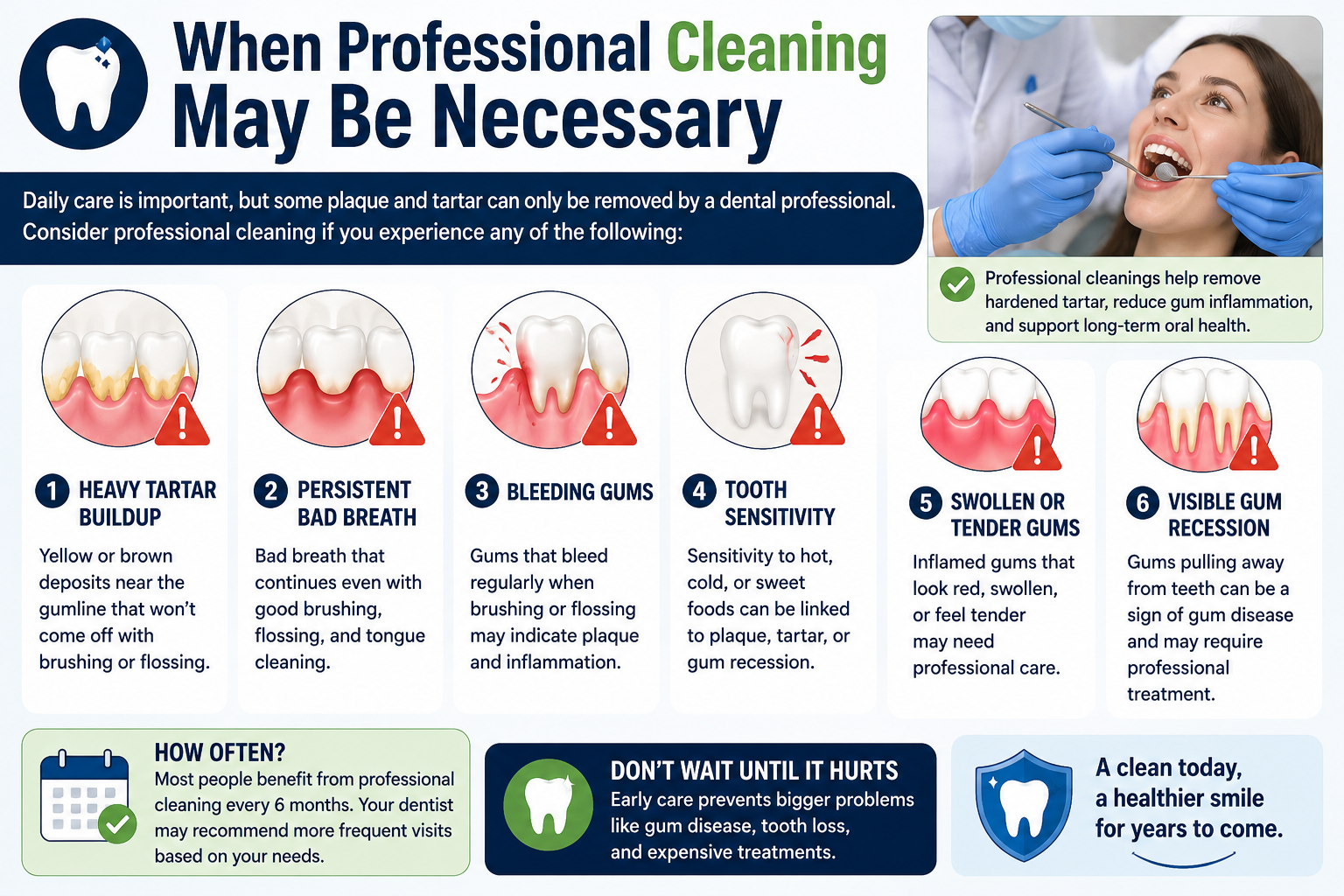
While home care is essential, some plaque and tartar buildup may require professional treatment.
You should consider visiting a dental professional if you experience:
- heavy tartar accumulation
- severe gum bleeding
- persistent bad breath
- tooth sensitivity
- swollen gums
- visible gum recession
Professional cleanings may help remove hardened deposits that cannot be eliminated through brushing alone.
Final Thoughts – 7 Signs Your Plaque Removal Routine
Plaque removal is not always immediately visible, but the mouth often provides clear signs when your routine is working.
Smoother teeth, healthier gums, fresher breath, and reduced buildup are all positive indicators that plaque levels are improving.
The key is consistency. Daily brushing, flossing, tongue cleaning, and healthy habits can support better oral hygiene over time.
Understanding the complete Dental Pro 7 ingredients guide may also help readers choose products that complement consistent brushing, flossing, and long-term gum care habits.
Rather than focusing on perfection, focus on building a routine that you can maintain consistently. Small improvements performed every day often lead to healthier teeth and gums in the long run.