
How to Clean Plaque From Between Teeth Without Damaging Your Gums
How to Clean Plaque From Between Teeth: Last Updated: July, 2026. ⏱️ 10 min read
For many people, plaque between the teeth is not something they notice immediately in the mirror. It is usually something they feel first.
A slightly rough sensation near the gumline. Floss that smells unpleasant in one specific spot. Teeth that feel “coated” again only a few hours after brushing.
That sticky buildup is often dental plaque — a bacterial film that forms continuously throughout the day, especially in tight spaces where toothbrush bristles barely reach.
What makes plaque frustrating is that even people with decent brushing habits still deal with it. In real life, most plaque problems happen in the small areas people unintentionally miss over and over again: behind lower front teeth, between crowded molars, or near the gumline where brushing tends to become rushed.
The encouraging part is that plaque between teeth can usually be controlled before it hardens into tartar. The key is not aggressive cleaning. It is learning how plaque actually behaves inside the mouth and adjusting daily habits realistically.
Why Plaque Builds Up Between Teeth So Quickly
Plaque is essentially a sticky bacterial biofilm. After eating, oral bacteria interact with sugars and food particles, creating a soft layer that clings to enamel and gum edges.
The spaces between teeth are particularly vulnerable because:
- saliva flow is lower there,
- food particles stay trapped longer,
- toothbrushes clean those surfaces poorly,
- oxygen levels are lower between tight teeth.
That environment allows bacteria to remain relatively undisturbed.
Some people are also naturally more prone to plaque accumulation because of:
- crowded teeth,
- dry mouth,
- mouth breathing during sleep,
- orthodontic retainers,
- smoking,
- frequent snacking or coffee sipping.
One detail dentists often notice is that plaque rarely builds evenly throughout the mouth.
For example:
- tartar commonly forms behind the lower front teeth because saliva ducts are nearby,
- plaque may collect more around one crown or filling edge,
- one tight gap between molars may consistently trap odor and debris.
These patterns are extremely common and do not always mean someone has “bad hygiene.”
If plaque seems to return unusually fast, this related article explains several hidden causes in more depth: Why Plaque Keeps Coming Back Even After Brushing
Why Daily Plaque Control Is Essential
Effective plaque bacteria control helps reduce bacterial biofilm before it irritates the gums or contributes to long-term oral health problems
The Biggest Mistake People Make When Cleaning Between Teeth
Most people are not actually cleaning plaque away.
They are often just disturbing the surface briefly.
This happens when:
- floss snaps quickly between teeth,
- brushing skips the gumline,
- mouthwash is used as a replacement for mechanical cleaning,
- flossing is inconsistent.
Plaque biofilm is surprisingly adhesive. According to periodontal research, it usually needs physical disruption — not simply rinsing — to detach properly from tooth surfaces.
That is why dentists emphasize slow, gentle contact instead of aggressive force.
Ironically, brushing harder can sometimes worsen gum irritation while still leaving plaque behind in tight spaces.
Interested in learning more about natural oral care? Explore the official Dental Pro 7 information together with our ingredient guide to understand how oral probiotics fit into a complete daily hygiene routine.
Flossing Properly Matters More Than Flossing Aggressively
People who dislike flossing are often using too much pressure.
Healthy flossing should not feel like “cutting” the gums.
A better technique looks more like polishing the sides of each tooth individually.
Cleaning the Gumline Safely Matters Too
Learning how to remove plaque from the gumline safely helps protect delicate gum tissue while improving plaque removal during daily oral care.
A More Effective Method
Instead of pushing floss straight down aggressively:
- Slide floss gently between the teeth.
- Wrap it slightly around one tooth surface.
- Move it vertically several times beneath the gumline.
- Repeat on the neighboring tooth.
This matters because plaque sticks along the sides of teeth, not just in the center gap itself.
One overlooked sign of plaque buildup is floss odor. If floss smells unpleasant repeatedly in the same location, bacteria are likely accumulating there consistently.
That does not necessarily mean severe disease — but it usually means the area needs more consistent cleaning attention.
Why Teeth Sometimes Feel Dirty Again by Evening
Many people brush thoroughly in the morning but still notice their teeth feel slightly fuzzy later in the day.
This can happen surprisingly fast.
Several factors contribute:
Dry Mouth
Saliva naturally helps regulate oral bacteria. A dry mouth allows plaque to mature more quickly.
This commonly happens from:
- dehydration,
- mouth breathing,
- poor sleep quality,
- certain medications,
- excessive caffeine intake.
Constant Snacking
Even healthy snacks feed oral bacteria repeatedly throughout the day.
Frequent grazing keeps plaque bacteria active almost continuously.
Coffee and Sticky Residue
Coffee itself does not directly create plaque, but many people notice teeth feel coated faster after repeated coffee consumption, especially when combined with sugar or creamer.
Plaque Between Teeth Can Affect Breath
Plaque trapped between teeth may encourage odor-producing bacteria, explaining why bad breath and gum disease often develop together over time.
Interdental Brushes Can Work Better for Some Adults
Traditional floss is useful, but it is not always the easiest or most effective tool for every mouth.
Adults with:
- wider spaces,
- gum recession,
- bridges,
- braces,
- crowded molars,
often clean more effectively with interdental brushes.
These tiny brushes physically sweep plaque from spaces floss may glide past too quickly.
Dental hygienists frequently recommend them for patients who struggle with recurring buildup around molars or dental work.
Water Flossers: Helpful, But Often Misunderstood
Water flossers have become popular because they are easier for sensitive gums.
They can:
- flush debris,
- reduce inflammation,
- improve gum comfort,
- help around braces and implants.
However, many dental professionals still caution that water alone may not fully remove sticky plaque biofilm without some form of physical contact.
Readers comparing complementary oral care options may also find this Dental Pro 7 review helpful for learning how users combine daily hygiene with natural gum support.
For that reason, water flossers tend to work best alongside:
- floss,
- interdental brushes,
- careful brushing near the gumline.
People looking for additional daily gum care support sometimes explore this detailed Dental Pro 7 review discussing oral bacteria balance and gum health routines.
How to clean plaque from between teeth: When Plaque Starts Turning Into Tartar
Plaque begins soft. Tartar does not.
Once plaque mineralizes from saliva minerals, it hardens into calculus (tartar), which usually cannot be removed safely at home.
Signs this may already be happening include:
- rough texture near gums,
- yellow or brown buildup,
- recurring gum bleeding,
- persistent bad breath,
- a “crunchy” feeling while flossing.
The lower front teeth are one of the most common areas where tartar first develops.
At that stage, professional dental cleaning is typically safer than scraping aggressively at home.
Plaque that remains trapped between teeth can gradually harden over time, making long-term tartar prevention more difficult without consistent cleaning habits.
Why Plaque Builds Up Faster for Some People
Oral bacteria behave differently from person to person.
Some individuals naturally accumulate tartar faster even with reasonable brushing habits.
Dentists often see faster buildup in people who:
- breathe through their mouth at night,
- have crowded teeth,
- wear retainers,
- consume sugary drinks frequently,
- smoke,
- experience chronic dry mouth.
There is also increasing discussion around oral microbiome balance — the idea that oral bacteria communities influence plaque formation, gum irritation, and breath quality.
That is partly why some people explore probiotic-style oral care products as an additional support strategy rather than relying entirely on stronger mouthwashes.
One example occasionally discussed in natural oral care communities is Dental Pro 7, which is designed around oral bacteria balance rather than harsh antiseptic approaches.
Readers interested in understanding the complete formulation can explore the Dental Pro 7 ingredients guide, which explains each botanical extract, probiotic component, and gum-supporting ingredient in detail.
Importantly, products like these are not replacements for flossing or professional dental care. They are generally used as complementary support alongside normal hygiene routines.
Oral Microbiome Balance Supports Cleaner Teeth
Maintaining a healthy oral microbiome supports beneficial bacteria that naturally help keep plaque and harmful microorganisms under better control.
A Daily Routine That Helps Prevent Plaque Between Teeth
Perfect oral hygiene routines rarely last.
Consistent routines usually do.
For most adults, a sustainable approach is more effective long term than aggressive “deep cleaning” cycles followed by inconsistency.
Morning
- Brush gently for two full minutes.
- Clean the tongue slowly.
- Rinse with water after coffee when possible.
Evening
- Floss before brushing.
- Spend extra time near the gumline.
- Avoid late-night snacking afterward.
These habits sound simple, but consistency matters more than intensity.
Readers considering Dental Pro 7 as part of their daily routine can compare packages in the Dental Pro 7 price comparison guide before purchasing.
For additional home-care strategies, these guides may also help: How to Clean Plaque From Between Teeth, Stop plaque build up
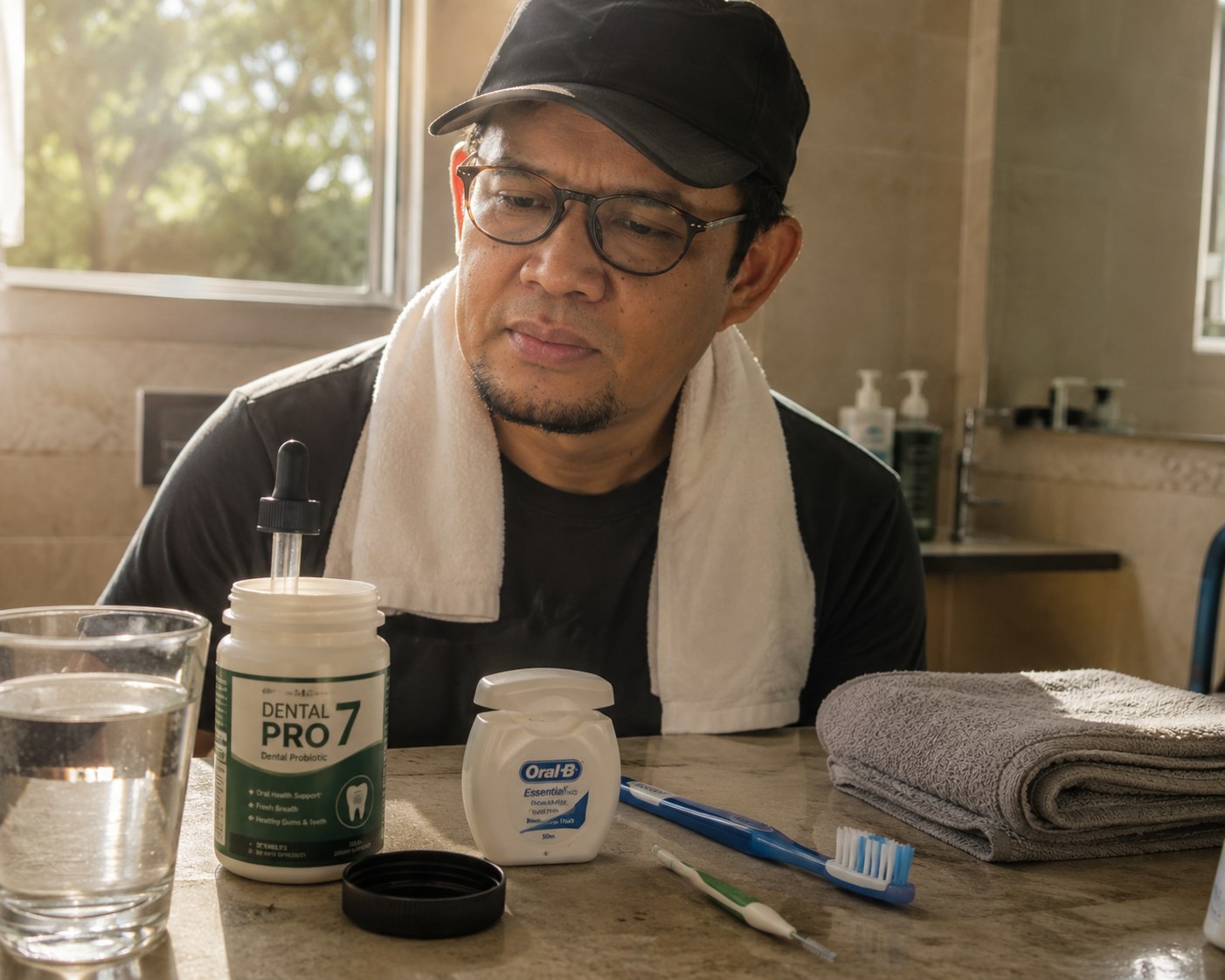
Build a Consistent Plaque Prevention Routine
Following a realistic daily routine to prevent plaque build-up often delivers better long-term results than occasional intensive cleaning efforts.
Choosing Complementary Oral Care Products Wisely
Consistent brushing and flossing remain essential, but comparing product features, ingredients, and pricing can help you choose oral care solutions that fit your needs.
How to clean plaque from between teeth: When It Is Time to See a Dentist
Even excellent home care has limitations.
Professional dental cleanings become important when plaque hardens into tartar or when gum inflammation persists despite regular brushing and flossing.
It is worth scheduling a dental visit if you notice:
- bleeding gums repeatedly,
- plaque returning extremely fast,
- chronic bad breath,
- gum tenderness,
- visible tartar buildup,
- tooth sensitivity near the gums.
According to the American Dental Association, consistent plaque removal and routine professional cleanings are among the most important preventive steps for long-term gum health.
The Cleveland Clinic also notes that untreated plaque accumulation can eventually contribute to gingivitis and periodontal disease.
Conclusion – how to clean plaque from between teeth
Cleaning plaque from between teeth is usually less about buying stronger products and more about reaching the areas that daily brushing tends to miss.
Most people do not need extreme routines. They need:
- slower technique,
- more consistency,
- less aggressive brushing,
- and better awareness of where plaque actually accumulates.
Small adjustments often make a surprisingly noticeable difference — especially when done consistently over time.
Frequently Asked Questions – how to clean plaque from between teeth
Why do my teeth feel dirty again only a few hours after brushing?
Plaque bacteria begin reforming continuously throughout the day, especially after eating or drinking frequently. Dry mouth and mouth breathing can also accelerate the process.
Why does floss smell bad in only one spot?
This often happens when food debris and bacteria repeatedly accumulate between the same two teeth. Tight contacts and difficult-to-clean molars are common causes.
Can overbrushing make plaque problems worse?
Brushing too aggressively may irritate gums and wear enamel without actually cleaning plaque effectively between teeth. Technique matters more than force.
Why does tartar usually form behind lower front teeth first?
Saliva glands located near the lower front teeth release minerals that can harden plaque faster in that area.
Is plaque between teeth normal?
Yes. Plaque forms naturally throughout the day. The goal is regular removal before it hardens into tartar or contributes to gum inflammation.
Can plaque between teeth lead to bad breath?
Yes. Plaque trapped between teeth can encourage odor-causing bacteria. Cleaning these areas consistently helps support fresher breath and healthier gums.
Can oral probiotics replace flossing?
No. Oral probiotics complement brushing and flossing but cannot remove plaque mechanically from between teeth. Daily interdental cleaning remains essential.
About the Author — Dental Pro 7 Ingredients Editorial Team
Dental Pro 7 Ingredients Editorial Team publishes educational content focused on oral hygiene, gum health, plaque prevention, and evidence-informed home care practices.
Our editorial approach prioritizes clarity, realistic oral health guidance, and balanced research over exaggerated claims or fear-based marketing. Articles are developed using publicly available dental references, preventive care principles, clinical observations commonly discussed in dentistry, and evolving research surrounding oral bacteria and gum health.
We aim to create content that feels practical, trustworthy, and genuinely useful for everyday readers trying to improve long-term oral hygiene habits.
Disclaimer – how to clean plaque from between teeth
This content is intended for informational and educational purposes only and should not be considered medical or dental advice.
Always consult a licensed dentist or qualified healthcare professional regarding persistent gum bleeding, bad breath, oral pain, or suspected dental disease. Individual oral health conditions vary, and not all home-care methods are appropriate for every person.


4 Comments