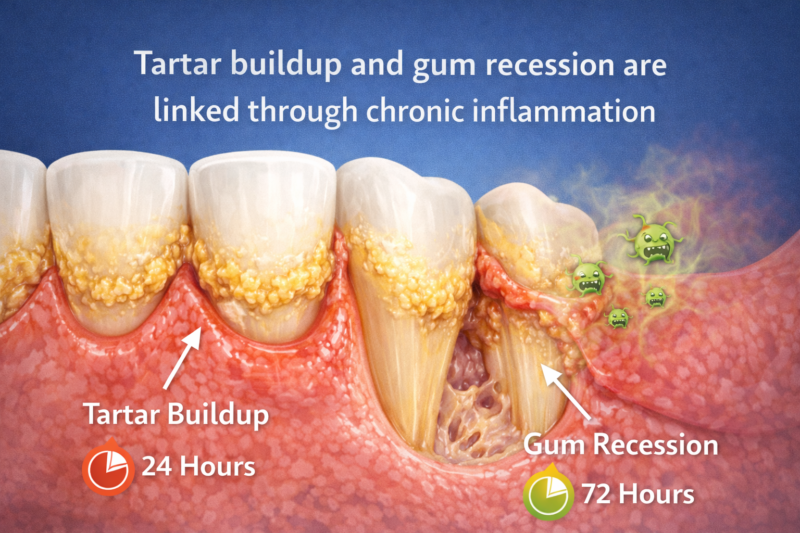
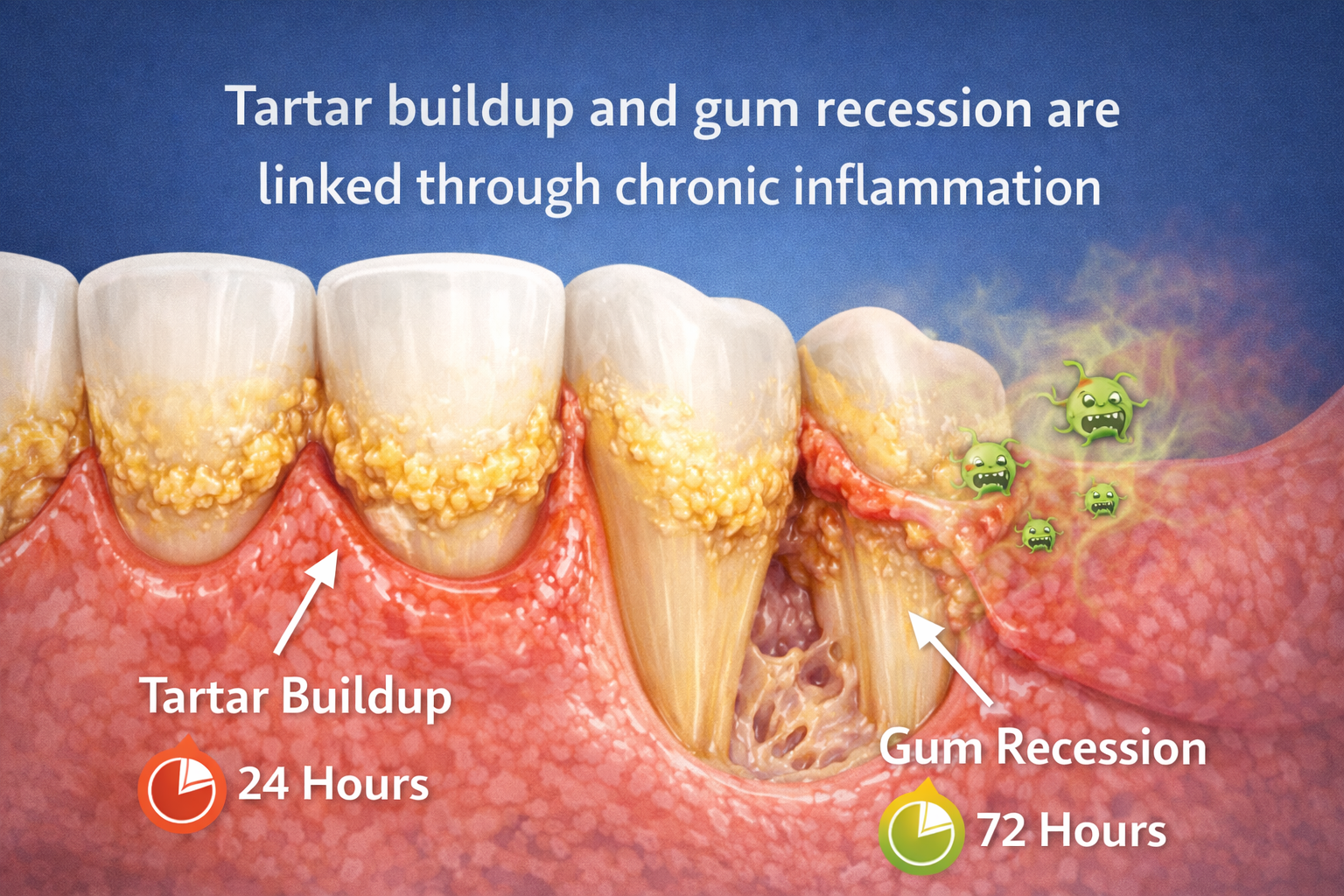
Tartar buildup and gum recession are closely connected through chronic inflammation. When hardened plaque accumulates along the gumline, it irritates delicate gum tissue. Over time, this irritation can cause the gums to gradually pull away from the teeth, exposing the roots underneath.
Unlike plaque, tartar (also called dental calculus) cannot be removed by brushing alone. If left untreated, tartar buildup and gum recession may progress together, leading to long-term oral health complications.
Understanding this relationship is key to preventing permanent attachment loss.
How Tartar Buildup Leads to Gum Recession
The link between tartar buildup and gum recession develops in stages:
1. Tartar Traps Bacteria
Tartar creates a rough, porous surface that allows bacteria to cling firmly to the tooth. These bacteria produce toxins that irritate gum tissue.
2. Chronic Inflammation Weakens Attachment
As bacteria accumulate, the body responds with inflammation. Gums may become swollen, red, and prone to bleeding. Persistent inflammation weakens the connective fibers that attach gums to teeth.
3. Tissue Gradually Pulls Back
When inflammation continues unchecked, gum tissue slowly recedes. The gumline shifts downward (or upward for upper teeth), exposing more of the tooth root.
This cycle explains why tartar buildup and gum recession often appear together during dental examinations.
Why Gum Recession Is a Serious Concern
Receding gums are not just a cosmetic issue. Tartar buildup and gum recession can lead to several complications:
- Tooth sensitivity: Exposed roots lack protective enamel, making teeth more sensitive to hot, cold, and sweet foods.
- Higher risk of decay: Root surfaces are softer than enamel and more vulnerable to cavities.
- Aesthetic changes: Teeth may appear longer or uneven.
- Increased mobility: Severe attachment loss may eventually affect tooth stability.
Because gum tissue does not regenerate easily, prevention and early intervention are critical.
Signs to Watch For
You may notice:
- Teeth appearing longer than before
- Sensitivity near the gumline
- Bleeding during brushing
- Visible tartar deposits
- Tender or inflamed gums
If these symptoms are present, tartar buildup and gum recession may already be progressing.
Prevention and Early Treatment
The good news is that early care can prevent further damage.
Professional Cleaning
Removing hardened tartar reduces bacterial load and helps calm inflammation.
Improved Oral Hygiene
Brushing twice daily with proper technique and flossing daily disrupt plaque before it hardens.
Gentle Brushing Technique
Aggressive brushing can worsen gum recession. Use a soft-bristled toothbrush and light pressure.
Regular Dental Visits
Routine cleanings allow your dentist to monitor both tartar buildup and gum recession before significant attachment loss occurs.
Early cleaning and improved hygiene often stabilize mild recession and prevent progression.
 See How Dental Pro 7 Supports Gum & Plaque Control

When to Seek Professional Care
If you notice gum recession alongside visible tartar buildup, do not delay evaluation. Once significant attachment loss occurs, advanced treatments such as gum grafting may be required.
Addressing tartar buildup and gum recession early greatly improves long-term outcomes and preserves natural teeth.
FAQ
1. Can gums grow back after recession?
Mild cases may stabilize with proper care, but severe recession often requires surgical treatment.
2. Is tartar the only cause of gum recession?
No. Brushing trauma, genetics, smoking, and periodontal disease can also contribute.
3. Is gum recession reversible?
Early stages may be managed and stabilized, but advanced tissue loss is typically not reversible without professional intervention.
By controlling tartar buildup and maintaining healthy gums, you can reduce the risk of gum recession and protect your smile for years to come.