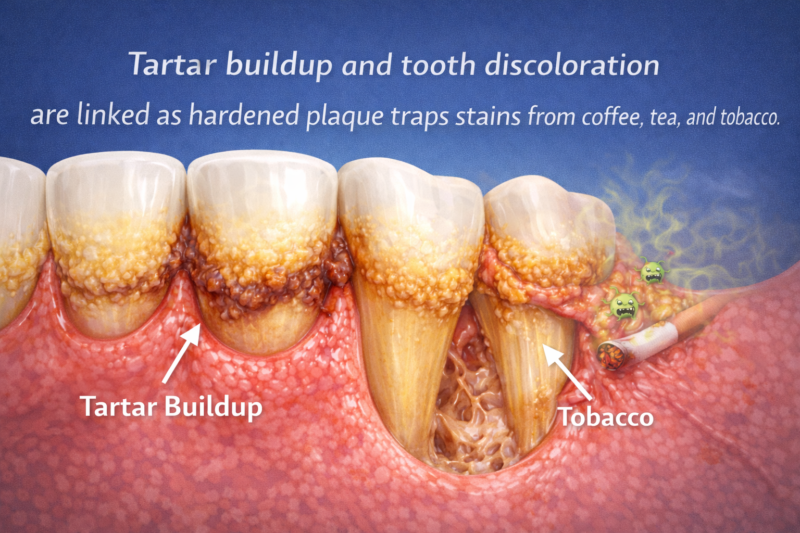
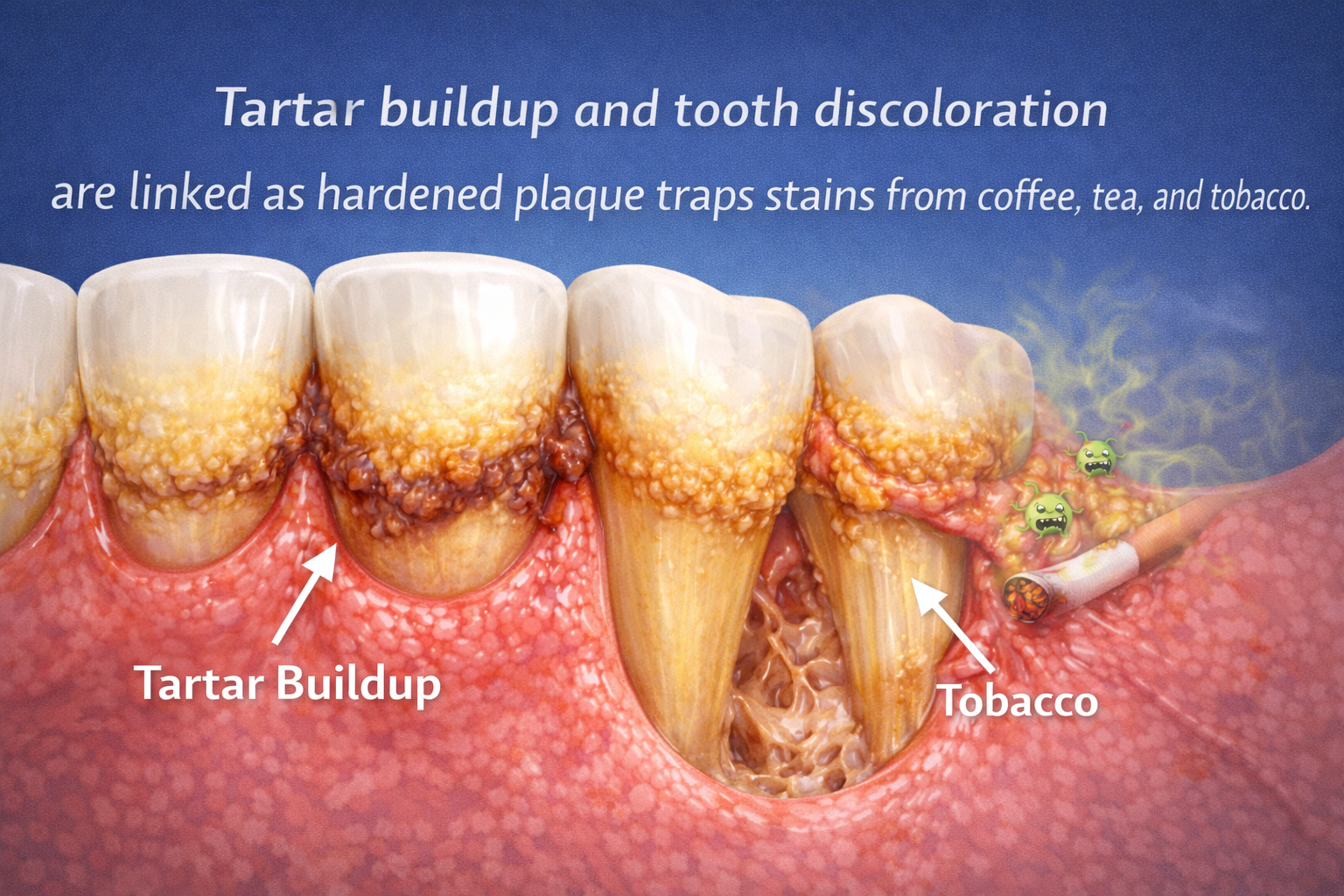
Tartar buildup and tooth discoloration often go hand in hand. When plaque hardens into tartar (also known as dental calculus), it creates visible yellow or brown deposits along the gumline. Over time, these hardened layers become darker and more noticeable.
Unlike surface stains that affect enamel, tartar buildup attaches firmly to the tooth. Its rough, porous structure makes it especially prone to trapping pigments from everyday foods and beverages — leading to persistent discoloration.
If your teeth appear stained near the gumline, tartar buildup and tooth discoloration may be the underlying cause.
Why Tartar Causes Visible Staining
Tartar contributes to discoloration for several reasons:
1. Natural Yellow Appearance
Fresh tartar often appears yellowish due to its mineral composition and bacterial content.
2. Porous Surface Absorbs Pigments
Tartar acts like a sponge, absorbing pigments from common stain-causing substances such as:
- Coffee
- Tea
- Tobacco
- Red wine
- Dark sodas
The longer tartar remains on the teeth, the more pigments it collects, causing deeper brown or even dark stains.
3. Bacterial Accumulation
Bacteria within tartar deposits can also contribute to dull or uneven tooth color.
Because tartar buildup and tooth discoloration develop gradually, many people don’t notice the change until staining becomes pronounced.
Why Whitening Products Often Fail
A common misconception is that whitening toothpaste or bleaching treatments can remove tartar stains. However, whitening products are designed to lighten enamel — not remove hardened calculus.
When tartar buildup and tooth discoloration are present, whitening treatments typically produce little or no improvement. That’s because the stain is embedded in the tartar layer itself.
Professional scaling must occur first to physically remove the hardened deposit. Only after tartar removal can whitening treatments effectively brighten natural enamel.
Professional Cleaning: The First Step
The most effective solution for tartar buildup and tooth discoloration is professional dental cleaning. During a scaling appointment, a dental hygienist:
- Removes hardened tartar above and below the gumline
- Polishes the tooth surface to reduce plaque retention
- Restores a smoother, cleaner appearance
Many patients notice immediate improvement in tooth color after scaling alone — even before whitening.
Prevention Tips to Maintain a Brighter Smile
Preventing tartar buildup is key to avoiding future discoloration. Consider these strategies:
- Brush twice daily with fluoride toothpaste
- Floss daily to disrupt plaque between teeth
- Schedule cleanings every six months
- Limit frequent exposure to coffee, tea, wine, and tobacco
- Rinse with water after consuming staining beverages
Consistency helps prevent both tartar buildup and tooth discoloration from returning.
 See How Dental Pro 7 Supports Gum & Plaque Control

When to Seek Professional Advice
If you notice dark deposits near your gumline or whitening products are not improving your smile, schedule a dental evaluation. Tartar buildup and tooth discoloration are often resolved quickly with proper scaling.
Addressing the issue early helps maintain both oral health and confidence in your smile.
FAQ
1. Can whitening remove tartar stains?
No. Tartar must be professionally removed before whitening treatments can be effective.
2. Is discoloration from tartar permanent?
Usually not. Professional cleaning typically restores natural tooth color.
3. Does tartar always look yellow?
No. Tartar buildup and tooth discoloration may appear yellow, brown, or even dark depending on staining and duration.
By preventing tartar buildup and scheduling regular cleanings, you can protect your teeth from discoloration and maintain a healthier, brighter smile.