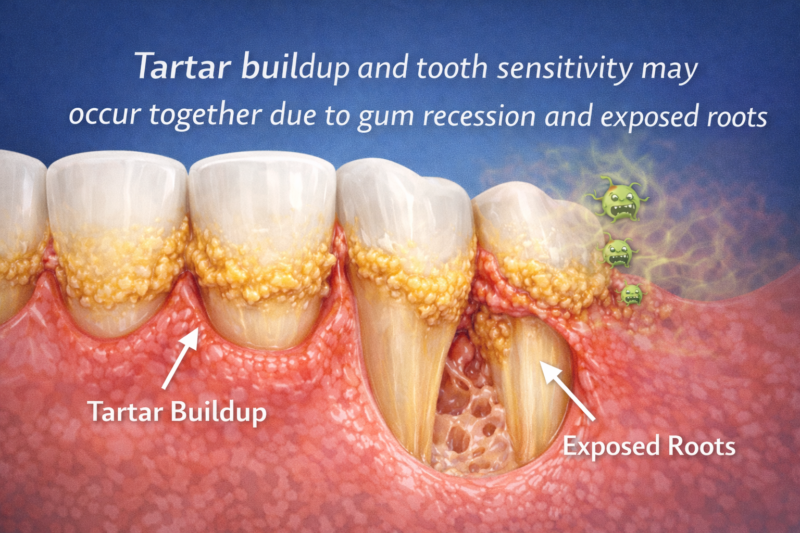
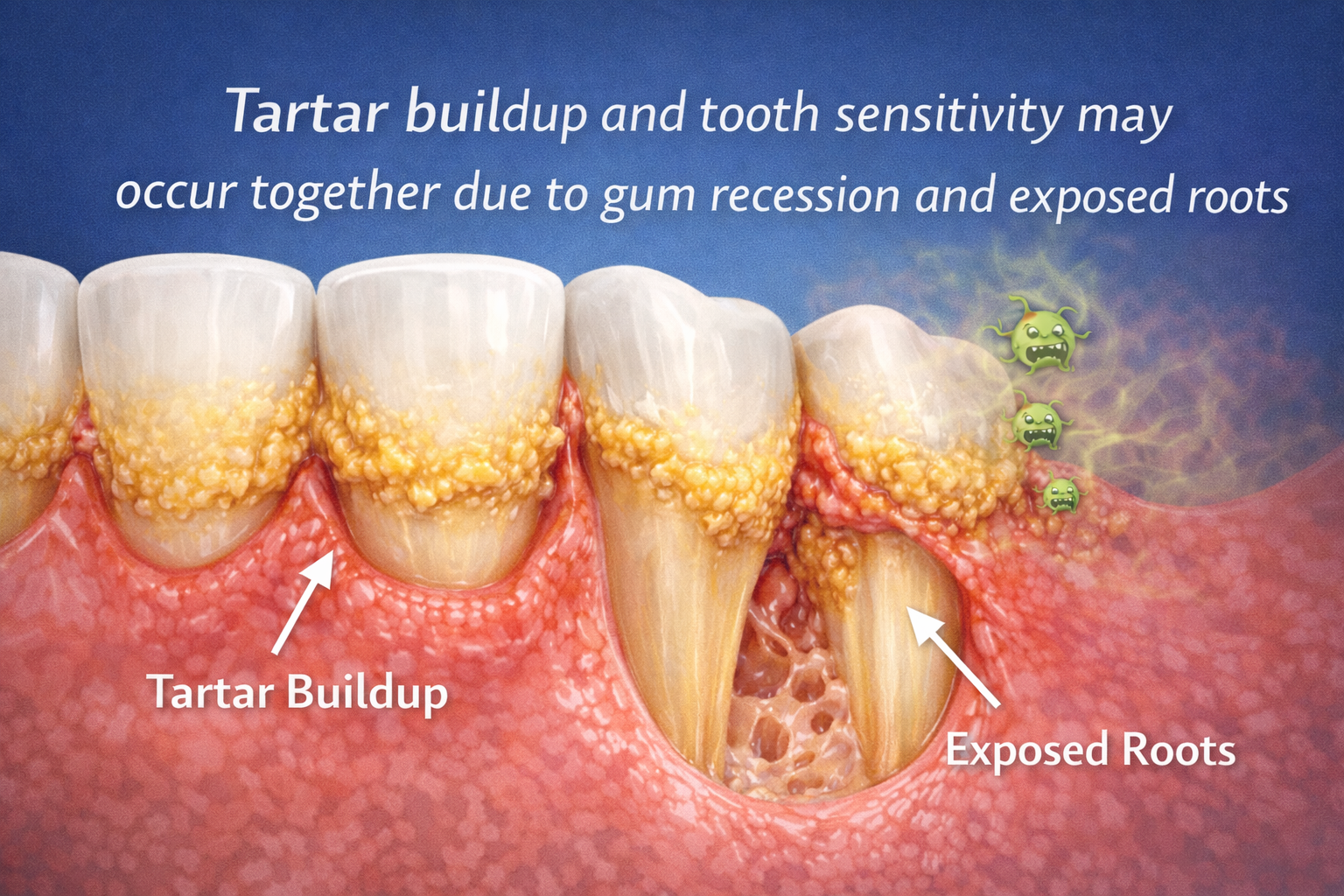
Tartar buildup and tooth sensitivity often occur together, especially when hardened deposits irritate the gumline. When tartar accumulates along the edges of teeth, it can trigger inflammation that gradually causes gum tissue to recede. As gums pull back, the tooth roots become exposed.
Unlike the crown of the tooth, which is protected by enamel, root surfaces are covered by a softer material called cementum. This layer offers less protection. Once exposed, roots are more vulnerable to temperature changes, pressure, and acidic foods — leading to noticeable sensitivity.
If left untreated, tartar buildup and tooth sensitivity may worsen over time.
Why Tartar Buildup Increases Sensitivity
There are several reasons why tartar buildup and tooth sensitivity are linked:
1. Gum Inflammation
Tartar creates a rough surface that traps bacteria. These bacteria release toxins that irritate gum tissue, causing redness, swelling, and bleeding. Chronic inflammation weakens the attachment between the gum and tooth.
2. Root Exposure
As gum tissue recedes due to inflammation, the protective coverage over tooth roots diminishes. Exposed dentin contains microscopic tubules that transmit sensations directly to the nerve of the tooth.
3. Bacterial Irritation
Bacteria living in tartar deposits can produce acids and toxins that further irritate exposed root surfaces, increasing discomfort.
When these factors combine, tartar buildup and tooth sensitivity can become a persistent problem.
Common Symptoms to Watch For
You may experience:
- Sharp pain when consuming hot or cold foods
- Sensitivity to sweet or acidic drinks
- Discomfort while brushing near the gumline
- Visible tartar deposits along the gums
- Receding gums or teeth appearing longer
If these signs are present, tartar buildup and tooth sensitivity may be connected.
Management and Treatment Options
The good news is that addressing tartar often helps reduce sensitivity.
Professional Scaling
A dental hygienist can remove hardened tartar using specialized instruments. Eliminating these deposits reduces bacterial irritation and allows inflamed gums to heal.
Desensitizing Toothpaste
Specially formulated toothpaste can block nerve pathways in exposed dentin, decreasing sensitivity over time.
Gum Health Monitoring
Regular dental checkups help track gum recession and prevent further exposure of root surfaces.
Improved Oral Hygiene
Brushing gently with a soft-bristled toothbrush and flossing daily helps prevent additional tartar buildup and tooth sensitivity.
Addressing the root cause — tartar accumulation — is essential for long-term relief.
Prevention Tips
To reduce the risk of tartar buildup and tooth sensitivity:
- Brush twice daily with fluoride toothpaste
- Use proper brushing technique along the gumline
- Avoid aggressive scrubbing
- Limit acidic beverages
- Schedule professional cleanings every six months
Preventive care is far easier than treating advanced gum recession or chronic sensitivity.
 See How Dental Pro 7 Supports Gum & Plaque Control

When to See a Dental Professional
If tooth sensitivity persists despite using desensitizing toothpaste, or if you notice visible tartar along the gumline, schedule a dental evaluation. Early treatment can prevent further gum recession and reduce discomfort.
Promptly addressing tartar buildup and tooth sensitivity helps protect both enamel and root surfaces from long-term damage.
FAQ
1. Does removing tartar reduce sensitivity?
Often, yes. Once inflammation decreases and gums begin to heal, sensitivity may improve significantly.
2. Are sensitive teeth permanent?
Not always. With proper treatment and preventive care, many cases improve over time.
3. Should I avoid cold drinks?
Temporarily avoiding triggers may reduce discomfort, but treating tartar buildup and tooth sensitivity directly is the most effective solution.
Taking early action against tartar buildup protects your gums, reduces tooth sensitivity, and supports long-term oral comfort.