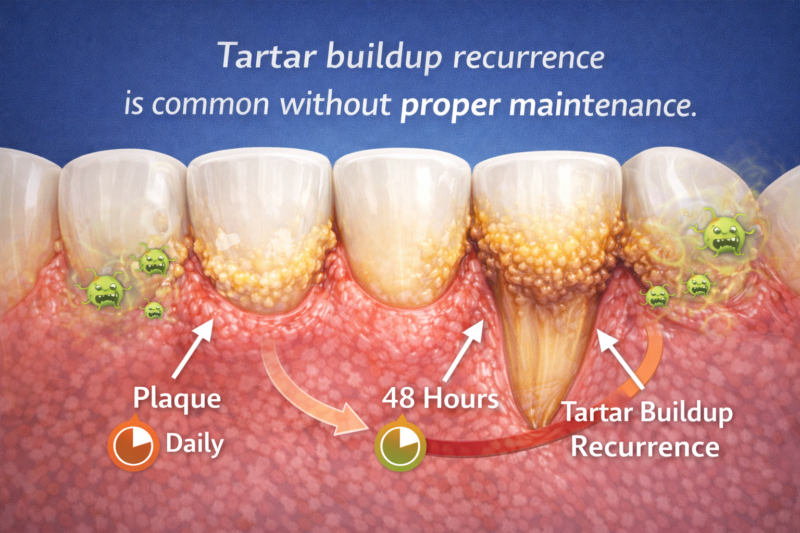
Tartar buildup recurrence is a common frustration for many patients. You may leave a dental cleaning appointment with smooth, polished teeth — only to notice hardened deposits returning weeks or months later.
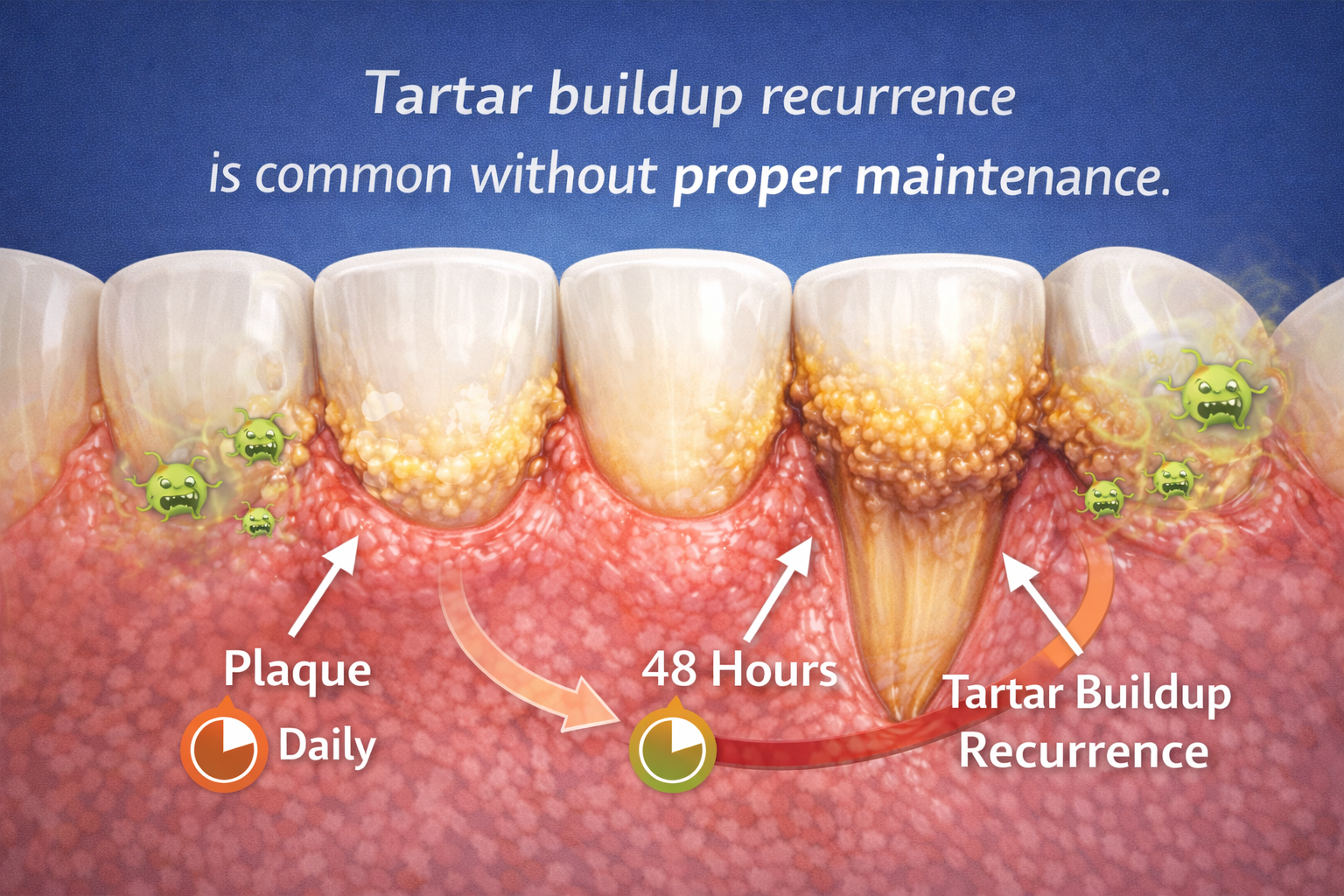
The reason is simple: plaque forms every single day. If plaque is not thoroughly removed through brushing and flossing, it begins absorbing minerals from saliva. Within 24–72 hours, this plaque can harden into tartar (also known as dental calculus).
Because plaque formation never stops, tartar buildup recurrence can happen repeatedly without consistent prevention.
The Cycle of Repeat Tartar Formation
Understanding how tartar buildup recurrence occurs helps break the cycle:
- Daily Plaque Formation
Bacteria combine with food particles and saliva to form plaque within hours after brushing. - Mineralization
If plaque remains undisturbed, it absorbs calcium and phosphate from saliva. - Hardening Into Tartar
Plaque hardens and attaches firmly to tooth surfaces, especially along the gumline and behind lower front teeth. - Increased Plaque Retention
Tartar creates a rough surface that attracts more plaque, accelerating future buildup.
Without proper intervention, this cycle repeats — leading to ongoing tartar buildup recurrence.
Risk Factors That Increase Recurrence
Some individuals are more prone to repeat calculus formation. Common risk factors include:
Irregular Brushing
Skipping brushing sessions allows plaque to remain long enough to harden.
Inconsistent Flossing
Plaque between teeth often mineralizes quickly if not removed daily.
High Mineral Content in Saliva
People with saliva rich in calcium and phosphate may experience faster tartar buildup recurrence.
Smoking
Smoking promotes faster tartar accumulation and increases gum inflammation.
Poor Brushing Technique
Even brushing twice daily may not prevent recurrence if technique is ineffective along the gumline.
Because these factors vary, tartar buildup recurrence may be more frequent for some individuals than others.
Long-Term Prevention Strategies
Preventing tartar buildup recurrence requires consistent daily habits and professional care.
Twice-Daily Brushing
Brush for at least two minutes, focusing on the gumline and inner surfaces of lower front teeth.
Daily Interdental Cleaning
Floss or use interdental brushes to remove plaque between teeth.
Regular Professional Maintenance
Most patients need cleanings every six months, but those prone to tartar buildup recurrence may benefit from visits every three to four months.
Personalized Hygiene Plans
Your dentist or hygienist can recommend specific tools, such as electric toothbrushes or antimicrobial rinses, tailored to your needs.
Consistency is the most important factor in preventing repeat tartar formation.
Why Maintenance Matters
Tartar buildup recurrence doesn’t just affect appearance — it increases the risk of:
- Gum inflammation (gingivitis)
- Bleeding gums
- Bad breath
- Periodontal disease
By disrupting plaque daily and maintaining regular cleanings, you significantly reduce the likelihood of hardened deposits returning quickly.
 See How Dental Pro 7 Supports Gum & Plaque Control

When to Seek Professional Advice
If tartar seems to return unusually fast despite good hygiene, schedule a dental evaluation. Some patients naturally form tartar more rapidly due to saliva composition or other biological factors.
A customized long-term maintenance strategy can dramatically reduce tartar buildup recurrence and protect your gum health.
FAQ
1. Why does tartar come back so fast?
Plaque forms daily and can mineralize within a few days if not removed thoroughly.
2. Can tartar buildup recurrence be stopped completely?
It cannot be eliminated entirely, but it can be significantly reduced with consistent care.
3. Are some people more prone to tartar buildup recurrence?
Yes. Saliva mineral content, hygiene habits, and smoking all influence how quickly tartar forms.
With proper daily care and regular dental visits, tartar buildup recurrence can be controlled — helping you maintain cleaner teeth and healthier gums long term.