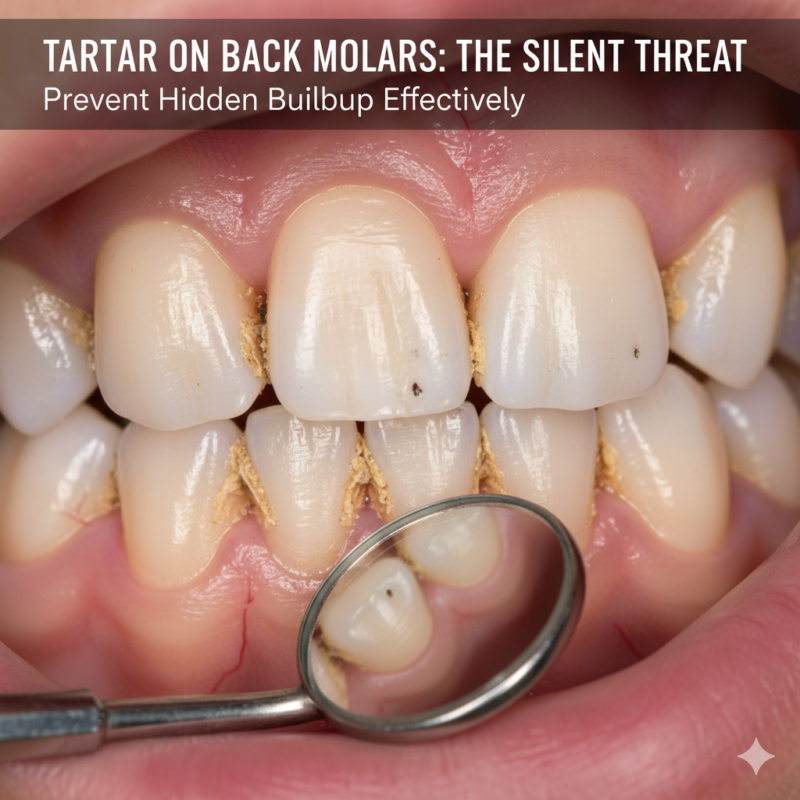
Tartar on back molars is common and often unnoticed.
Because molars sit far in the mouth, they are harder to see and clean. Many people focus on front teeth and rush through the back.
This creates the perfect condition for buildup.
Understanding why tartar forms on back molars helps you prevent long-term problems.
💡 You can also explore similar dental health supplements and oral care products on Amazon.
Check availability here →
Why Back Molars Are High-Risk Areas
Molars have a unique shape.
They contain:
Deep grooves
Wide chewing surfaces
Pits and fissures
Tight contact points
Food particles easily settle into these areas. If plaque remains, it can harden into tartar within days.
The back position also makes brushing angles more difficult.
Many people:
Do not open their mouth wide enough
Miss the gumline
Avoid brushing wisdom teeth
Stop brushing too early
These habits increase buildup risk.
How Fast Does Tartar Form on Molars?
Plaque develops quickly after eating.
If not removed thoroughly, it can begin hardening in 24 to 72 hours.
Because molars are harder to clean, plaque often remains longer in this area. That makes mineralization more likely.
Over time, tartar becomes thick and firmly attached.
Once hardened, it cannot be removed at home.
What Does Tartar on Back Molars Look Like?
You may not see it easily.
However, signs include:
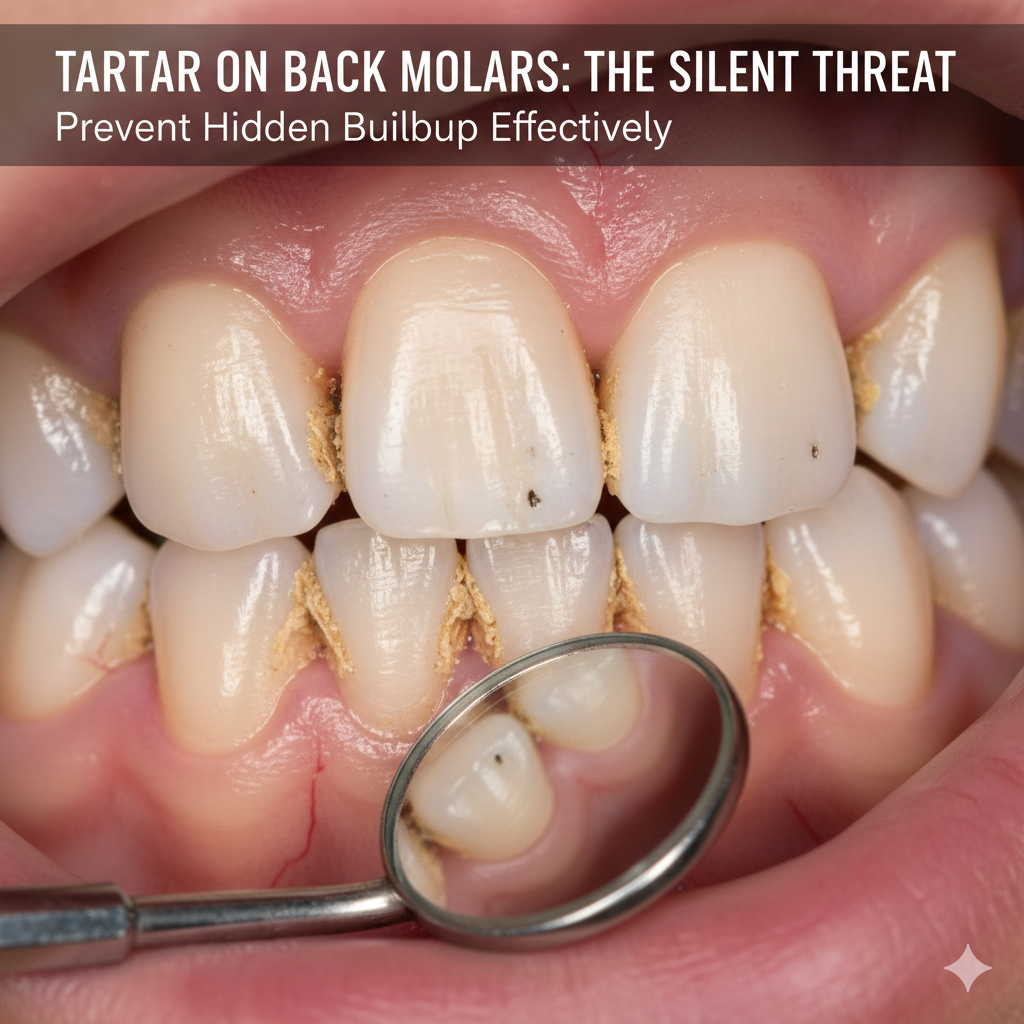
Yellow or brown deposits near the gumline
Dark stains in hard-to-reach corners
Rough texture felt by the tongue
Gum redness behind the teeth
Sometimes the only noticeable symptom is bad breath.
Why Hidden Tartar Is a Serious Issue
Molars do most of the chewing.
When tartar builds up, it increases the risk of:
Cavities in deep grooves
Gum inflammation
Infection near wisdom teeth
Periodontal pockets
If ignored, gum irritation can spread and affect surrounding teeth.
Because the area is less visible, problems may progress before being noticed.
Can You Remove It at Home?
No.
Once tartar on back molars forms, brushing and flossing cannot remove it.
Using sharp objects can damage enamel and injure the gums.
Professional scaling is required to safely remove hardened deposits.
How Dentists Remove Tartar from Molars
Dental professionals use specialized angled instruments to reach back teeth.
Ultrasonic scalers help break apart thick buildup.
After removal:
The tooth surface becomes smooth
Gums experience less irritation
Future plaque attachment becomes more difficult
Regular cleanings reduce the risk of heavy recurrence.
How to Prevent Tartar on Back Molars
Prevention requires focus and patience.
1. Use a Small Brush Head
A compact brush reaches molars more easily.
2. Brush in Sections
Spend at least 30 seconds cleaning the back teeth alone.
3. Adjust Your Wrist Angle
Tilt the brush to reach the gumline properly.
4. Do Not Skip Wisdom Teeth
Even partially erupted molars need cleaning.
5. Floss Carefully
Tight contacts between molars trap plaque easily.
6. Rinse After Meals
Water rinsing helps remove food debris.
7. Maintain Routine Dental Visits
Professional cleanings prevent thick buildup.
Consistency is more effective than aggressive brushing.
Common Mistakes That Increase Risk
Brushing only visible teeth
Applying too much pressure
Skipping floss
Brushing for less than two minutes
Ignoring mild gum bleeding
Gentle, thorough cleaning works best.
When Should You See a Dentist?
Schedule an appointment if you notice:
Persistent bad breath
Gum swelling in the back
Bleeding while brushing molars
Rough surfaces that remain after brushing
Early treatment prevents more serious issues.
Long-Term Outlook
Tartar on back molars can be controlled with proper care.
The key is awareness. Because these teeth are less visible, they require extra attention.
Good brushing technique and regular professional cleaning protect your molars for the long term.
Dental Professional Recommendation
If you suspect tartar on back molars, schedule a professional dental cleaning. Early scaling removes hidden buildup safely and helps prevent gum inflammation or tooth decay.
Regular dental checkups ensure that hard-to-reach areas stay clean and healthy.
FAQ
1. Why does tartar form more easily on back molars?
Back molars have deep grooves and are harder to clean. Plaque often remains longer in this area, which allows minerals in saliva to harden it into tartar.
2. Can tartar on back molars cause cavities?
Yes. Hardened buildup near grooves and gumlines can increase the risk of tooth decay if left untreated.
3. Is tartar on molars painful?
Early buildup is usually painless. However, gum irritation or infection may cause discomfort over time.
4. How often should molars be professionally cleaned?
Most people benefit from cleanings every six months. Those with heavy buildup may need more frequent visits based on professional advice.