Tartar Buildup in Smokers: Why It Happens and How to Prevent It
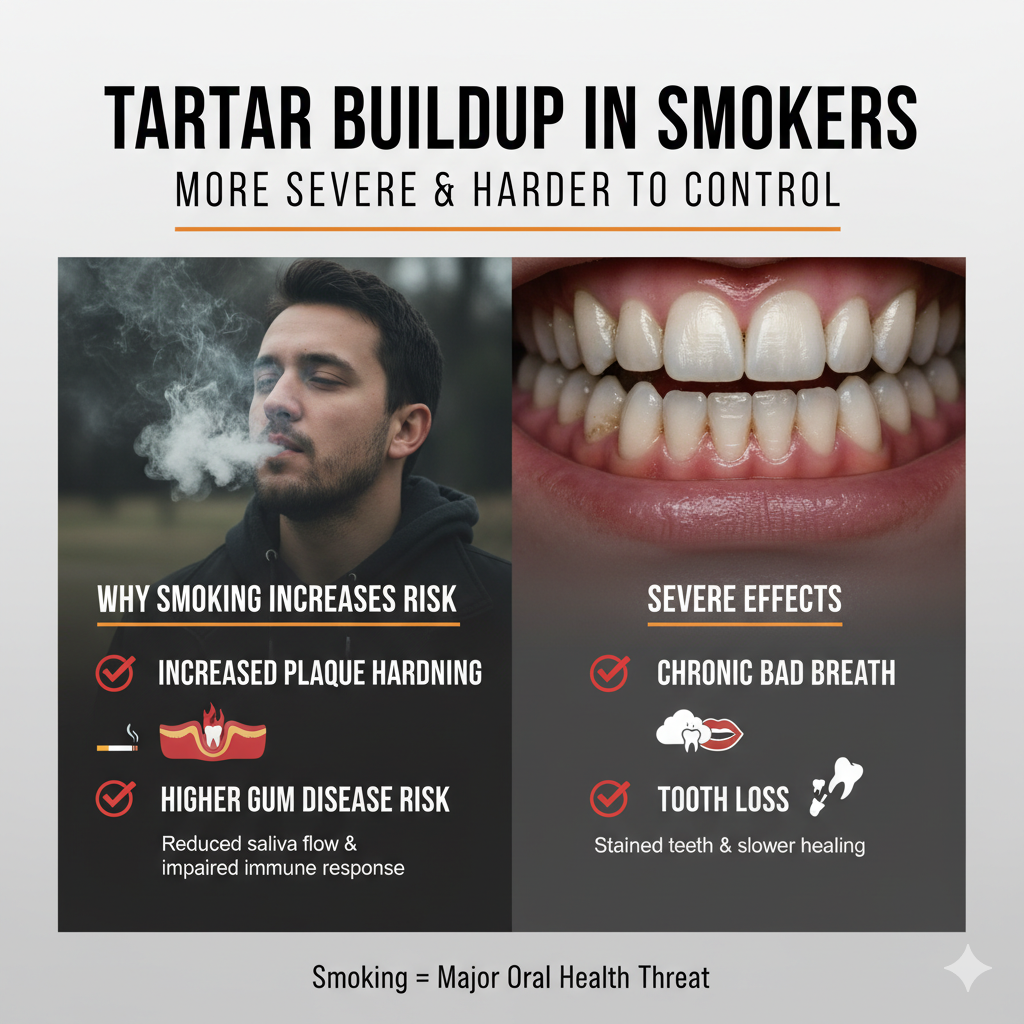
Tartar Buildup in Smokers: Tartar buildup is a common dental problem—but for smokers, it becomes significantly worse. If you smoke cigarettes or use tobacco products, your risk of hardened plaque (tartar) increases dramatically, leading to gum disease, bad breath, and even tooth loss.
Understanding why this happens—and how to stop it—can make a major difference in your oral health.
What Is Tartar and Why Is It Dangerous?
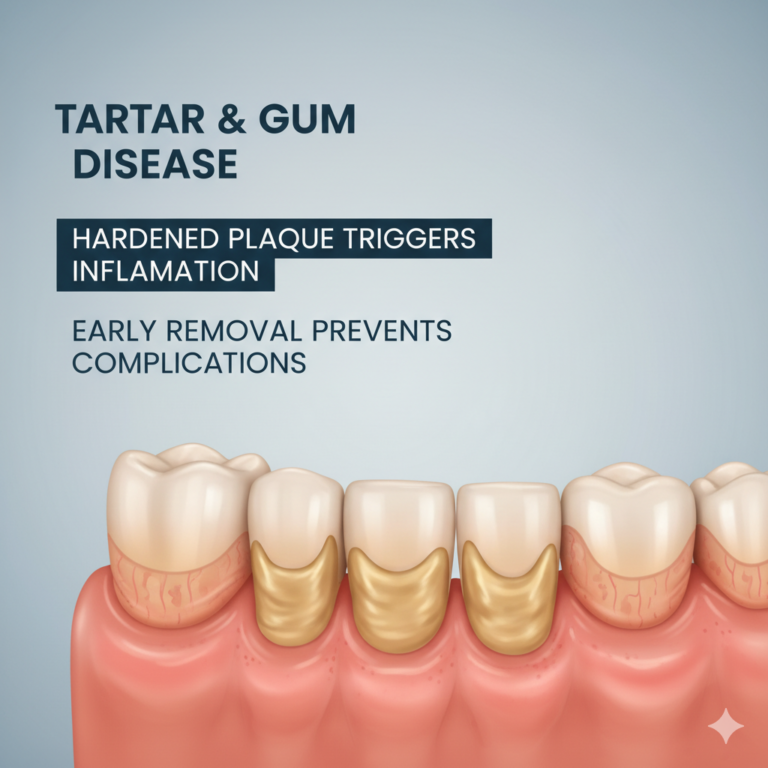
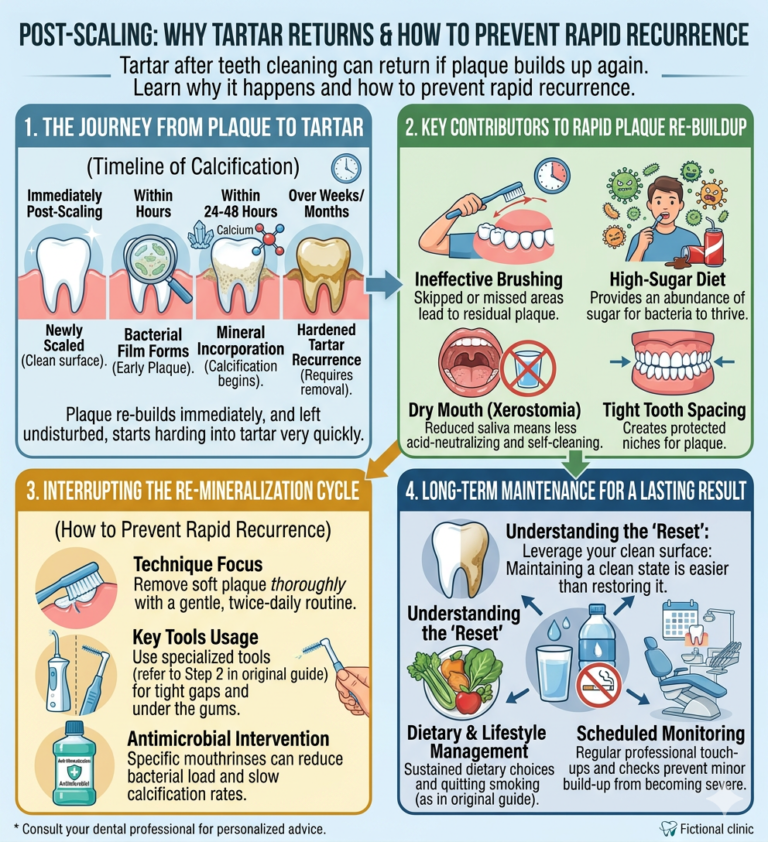
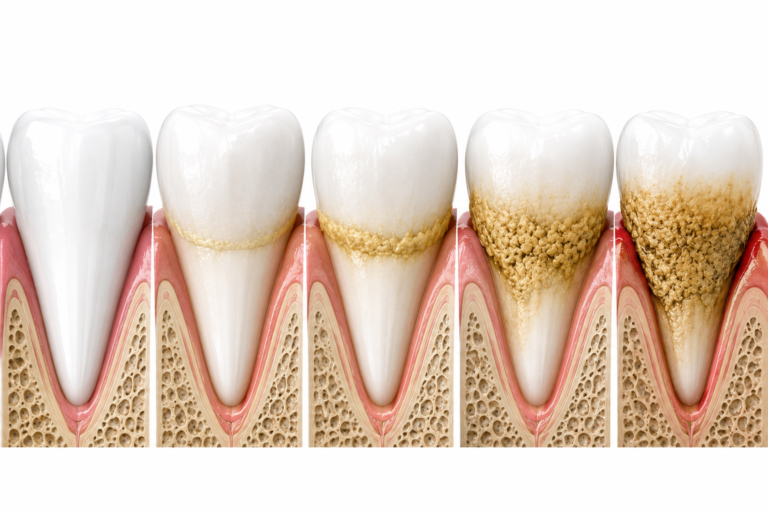
Tartar, also known as dental calculus, forms when plaque (a sticky film of bacteria) hardens on your teeth. Once it turns into tartar, it cannot be removed by brushing alone.
For smokers, tartar tends to:
- Build up faster
- Appear darker (yellow, brown, or even black)
- Stick more firmly to teeth and gums
This makes it not only a cosmetic issue but also a serious health concern.
Why Smokers Get More Tartar
Smoking changes your mouth environment in several harmful ways. These effects combine to accelerate tartar formation.
1. Reduced Saliva Flow
Saliva helps wash away food particles and bacteria. Smoking reduces saliva production, allowing plaque to accumulate quickly.
2. Increased Bacterial Growth
Tobacco creates an ideal environment for harmful bacteria to thrive. This speeds up plaque formation, which then hardens into tartar.
3. Weakened Immune Response
Smoking weakens your body’s ability to fight infections. This makes your gums more vulnerable to inflammation and tartar-related damage.
4. Nicotine Staining
Nicotine and tar in tobacco stain teeth, making tartar more visible and harder to clean.
Signs of Tartar Buildup in Smokers
If you smoke, watch for these warning signs:
- Yellow or brown deposits near the gumline
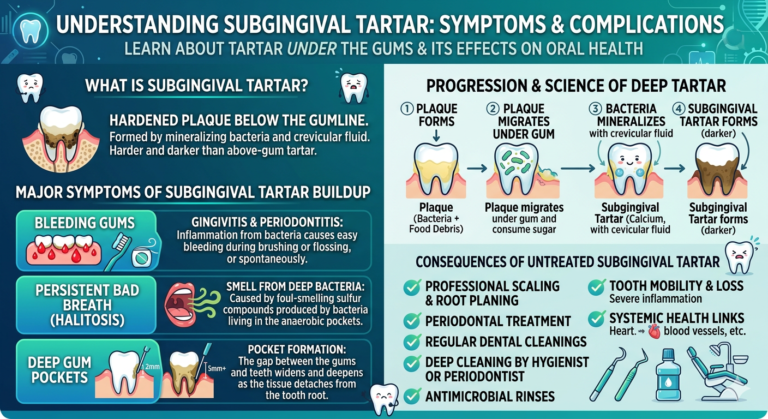
- Persistent bad breath (halitosis)
- Bleeding gums when brushing
- Gum recession (gums pulling away from teeth)
- Loose teeth in severe cases
These symptoms often appear earlier and progress faster in smokers compared to non-smokers.
🛒 Recommended Products to Reduce Tartar (Especially for Smokers)
Using the right tools can significantly slow down tartar buildup—especially if you smoke. Below are dentist-recommended categories with high-performing options.
🔌 Electric Toothbrush (Best for Plaque Removal) on Amazon

- Oral-B iO Series 2 Electric Toothbrush
- Philips Sonicare ProtectiveClean 4100
- Philips Sonicare 2100 Series Electric Toothbrush
Why they help:
- Remove more plaque before it hardens into tartar
- Reach difficult areas near the gumline
- Built-in timers ensure proper brushing duration
👉 Top picks include:
- Oral-B iO Series 2 Electric Toothbrush – great for deep cleaning and gum care
- Philips Sonicare ProtectiveClean 4100 – gentle but powerful sonic cleaning
- Philips Sonicare 2100 Series Electric Toothbrush – budget-friendly option
Health Risks Linked to Tartar in Smokers
Tartar is more than just buildup—it’s a trigger for serious oral diseases.
Gum Disease (Periodontitis)
Smokers are up to several times more likely to develop advanced gum disease. Tartar traps bacteria under the gums, leading to infection and bone loss.
Tooth Loss
Untreated tartar and gum disease can destroy the structures supporting your teeth.
Chronic Bad Breath
Bacteria trapped in tartar produce foul-smelling compounds that are difficult to eliminate.
Delayed Healing
Smokers experience slower healing after dental treatments, making tartar-related issues harder to manage.
How Dentists Treat Tartar in Smokers
Because tartar cannot be removed at home, professional treatment is required.
Routine Cleaning (Prophylaxis)
For mild cases, dentists remove tartar above the gumline using special tools.
Deep Cleaning (Scaling and Root Planing)
For smokers with advanced buildup, a deeper cleaning is needed to remove tartar below the gums and smooth tooth roots.
Maintenance Visits
Smokers are often advised to visit the dentist every 3–4 months instead of the standard 6 months.
How to Prevent Tartar Buildup if You Smoke
Even if you’re not ready to quit smoking yet, you can still reduce tartar buildup with proper care.
1. Brush More Effectively
Brush at least twice daily using proper technique. Focus on the gumline where tartar forms most.
2. Use an Electric Toothbrush
Electric toothbrushes remove more plaque than manual brushing, especially for smokers with heavy buildup.
3. Floss Daily
Flossing removes plaque between teeth—areas your toothbrush can’t reach.
4. Use Antibacterial Mouthwash
This helps reduce bacteria and slow plaque formation.
5. Stay Hydrated
Drinking water helps compensate for reduced saliva and washes away debris.
6. Consider Quitting Smoking
Quitting is the most effective way to improve your oral health and reduce tartar buildup long-term.
Tartar Buildup in Smokers: Can Smokers Fully Reverse Tartar Damage?
Tartar itself cannot be reversed at home—but its effects can be managed.
With professional cleaning and improved oral hygiene:
- Early gum inflammation can heal
- Further damage can be prevented
- Your smile can gradually improve
However, advanced gum disease may require ongoing treatment and cannot always be fully reversed.
Pro Tips for Smokers Who Want Healthier Teeth
- Schedule dental cleanings more frequently
- Use whitening toothpaste to reduce stains (but not tartar)
- Avoid sugary drinks that worsen plaque buildup
- Rinse your mouth after smoking
- Combine dental care with gradual smoking reduction
Small changes can lead to noticeable improvements over time.
Conclusion – Tartar Buildup in Smokers
Tartar buildup in smokers is faster, darker, and more dangerous than in non-smokers. The combination of reduced saliva, increased bacteria, and weakened immunity creates the perfect conditions for dental problems.
The good news? With consistent oral care, regular dental visits, and mindful habits, you can control tartar buildup and protect your teeth—even if you currently smoke.
If you want the biggest impact, though, reducing or quitting smoking remains the most powerful step toward a healthier mouth and a brighter smile.
FAQ – Tartar Buildup in Smokers
Does smoking directly cause tartar?
Smoking doesn’t directly create tartar, but it accelerates plaque buildup, which quickly hardens into tartar.
How often should smokers get dental cleanings?
Every 3–4 months is recommended for smokers, compared to every 6 months for non-smokers.
Can brushing remove tartar in smokers?
No. Once plaque hardens into tartar, only a dentist can remove it.
Is tartar worse in heavy smokers?
Yes. The more you smoke, the faster tartar builds up and the more severe the damage.