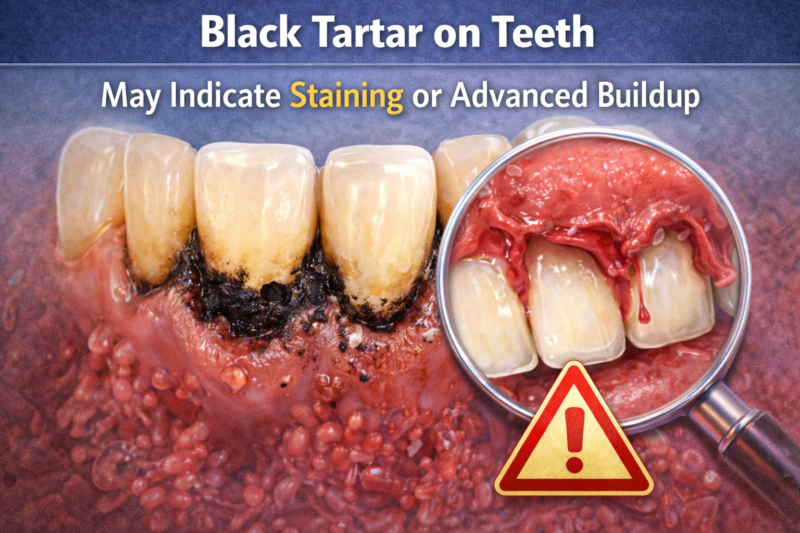
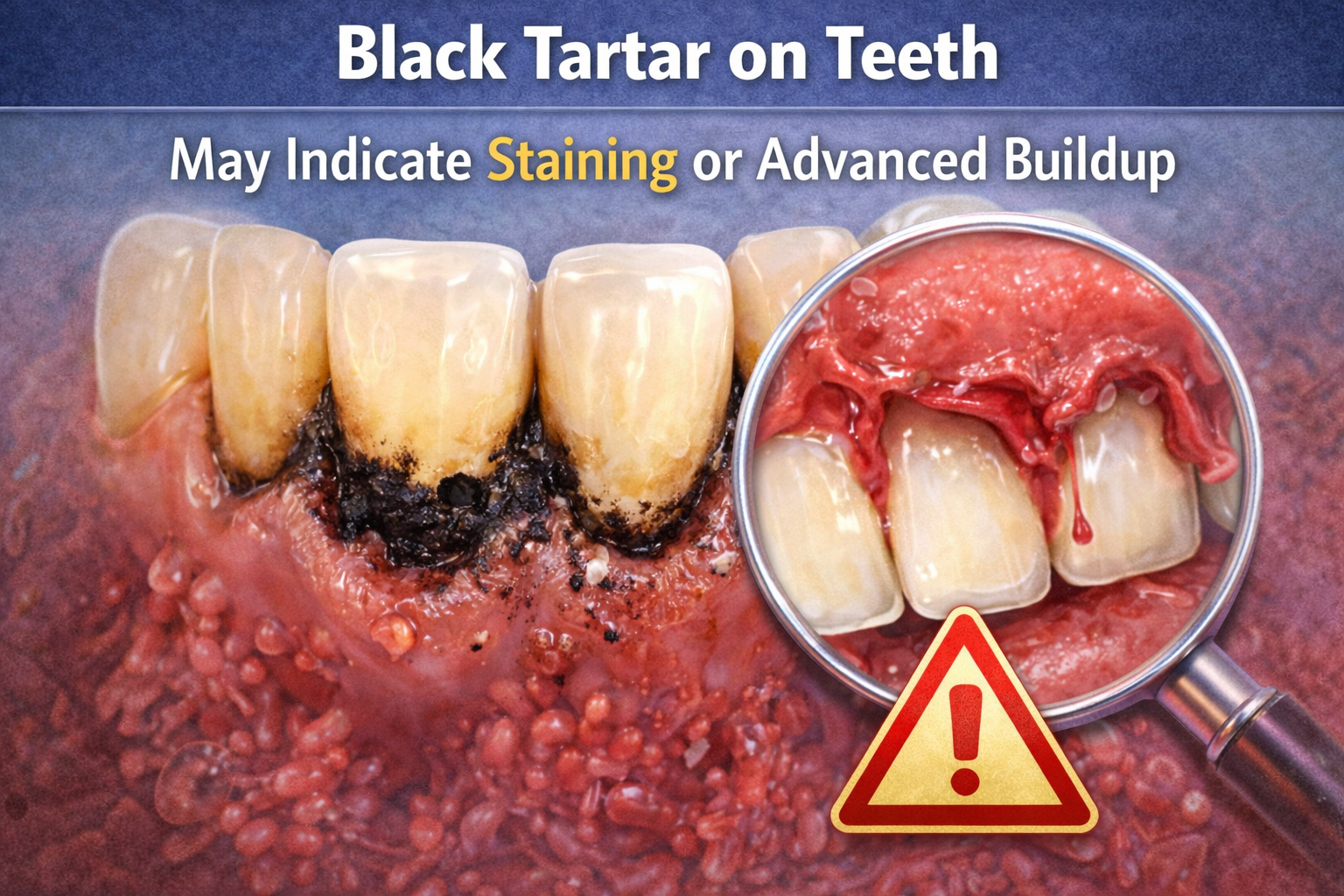
Black Tartar on Teeth can be alarming for patients who suddenly notice dark deposits near the gumline. Unlike common yellow or light brown calculus, this darker buildup often signals older, hardened tartar that has absorbed stains or developed beneath the gums. Understanding what black tartar on teeth means is essential for protecting long-term oral health.
Tartar, also known as dental calculus, forms when plaque hardens due to mineral deposits in saliva. Once it solidifies, it cannot be removed by brushing or flossing alone. Over time, this buildup can change color, especially if it develops below the gumline.
Why Does Tartar Turn Black?
Black tartar on teeth most commonly forms subgingivally, meaning beneath the gum tissue. In this environment, it can absorb pigments and undergo chemical changes that darken its appearance.
Common causes of black discoloration include:
- Blood pigment staining: During gum inflammation or bleeding, iron compounds from blood can bind to tartar and darken it.
- Smoking or tobacco use: Nicotine and tar leave dark stains that penetrate hardened calculus.
- Dark beverages: Coffee, tea, and red wine contribute to surface staining over time.
- Oxidation: Tartar exposed to saliva and bacteria can darken naturally as it ages.
Subgingival tartar often appears black because it mixes with inflammatory byproducts beneath the gums. This is why black tartar on teeth frequently indicates a more advanced stage of buildup.
Is Black Tartar Dangerous?
In many cases, black tartar is more than a cosmetic issue. It often signals underlying gum disease or chronic inflammation. When tartar accumulates below the gumline, it creates a rough surface that traps more bacteria. This can lead to:
- Persistent gum infection
- Deep periodontal pockets
- Gum recession
- Bone loss around teeth
- Increased tooth mobility
Left untreated, advanced periodontal disease may result in permanent damage. Because black tartar on teeth is commonly associated with subgingival accumulation, it should never be ignored.
Treatment Options
Black tartar cannot be removed with whitening toothpaste, rinses, or home remedies. Since it is hardened calculus, professional intervention is required.
Treatment typically includes:
- Professional scaling: Specialized instruments remove tartar above and below the gumline.
- Deep cleaning (scaling and root planing): Necessary if periodontal pockets are present.
- Ongoing periodontal maintenance: For patients with chronic gum disease.
Early treatment prevents further tissue destruction and reduces inflammation.
Prevention Strategies
Preventing black tartar on teeth involves consistent plaque control and routine dental visits. Recommended habits include:
- Brushing thoroughly twice daily with fluoride toothpaste
- Flossing daily to clean between teeth
- Limiting tobacco use
- Scheduling professional cleanings every six months (or more frequently if advised)
Good oral hygiene reduces plaque before it hardens into tartar.
 See How Dental Pro 7 Supports Gum & Plaque Control

If you notice black tartar on your teeth, schedule a dental evaluation immediately. Early professional care can prevent advanced gum disease and protect your overall oral health.
FAQ
1. Is black tartar worse than yellow tartar?
Black tartar often indicates deeper or older buildup beneath the gums, which may be associated with gum disease.
2. Can whitening remove black tartar?
No. Whitening products cannot remove hardened tartar. It must be professionally scaled away.
3. Does smoking cause black tartar?
Yes. Smoking contributes to staining and increases plaque accumulation, which can darken tartar over time.