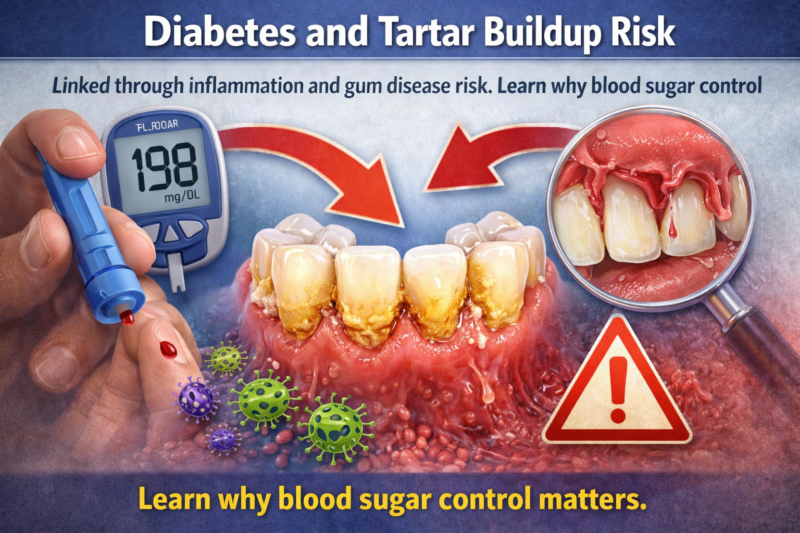
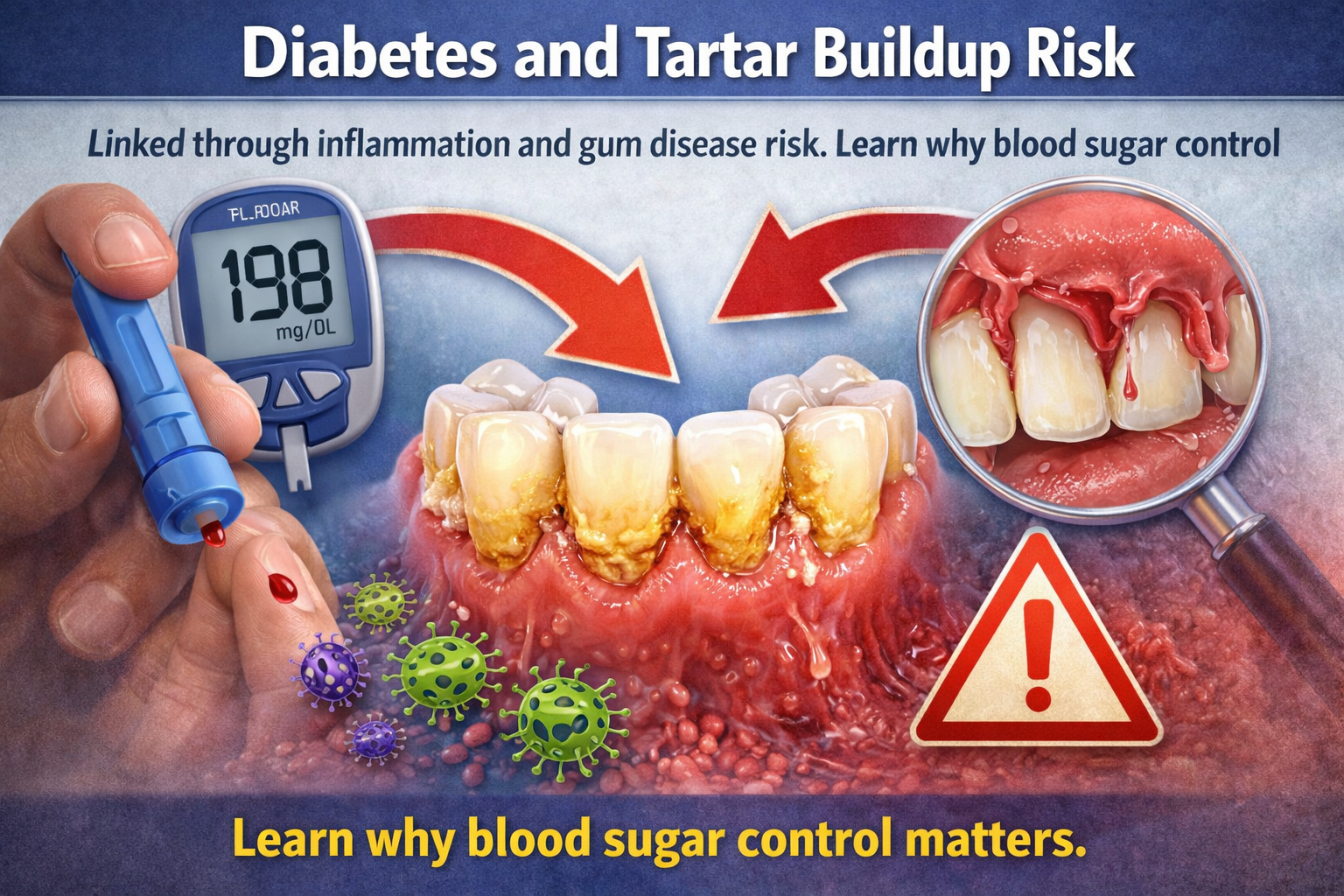
Diabetes and Tartar Buildup: Diabetes affects more than blood sugar levels. It influences multiple systems in the body, including oral health. The connection between diabetes and tartar buildup is well established, as elevated glucose levels can alter the oral environment, promote bacterial growth, and increase inflammation in gum tissues. Understanding this relationship is essential for preventing serious dental complications.
How Diabetes Changes the Oral Environment
When blood sugar levels remain high, excess glucose is present not only in the bloodstream but also in saliva. This creates an environment that encourages harmful oral bacteria to thrive.
Higher glucose levels can:
- Feed plaque-forming bacteria
- Accelerate plaque accumulation
- Increase gum inflammation
Plaque is a sticky film of bacteria that forms continuously on teeth. If not removed through proper brushing and flossing, it hardens into tartar (calculus). In people with diabetes, this process may occur more rapidly, increasing the risk of significant tartar buildup along the gumline.
Reduced Immune Response
Diabetes can weaken the body’s immune system, making it more difficult to fight infections. Gum tissues may:
- Heal more slowly
- Respond poorly to bacterial invasion
- Develop chronic inflammation
When tartar buildup is present, it creates a rough surface where more bacteria can attach. This worsens inflammation and may lead to a destructive cycle of infection and delayed healing. The impaired immune response in diabetes allows gum disease to progress more aggressively.
Increased Risk of Gum Disease
The relationship between diabetes and tartar buildup significantly raises the likelihood of periodontal disease. Individuals with poorly controlled diabetes are more prone to:
- Gingivitis (early gum inflammation)
- Periodontitis (advanced gum disease)
- Bone loss around teeth
- Tooth mobility or tooth loss
Subgingival tartar, which forms below the gumline, is especially dangerous. It is not visible and can only be removed by a dental professional. Left untreated, it contributes to progressive tissue and bone damage.
Warning Signs to Monitor
Patients managing diabetes should pay close attention to oral symptoms, including:
- Bleeding during brushing or flossing
- Persistent bad breath
- Gum recession
- Red, swollen, or tender gums
- Loosening teeth
Early detection and treatment can prevent complications and protect long-term oral health.
Importance of Blood Sugar Control
Maintaining stable glucose levels plays a critical role in reducing oral complications. Good glycemic control helps decrease:
- Inflammatory responses
- Harmful bacterial growth
- Severity and progression of gum disease
Research shows that gum disease can also make blood sugar harder to control, creating a two-way relationship. Managing both conditions together improves overall health outcomes.
Preventive Strategies
Effective management of diabetes and tartar buildup includes:
- Brushing thoroughly twice daily with fluoride toothpaste
- Daily flossing to remove plaque between teeth
- Professional dental cleanings every 3–6 months
- Routine medical monitoring of blood glucose
An integrated approach between medical and dental professionals ensures better protection against complications.
🔵 See How Dental Pro 7 Supports Gum & Plaque Control
If you have diabetes and notice tartar buildup or gum symptoms, schedule a dental evaluation promptly. Coordinated care between your physician and dental professional helps protect both your oral health and overall well-being.
FAQ – Diabetes and Tartar Buildup
1. Does diabetes cause tartar directly?
Diabetes does not directly create tartar, but it increases plaque formation and inflammation, which promote tartar buildup.
2. Should diabetics get more frequent cleanings?
In many cases, yes. More frequent professional cleanings help reduce periodontal risk.
3. Can gum disease affect blood sugar?
Yes. Chronic gum inflammation can make blood glucose levels more difficult to control.