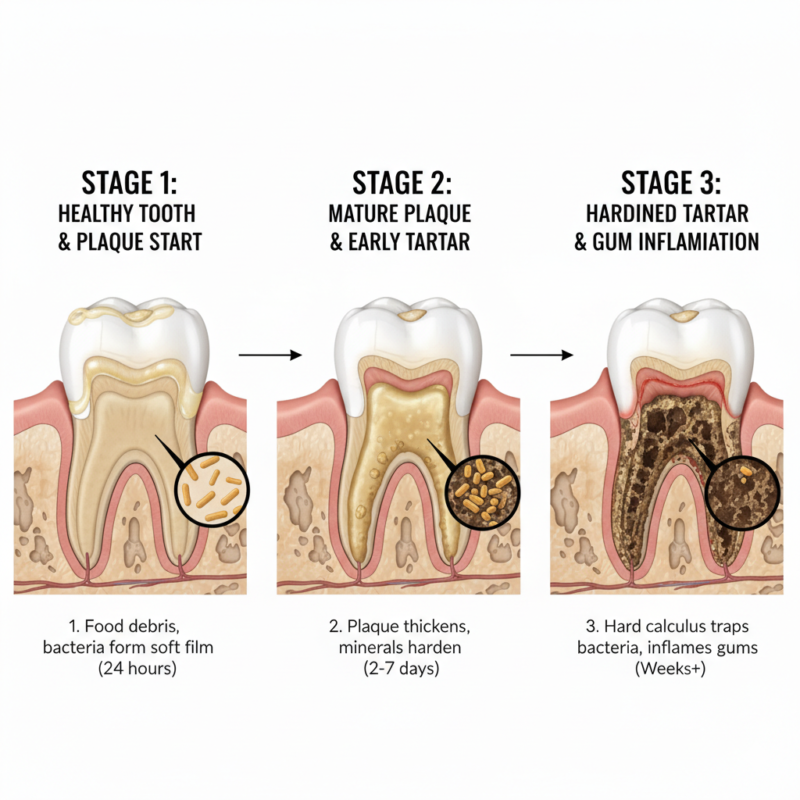
How fast does tartar form on teeth? Many people assume it takes weeks. In reality, the process can begin much faster.
Tartar starts as plaque. Plaque forms within hours after brushing. If it is not removed, it can begin hardening in as little as 24 to 72 hours.
That means the window for prevention is short.
Understanding the plaque to tartar process helps you act before buildup becomes difficult to remove.
👉See how Dental Pro 7 supports long-term tartar prevention
The Plaque to Tartar Process
The timeline begins immediately after cleaning.
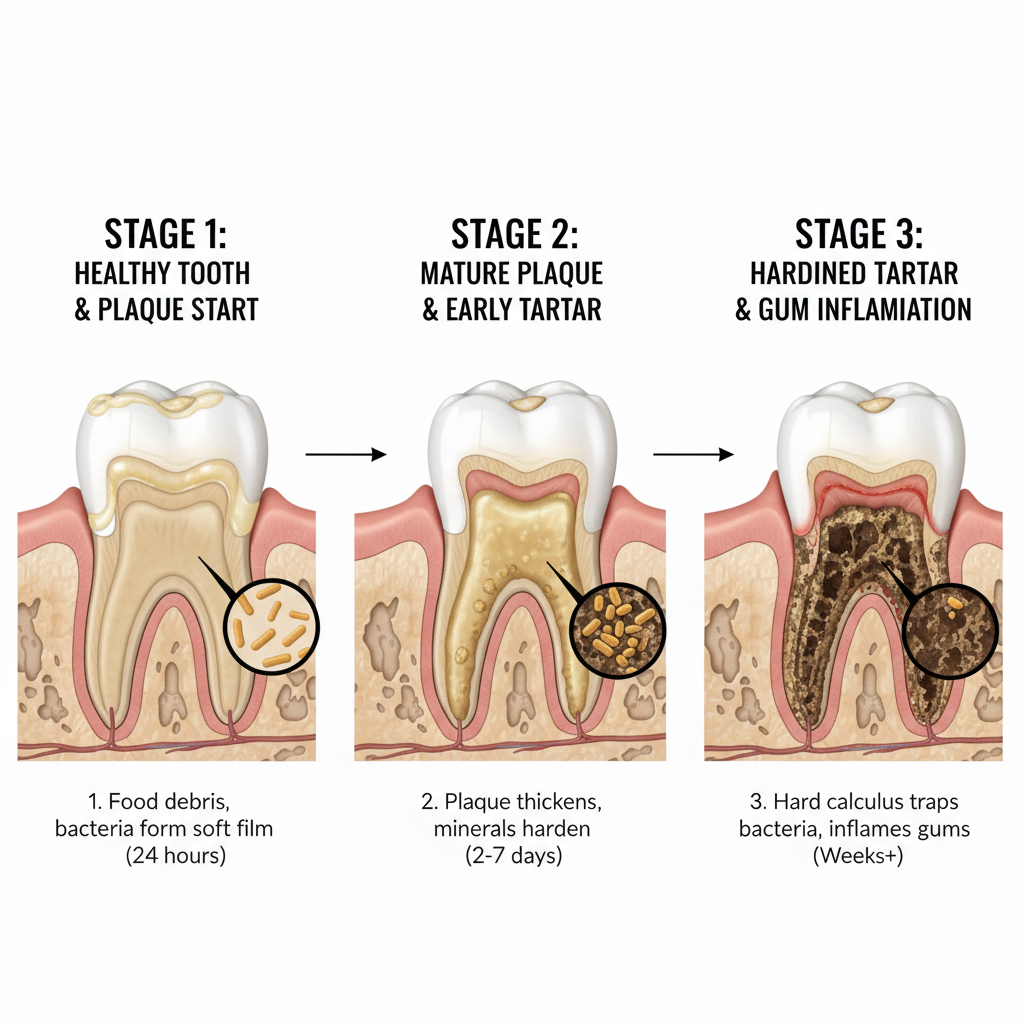
Stage 1: Plaque Formation (0–24 Hours)
After brushing, a thin protein film forms on teeth. Bacteria attach to this film and begin multiplying.
Within hours:
bacteria feed on food particles
acids are produced
biofilm thickens
This soft layer is plaque.
At this stage, brushing and flossing easily remove it.
Stage 2: Early Mineralization (24–72 Hours)
If plaque remains, minerals from saliva begin binding to it.
Calcium and phosphate combine with bacteria and harden the structure.
This early hardening phase can start within one to three days.
The process depends on:
saliva composition
oral hygiene habits
diet
bacterial levels
Some people experience faster mineralization than others.
💡 You can also explore similar dental health supplements and oral care products on Amazon.
Stage 3: Fully Hardened Tartar (Several Days to Weeks)
Once mineralization progresses, plaque becomes tartar.
Tartar:
bonds tightly to enamel
resists brushing
creates a rough surface
traps more plaque
At this stage, professional scaling is required.
The longer tartar remains, the thicker it becomes.
Why Tartar Forms Faster in Some People
Not everyone develops tartar at the same speed.
Risk factors include:
high calcium in saliva
dry mouth
crowded teeth
inconsistent flossing
frequent snacking
smoking
People with high mineral saliva often notice rapid buildup behind lower front teeth.
These areas are close to salivary glands.
If you see buildup returning quickly after cleaning, you may need shorter dental intervals.
Common Areas Where Tartar Forms First
Tartar tends to develop in predictable locations:
behind lower front teeth
along the gumline
between crowded teeth
near salivary duct openings
These areas collect plaque easily.
Because saliva pools there, mineralization accelerates.
Targeting these zones during brushing reduces risk significantly.
How Diet Affects Tartar Formation
Diet influences both plaque and mineralization.
Sugary and starchy foods:
increase bacterial activity
raise acid production
accelerate plaque growth
Frequent snacking allows plaque to remain active longer.
Additionally, dehydration thickens saliva, making mineral deposits more likely.
Drinking water regularly helps rinse food debris and maintain saliva balance.
How to Interrupt the Tartar Timeline
Because tartar can begin forming within 24–72 hours, daily consistency matters.
Follow these steps:
1. Brush Twice Daily
Use proper technique and angle bristles toward the gumline.
2. Floss Every Day
Interdental plaque mineralizes quickly.
3. Avoid Skipping Nights
Overnight plaque growth accelerates mineralization.
4. Stay Hydrated
Healthy saliva flow reduces mineral concentration buildup.
5. Schedule Professional Cleanings
Even with good habits, some plaque hardens.
Regular scaling removes early deposits before they thicken.
What Happens If You Delay Cleaning?
If plaque hardens into tartar and remains:
gum inflammation increases
bleeding becomes frequent
bad breath develops
gum pockets deepen
bone support may decline
Because tartar creates a rough surface, new plaque sticks more easily.
This creates a cycle of faster buildup.
Early removal prevents this cycle.
Can Tartar Ever Stop Forming Completely?
No one can eliminate plaque formation entirely. It is a natural bacterial process.
However, you can:
slow mineralization
reduce bacterial load
minimize hardened deposits
maintain smooth enamel surfaces
Consistency lowers overall accumulation speed.
The key is not perfection, but interruption.
How Often Should You Get a Cleaning?
Most people benefit from professional cleaning every six months.
However, if tartar forms quickly, your dentist may recommend every three to four months.
Personalized intervals protect gum health and prevent deep deposits.
Early scaling is easier and more comfortable.
Key Takeaway
How fast does tartar form? It can begin hardening within 24 to 72 hours if plaque is not removed.
That short window makes daily brushing and flossing essential.
Tartar is easier to prevent than remove.
Disrupt plaque consistently, and you reduce mineral buildup before it becomes a problem.
Tartar begins forming within days if plaque is left undisturbed.
Daily plaque disruption helps interrupt mineralization early.
👉See how Dental Pro 7 supports long-term tartar prevention
FAQ – How Fast Does Tartar Form on Teeth?
How long does tartar take to form?
It can begin hardening within 24–72 hours.
Can brushing remove tartar once it forms?
No. Only professional scaling removes hardened tartar.
Why does tartar return quickly?
High mineral saliva and missed plaque areas speed formation.
Is tartar formation preventable?
It cannot be eliminated entirely, but it can be significantly reduced.