
Dental Pro 7 Ingredients Breakdown: Probiotic Strains, Oral Health, and Safety
Dental Pro 7 Ingredients Breakdown: Last Updated, October 27, 2026 | Min Read: 8 minutes
Dental Pro 7 is marketed as a botanical oral care product. Understanding its ingredients can help readers evaluate its intended use, potential benefits, and safety considerations.
The product information discusses several probiotic strains associated with oral microbial research. However, evidence for individual strains does not automatically establish the effectiveness of the complete formula.
This guide examines the probiotic strains described in the source material. It also explains how oral probiotics relate to plaque control, tartar buildup, and tooth sensitivity.
What Is the Dental Pro 7 Ingredients Breakdown?
The Dental Pro 7 ingredients breakdown focuses on the probiotic strains discussed in the product’s available descriptions. These include Lactobacillus reuteri, Lactobacillus paracasei, Bifidobacterium lactis, and BLIS K-12.
Each strain has distinct characteristics. Researchers have investigated some of these microorganisms for their potential roles in oral or other microbial environments.
The exact strain identity, viable count, formulation, and storage conditions can influence a probiotic product’s properties. Readers should check the current product label for verified details.
Explore the Dental Pro 7 Probiotic Formula
Understanding the ingredients can help you make a more informed decision about your oral care routine. Dental Pro 7 combines selected probiotic strains designed to support oral bacterial balance and everyday gum care.
If you are exploring probiotic-based oral care, reviewing the formulation and individual strains can help you understand how this approach fits alongside regular brushing and flossing.
👉 Explore Dental Pro 7 Today
Which Probiotic Strains Are Discussed in the Formula?
The source material identifies four probiotic strains. Research on these organisms varies, and the evidence depends on the specific strain and intended use.
1. Lactobacillus reuteri
Lactobacillus reuteri has been investigated in oral health research. Some studies have explored particular strains in relation to gum health and oral microbial balance.
These findings do not mean that every L. reuteri product produces the same effects. The results of one clinical study cannot automatically be applied to a different strain or complete formulation.
2. Lactobacillus paracasei
Lactobacillus paracasei is a bacterial species studied in probiotic research. Its properties depend on the strain and the formulation in which it is used.
Research into microbial interactions may help explain its potential applications. More evidence is needed to establish specific benefits for a particular oral care product.
3. Bifidobacterium lactis
Bifidobacterium lactis is commonly discussed in probiotic research, particularly in relation to digestive health. Researchers have also examined selected Bifidobacterium strains in other biological settings.
Evidence from digestive health studies does not automatically establish benefits for the oral microbiome. Product-specific research is important when assessing oral health claims.
4. BLIS K-12
BLIS K-12 is a named oral probiotic strain studied in relation to the mouth and throat. Research has explored its potential effects on selected microorganisms in these environments.
The results depend on the outcome measured and the population studied. Its inclusion in a formula does not prove that the finished product prevents oral disease or resolves gum symptoms.
Explore Dental Pro 7 Before Choosing an Oral Care Routine
Understanding probiotic ingredients is one step toward making an informed decision about oral care. Compare the product’s current ingredient list, directions, and available evidence before choosing a routine.
Explore the Dental Pro 7 ingredients guide for additional information about the product’s ingredient profile. Use this resource alongside independent evidence and professional dental guidance.
Dental Pro 7 should not be considered a proven treatment for gum disease, tooth sensitivity, or hardened tartar. Daily brushing, inter-dental cleaning, and appropriate professional care remain essential.
How Probiotics Relate to the Oral Microbiome
The mouth contains many types of microorganisms. Some contribute to a healthy oral environment, while others can contribute to dental plaque and gum inflammation under certain conditions.
Oral probiotics are studied for their potential interactions with existing microorganisms. Researchers investigate whether particular strains can influence microbial activity or compete for space and nutrients.
However, the effects depend on the strain, dose, formulation, and individual. A multi-strain formula is not automatically more effective than a single-strain product.
Evidence from studies of individual probiotics also cannot confirm that Dental Pro 7 produces a particular clinical outcome. Reliable conclusions require research on the actual formulation and the benefits being claimed.
Probiotics, Plaque Control, and Tartar Buildup
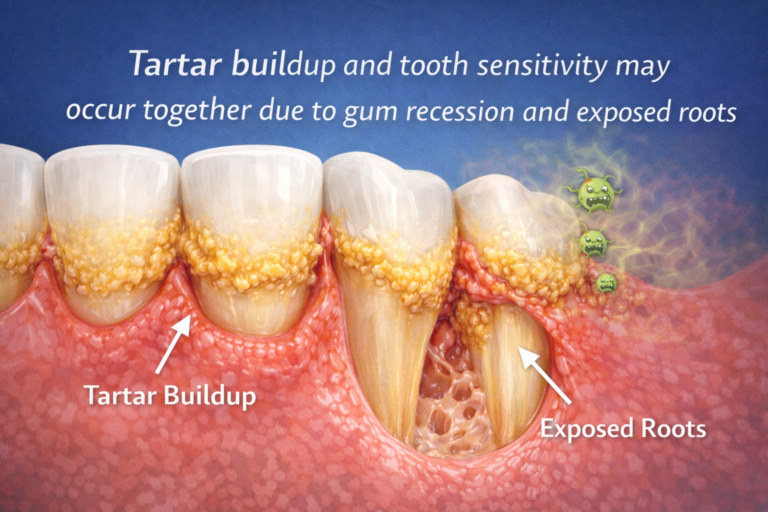
Dental plaque is a soft biofilm that develops continuously on tooth surfaces. Brushing with fluoride toothpaste and cleaning between teeth help remove plaque before it hardens.
When plaque remains on teeth, minerals in saliva can gradually turn it into tartar, also called dental calculus. Once tartar has hardened, ordinary brushing cannot reliably remove it.
Oral probiotics are being studied for possible roles in oral microbial balance. However, they should not be presented as a substitute for mechanical plaque removal or professional tartar cleaning.
Read our guide to Dental Pro 7 without SLS, perfumes, or fillers to learn more about formulation considerations when comparing oral care products. Ingredient preferences should complement, rather than replace, established plaque-control practices.
Can Probiotics Help with Tooth Sensitivity?
Tooth sensitivity can occur when dentin becomes exposed or tooth enamel is worn. Gum recession, tooth decay, cracks, and other dental conditions can also cause discomfort.
Research into oral probiotics does not establish that Dental Pro 7 treats tooth sensitivity. A dental professional can assess the underlying cause and recommend appropriate care.
If sensitivity occurs alongside rough deposits or gum changes, a dental examination can help determine whether tartar, gum recession, or another condition is involved.
How Dental Pro 7 Fits into Everyday Oral Hygiene
Probiotic products may interest people exploring different approaches to oral care. Their role should be considered alongside well-established hygiene practices.
A practical routine includes:
- Brush twice daily with fluoride toothpaste.
- Clean between teeth every day with floss or a suitable inter-dental cleaner.
- Drink water regularly to support normal saliva function.
- Limit frequent sugary snacks and drinks.
- Arrange regular dental examinations and professional cleanings.
These habits help control plaque and support gum health. Product selection should be based on individual needs, reliable information, and professional advice when necessary.

Dental Pro 7 Without Artificial Chemicals: Understanding the Claims
Some consumers prefer products marketed around botanical ingredients or formulations that exclude selected additives. These preferences may influence how they compare oral care products.
However, terms such as “natural” and “chemical-free” do not establish that a product is safer or more effective. Safety depends on the complete formulation, concentration, intended use, and individual circumstances.
Our guide to Dental Pro 7 without artificial chemicals provides further context about the product’s positioning. Review ingredient descriptions carefully and distinguish marketing language from independently supported evidence.
Safety and Practical Considerations
Probiotic products can differ in their strains, concentrations, and intended uses. Individual suitability may also vary.
Before using a new product, consider the following:
- Read the current product label and follow its directions.
- Check the ingredient list for substances that may cause a reaction.
- Ask a healthcare professional about suitability if you have an underlying medical condition.
- Seek advice before using a new probiotic product if you are immunocompromised or have significant health concerns.
- Stop using the product and seek advice if you experience an unexpected reaction.
People with persistent gum bleeding, swelling, pain, or tooth sensitivity should seek dental assessment rather than relying on a probiotic product alone.
For a more detailed discussion of potential risks and precautions, read the Dental Pro 7 side effects and safety guide. It provides additional information to consider when reviewing product suitability.
Comparing Dental Pro 7 Prices and Product Options
Price is one factor to consider when comparing oral care products. Buyers may also want to check package size, cost per unit, shipping, and the product’s stated directions.
Comparing these details helps readers understand the overall cost of a product. Price alone does not establish its safety, quality, or clinical effectiveness.
See the Dental Pro 7 price comparison guide for additional purchasing information. Confirm current prices and terms before placing an order.
Frequently Asked Questions
What is the Dental Pro 7 ingredients breakdown?
It is an overview of the ingredients discussed in product information, including four probiotic strains: Lactobacillus reuteri, Lactobacillus paracasei, Bifidobacterium lactis, and BLIS K-12.
Do all probiotic strains have the same effects?
No. Probiotic effects depend on the specific strain, formulation, dose, and intended outcome. Findings for one strain do not automatically apply to another.
Can oral probiotics replace brushing and flossing?
No. Brushing with fluoride toothpaste and cleaning between teeth remain central to daily oral hygiene. Probiotic products should not replace these practices.
Can Dental Pro 7 remove hardened tartar?
There is insufficient evidence here to establish that Dental Pro 7 removes hardened tartar. Established deposits generally require professional cleaning by a dentist or dental hygienist.
Can Dental Pro 7 treat tooth sensitivity?
This article does not establish that Dental Pro 7 treats tooth sensitivity. A dentist can assess possible causes, including exposed dentin, gum recession, tooth decay, and enamel wear.
Are probiotic oral care products suitable for everyone?
Suitability varies by product and individual. People with significant medical conditions, immune system concerns, or known ingredient sensitivities should consult an appropriate healthcare professional.
Where can I find more information about Dental Pro 7?
Review the product’s current label and official product information. You can also consult the ingredient, safety, and pricing guides linked in this article.
Final Thoughts
Understanding probiotic strains can help readers evaluate oral care products more carefully. However, research on individual microorganisms does not automatically establish the benefits of a complete formula.
For long-term oral health, focus on daily plaque removal and routine dental care. Probiotic products may be considered according to their instructions and available evidence, but they should not replace professional advice or treatment.
Hardened tartar requires professional removal. Persistent tooth sensitivity, bleeding gums, or swelling should be assessed by a dental professional.
References
- Centers for Disease Control and Prevention (CDC): About Gum Disease
- American Dental Association (ADA): Oral Health Topics
- National Institute of Dental and Craniofacial Research (NIDCR): Oral Hygiene
About the Author
The Dental Pro 7 Ingredients Editorial Team publishes educational content about oral care ingredients, plaque control, gum health, and preventive dental practices. The goal is to help readers understand product information and make informed decisions.
Disclaimer: This article is for educational purposes only. It does not provide medical or dental advice and does not establish that Dental Pro 7 treats, cures, or prevents disease. Consult a qualified dental professional for diagnosis and treatment.
Affiliate disclosure: The publisher may receive compensation from qualifying purchases through affiliate links. Product descriptions should be evaluated alongside independent evidence and professional guidance.
Ready to Explore the Dental Pro 7 Formula?
Discover the probiotic strains, formulation details, and current product options to decide whether this approach fits your oral care routine.




3 Comments