Saliva Mineral Content and Tartar: Not all tartar buildup is caused by poor hygiene.
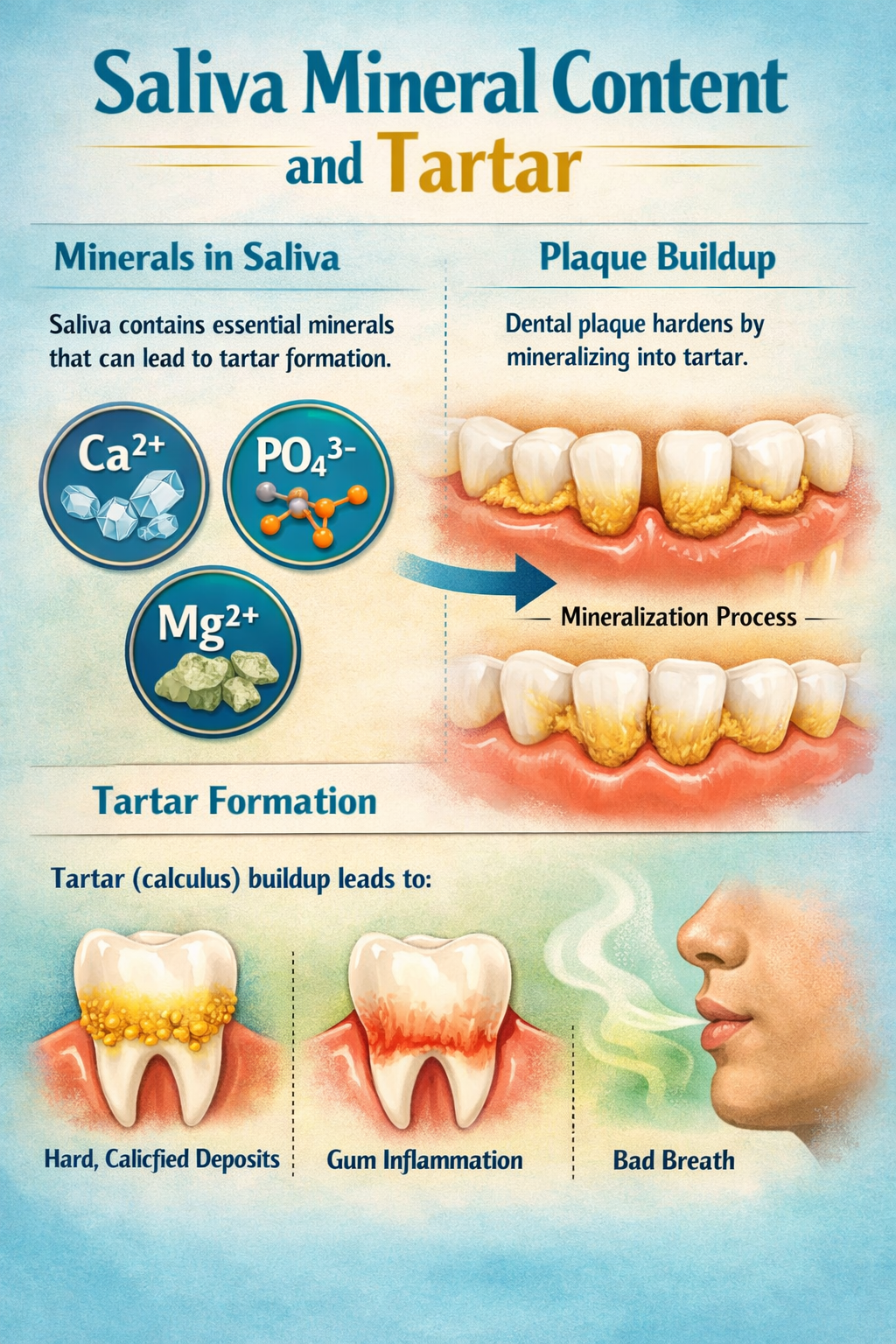
Saliva mineral content and tartar formation are biologically connected.
Individuals with higher calcium and phosphate levels may experience faster plaque hardening.
How Mineralization Works
Plaque is soft and sticky.
When exposed to mineral-rich saliva, calcium deposits accumulate within it.
This process transforms soft plaque into hardened calculus.
Why Some People Build Tartar Faster
Genetic and metabolic factors influence saliva composition.
High mineral concentration accelerates:
Plaque hardening
Calculus thickness
Recurrent buildup
This explains why some individuals experience rapid accumulation despite consistent brushing.
High-Risk Areas
Mineral-rich saliva pools:
Behind lower front teeth
Near upper molars
These locations show heavy buildup first.
Can Saliva Composition Be Changed?
Saliva mineral levels are largely biological.
However, tartar impact can be managed through:
Consistent plaque disruption
Tartar-control toothpaste
Regular professional cleanings
Management focuses on prevention.
Importance of Professional Monitoring
Frequent evaluation helps:
Detect early mineralization
Adjust cleaning intervals
Prevent gum inflammation
Biology may influence risk, but maintenance controls damage.
 Discover how Dental Pro 7 supports cleaner tooth surfaces
If you experience rapid tartar buildup despite good hygiene, consult your dentist about personalized maintenance scheduling.
FAQ – Saliva Mineral Content and Tartar
1. Is high mineral saliva unhealthy?
Not necessarily, but it increases tartar risk.
2. Can toothpaste reduce mineralization?
Some tartar-control formulas slow the process.
3. Does diet change saliva minerals?
Diet influences saliva indirectly but genetics play a strong role.