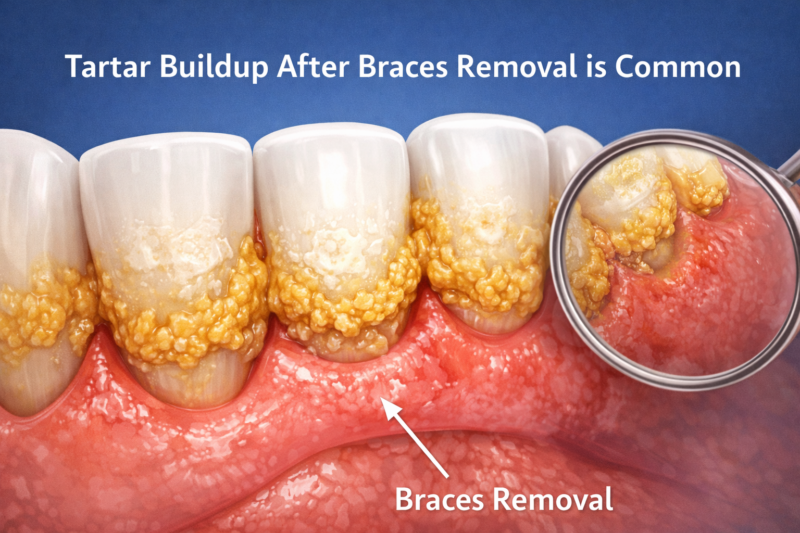
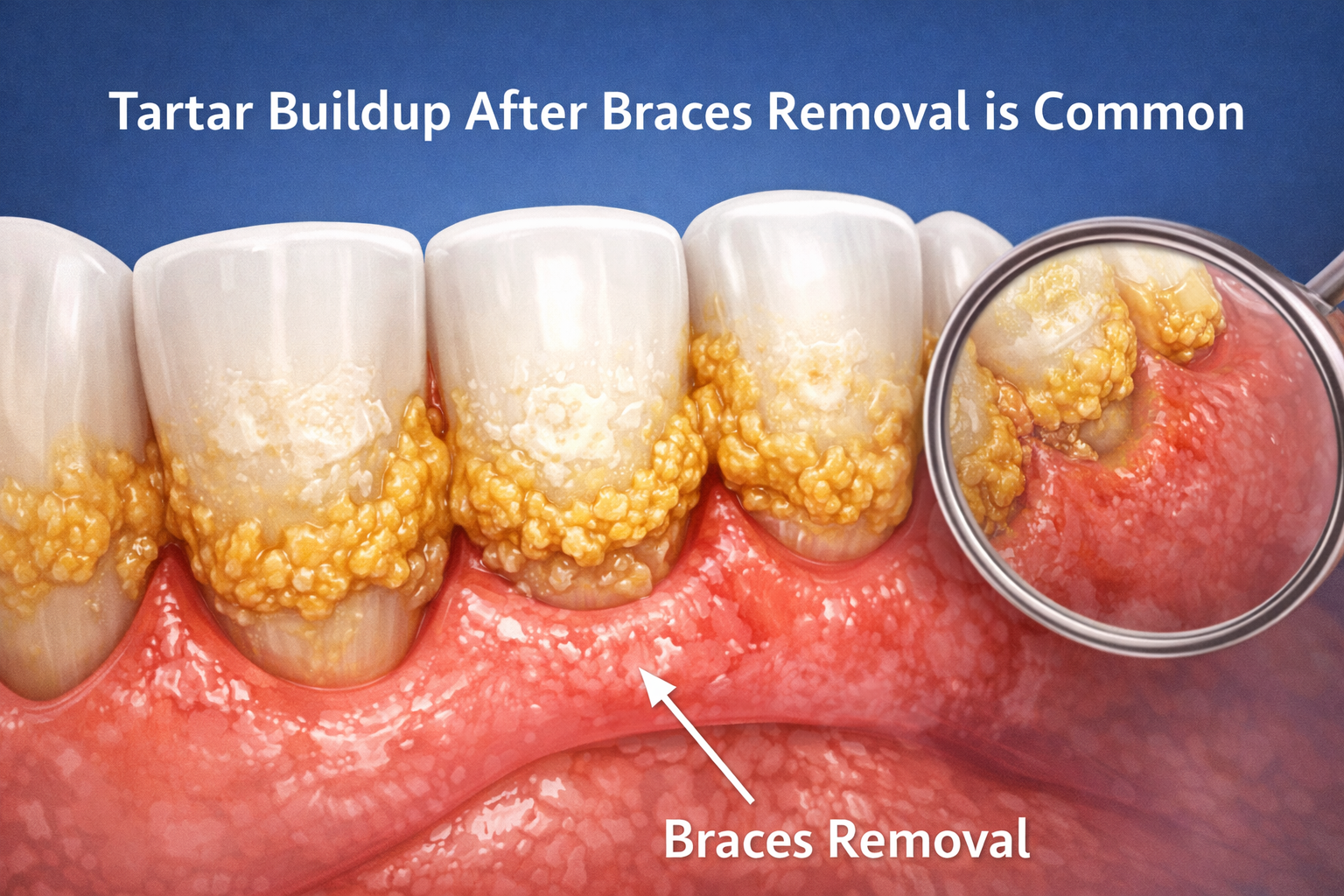
Tartar Buildup After Braces Removal: Many patients feel excited when their orthodontic treatment ends — but some are surprised to notice tartar buildup after braces removal. This is a common and manageable issue that occurs because braces create plaque-retentive areas that can be difficult to clean thoroughly.
During orthodontic treatment, brackets, wires, and bands make brushing and flossing more challenging. Even with excellent effort, plaque can accumulate around brackets and near the gumline. Once plaque hardens, tartar buildup after braces removal may become visible — especially along the lower front teeth and around previously bonded areas.
The good news? With proper care, this buildup can be safely removed and gum health can be restored.
Why Tartar Buildup After Braces Removal Happens
Several contributing factors increase the risk of tartar accumulation following orthodontic treatment:
1. Residual Bonding Material
After braces are removed, small traces of adhesive may remain on the enamel. These microscopic rough spots attract plaque and encourage tartar formation.
2. Inflamed Gums
Braces can irritate gum tissue, leading to mild inflammation. Swollen gums create deeper pockets where plaque can accumulate, increasing the likelihood of tartar buildup after braces removal.
3. Inconsistent Cleaning During Treatment
Even highly motivated patients may struggle to clean around brackets and wires effectively. Areas that were harder to reach during treatment often become sites of tartar formation.
4. Plaque Retention Around Attachments
Orthodontic appliances create small ledges and crevices that trap bacteria. Once the braces are removed, any remaining hardened deposits become more noticeable.
Signs of Tartar Buildup After Braces Removal
You may notice:
- Yellow or brown deposits near the gumline
- Rough areas on previously bonded teeth
- Bleeding during brushing
- Mild gum tenderness
- Persistent bad breath
If these symptoms appear, tartar buildup after braces removal is likely present and should be professionally addressed.
Post-Braces Care: Restoring a Healthy Smile
After orthodontic treatment, professional dental care plays an important role in protecting your newly aligned teeth.
1. Professional Scaling
A dental hygienist removes hardened tartar safely using specialized instruments.
2. Thorough Polishing
Polishing smooths enamel surfaces and removes residual bonding material. This step helps reduce plaque retention.
3. Fluoride Treatment
Fluoride strengthens enamel and helps protect areas that may have been weakened during orthodontic treatment.
4. Hygiene Reinforcement
Your dental team may review brushing and flossing techniques to prevent future tartar buildup after braces removal.
Early professional care restores smooth enamel surfaces and promotes gum recovery.
How to Prevent Future Tartar Buildup
Once your braces are removed, maintaining daily oral hygiene becomes much easier — but consistency remains essential.
Follow these tips:
- Brush twice daily with fluoride toothpaste
- Use floss or interdental cleaners
- Consider an electric toothbrush for improved plaque removal
- Schedule routine cleanings every six months
- Wear retainers as directed and clean them properly
With proper maintenance, tartar buildup after braces removal can be prevented long term.
 See How Dental Pro 7 Supports Gum & Plaque Control

When to Schedule a Cleaning
If you have recently completed orthodontic treatment, it’s wise to schedule a professional cleaning shortly after braces removal. This ensures any tartar buildup after braces removal is eliminated before it affects gum health or stains your teeth.
Protecting your investment in orthodontic treatment begins with maintaining clean, healthy enamel.
FAQ
1. Is tartar buildup normal after braces removal?
Yes, it is common due to plaque retention during treatment, but it is easily treatable.
2. Can polishing remove tartar?
Polishing smooths the enamel, but scaling is required first to remove hardened tartar.
3. Will my gums recover after braces?
Yes. With proper hygiene and professional care, gums typically return to a healthy state.
Addressing tartar buildup after braces removal promptly helps preserve your straight smile and ensures long-term oral health success.