Tartar Buildup Under Gums: Causes, Risks, and Treatment
Tartar buildup under gums: Last Updated: September 22, 2026 | 7 min read
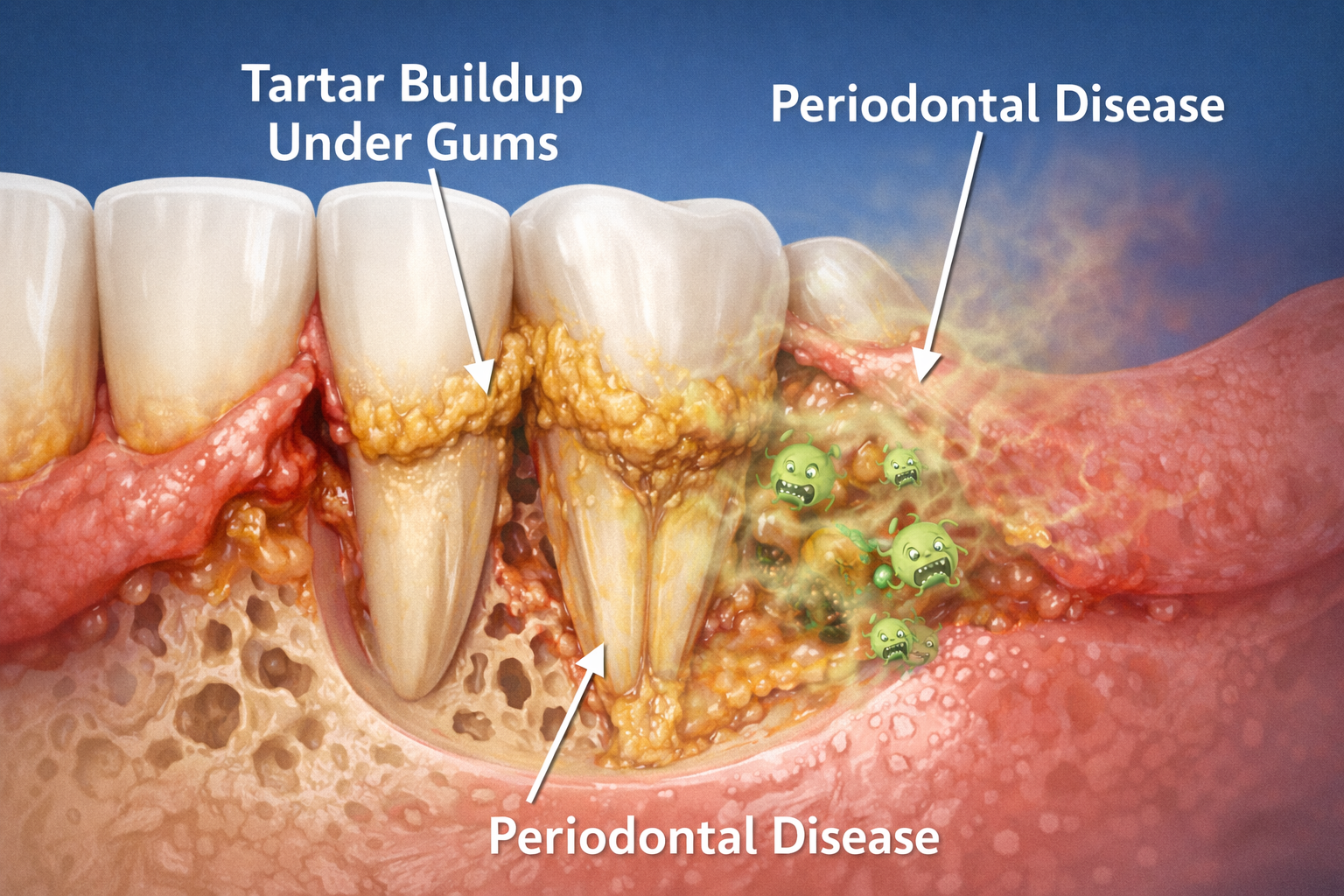
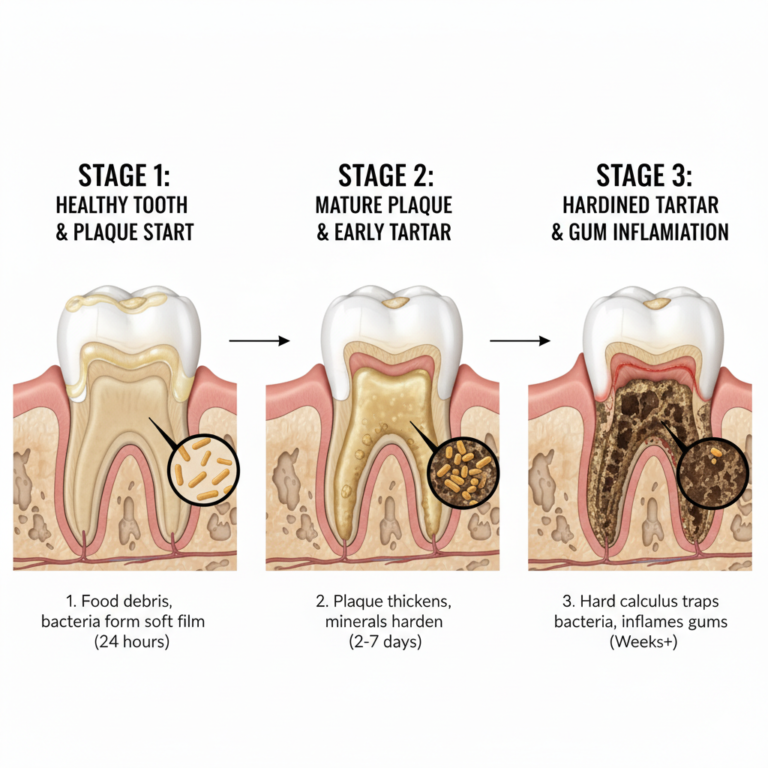
Tartar buildup under gums, also called submarginal calculus, can develop below the gum line. Because these deposits are difficult to see, people may notice gum problems before they realize tartar is present.
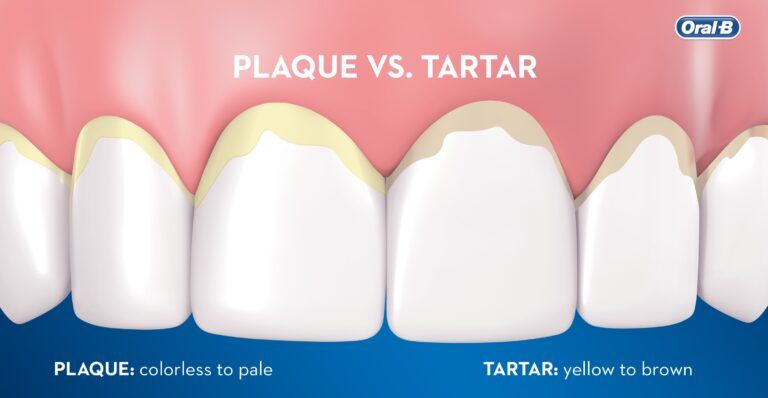
Tartar forms when plaque hardens on the teeth. Once tartar develops, brushing and flossing cannot remove it. A dentist or dental hygienist needs to perform professional cleaning.
When tartar remains below the gum line, it can contribute to gum inflammation and periodontal problems. Early dental evaluation can help identify the condition and determine the appropriate treatment.
Why Tartar Buildup Under Gums Matters
Tartar below the gum line creates a rough surface where plaque and bacteria can remain. This can make daily plaque control more difficult.
1. Bacteria Can Collect Around Tartar
Tartar has a rough surface that can retain plaque. Bacteria in plaque can irritate the gums and contribute to inflammation.
2. Gum Inflammation May Develop
Inflamed gums may become red, swollen, tender, or prone to bleeding. These symptoms can indicate gingivitis or periodontal disease.
3. Gum Pockets Can Become Deeper
As periodontal disease progresses, the gums can pull away from the teeth. This creates pockets where plaque and tartar can accumulate.
Deeper pockets are harder to clean at home and may require professional periodontal care.
4. Advanced Gum Disease Can Affect Supporting Bone
Periodontal disease can damage the tissues and bone that support the teeth. Advanced disease may lead to loose teeth and tooth loss.
Discover Dental Pro 7
Looking for an additional product for your daily oral care routine? Learn more about Dental Pro 7 and its botanical ingredients for everyday gum and oral care.
See How Dental Pro 7 Supports Gum & Plaque Care
This product is not intended to diagnose, treat, cure, or prevent any disease.
Symptoms of Tartar Buildup Under Gums
Submarginal tartar can be difficult to see. Pay attention to changes in your gums and teeth, including:
- Bleeding during brushing or flossing
- Red or swollen gums
- Gum tenderness
- Gum recession
- Persistent bad breath
- A bad taste in the mouth
- Sensitive or loose teeth in advanced cases
These symptoms can have several causes. A dental examination is needed to determine whether tartar or periodontal disease is involved. NIDCR lists bleeding gums, receding gums, sensitive or loose teeth, and persistent bad breath among possible signs of gum disease.
Related Tartar Problems to Know
Tartar can develop in different areas of the mouth. Its location and the condition of the gums can affect the symptoms and care required.
Tartar and Bad Breath
Persistent bad breath can occur for several reasons. Plaque, gum inflammation, dry mouth, and other oral conditions can contribute to unpleasant breath.
Learn more about tartar buildup and bad breath and the oral factors that may contribute to persistent odor.
Tartar Behind Front Teeth
The back of the lower front teeth can collect plaque and tartar. Saliva also flows near this area, which can contribute to mineral buildup.
Read about tartar buildup behind the front teeth and practical ways to improve daily plaque control.
Tartar Buildup in Children
Children can develop plaque and tartar when brushing and cleaning between teeth are inconsistent. Early oral care helps establish healthy habits.
Parents can learn more about tartar buildup in children and simple prevention strategies for younger patients.
Autoimmune Disease and Tartar Risk
Certain health conditions and medications can affect gum health. NIDCR identifies several medical and genetic factors that may increase periodontal disease risk.
Read about autoimmune disease and tartar buildup risk to explore this connection in greater detail.
Tartar Buildup in Seniors
Age can be associated with a higher risk of gum disease, although age alone does not determine a person’s oral health.
Learn more about tartar buildup in seniors and the daily habits that support oral health as people get older.
How Tartar Buildup Under Gums Is Treated
Once tartar forms below the gum line, professional treatment is needed. Brushing and flossing remain important for plaque control, but they cannot remove hardened tartar.
Scaling and Root Planing
For periodontal disease, a dentist or dental hygienist may recommend scaling and root planing.
Scaling removes plaque and tartar from above and below the gum line. Root planing smooths affected root surfaces to support periodontal care. The ADA describes scaling and root planing as a deep cleaning procedure used to treat gum disease.
Treatment depends on the depth of the gum pockets and the condition of the supporting tissues. Some patients may need additional periodontal treatment.
Periodontal Maintenance
After periodontal treatment, regular maintenance can help control plaque and tartar. The appropriate interval depends on the patient’s periodontal condition and the dentist’s assessment.
Daily Care After Professional Cleaning
Professional treatment removes existing tartar. Daily oral care then helps control new plaque buildup.
Follow these basic habits:
- Brush twice daily with fluoride toothpaste.
- Clean between your teeth every day.
- Use a soft-bristled toothbrush.
- Brush gently along the gum line.
- Follow your dentist’s recommended maintenance schedule.
- Attend regular dental examinations.
NIDCR recommends daily brushing and cleaning between teeth as part of good oral hygiene.
Can Dental Pro 7 Support Daily Oral Care?
Dental Pro 7 can be considered as an additional product within a broader daily oral care routine.
Its role should be presented as oral hygiene support rather than professional tartar removal. Hardened tartar requires cleaning by a dentist or dental hygienist.
Explore Dental Pro 7 for Gum & Plaque Care
When to See a Dental Professional
Schedule a dental evaluation if you notice persistent gum bleeding, swelling, recession, bad breath, tooth sensitivity, or loose teeth.
A dental professional can examine the gums, measure periodontal pockets, and determine whether tartar or periodontal disease is present. X-rays may also be used when bone levels need further evaluation.
Early assessment provides an opportunity to address plaque, tartar, and gum inflammation before more advanced periodontal problems develop.
FAQ
Can I see tartar under my gums?
Usually, submarginal tartar is difficult to see directly. A dental professional can examine the gums and use appropriate instruments to identify deposits.
Can brushing remove tartar under the gums?
Brushing helps remove plaque and control new buildup. Once plaque hardens into tartar, professional cleaning is required for removal.
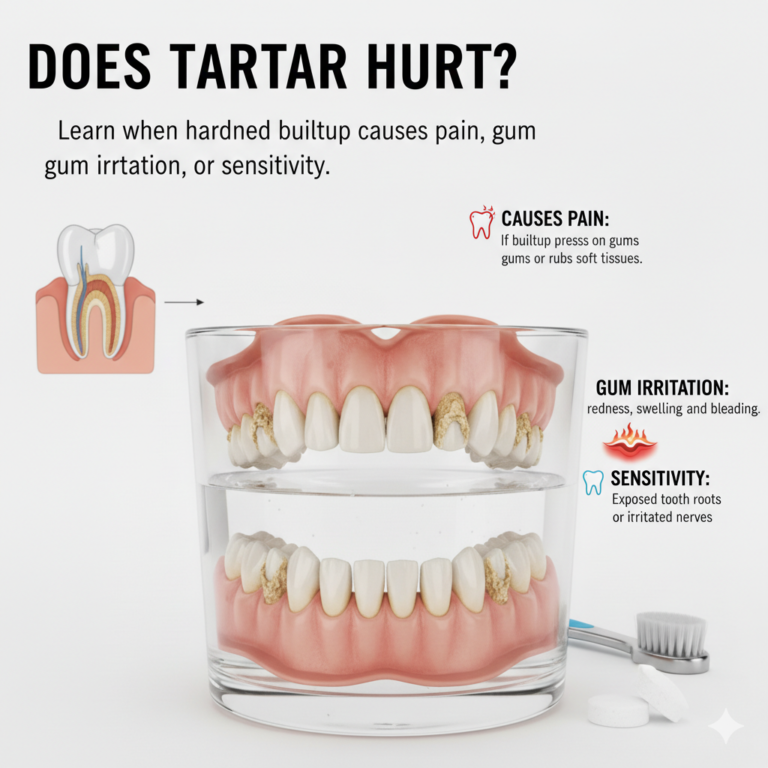
Is tartar under the gums painful?
It may cause few noticeable symptoms at first. Gum bleeding, swelling, tenderness, bad breath, or tooth sensitivity can appear as gum problems develop.
Can tartar under the gums cause tooth loss?
Advanced periodontal disease can damage the tissues and bone supporting the teeth. In severe cases, teeth can become loose and may eventually be lost.
Is scaling and root planing always necessary?
Treatment depends on the condition of the gums and the depth of periodontal pockets. A dentist determines whether routine cleaning, scaling and root planing, or another treatment is appropriate.
Can Dental Pro 7 remove tartar under the gums?
Dental Pro 7 should not be presented as a tartar-removal treatment. Hardened tartar requires professional cleaning. Daily oral care products can instead be used as part of a broader plaque-control routine.
Trusted Dental Health Resources
- NIDCR — Periodontal (Gum) Disease — information about causes, symptoms, diagnosis, and treatment of gum disease.
- NIDCR — Oral Hygiene — guidance on brushing, cleaning between teeth, plaque, and tartar.
- American Dental Association — Scaling and Root Planing — explanation of professional deep cleaning below the gum line.
- American Dental Association — Periodontists — information about periodontal disease and treatment options.



2 Comments