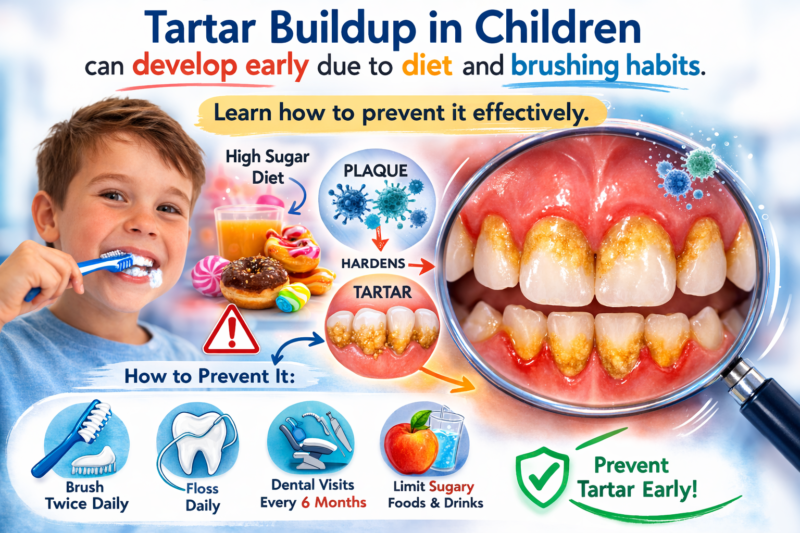
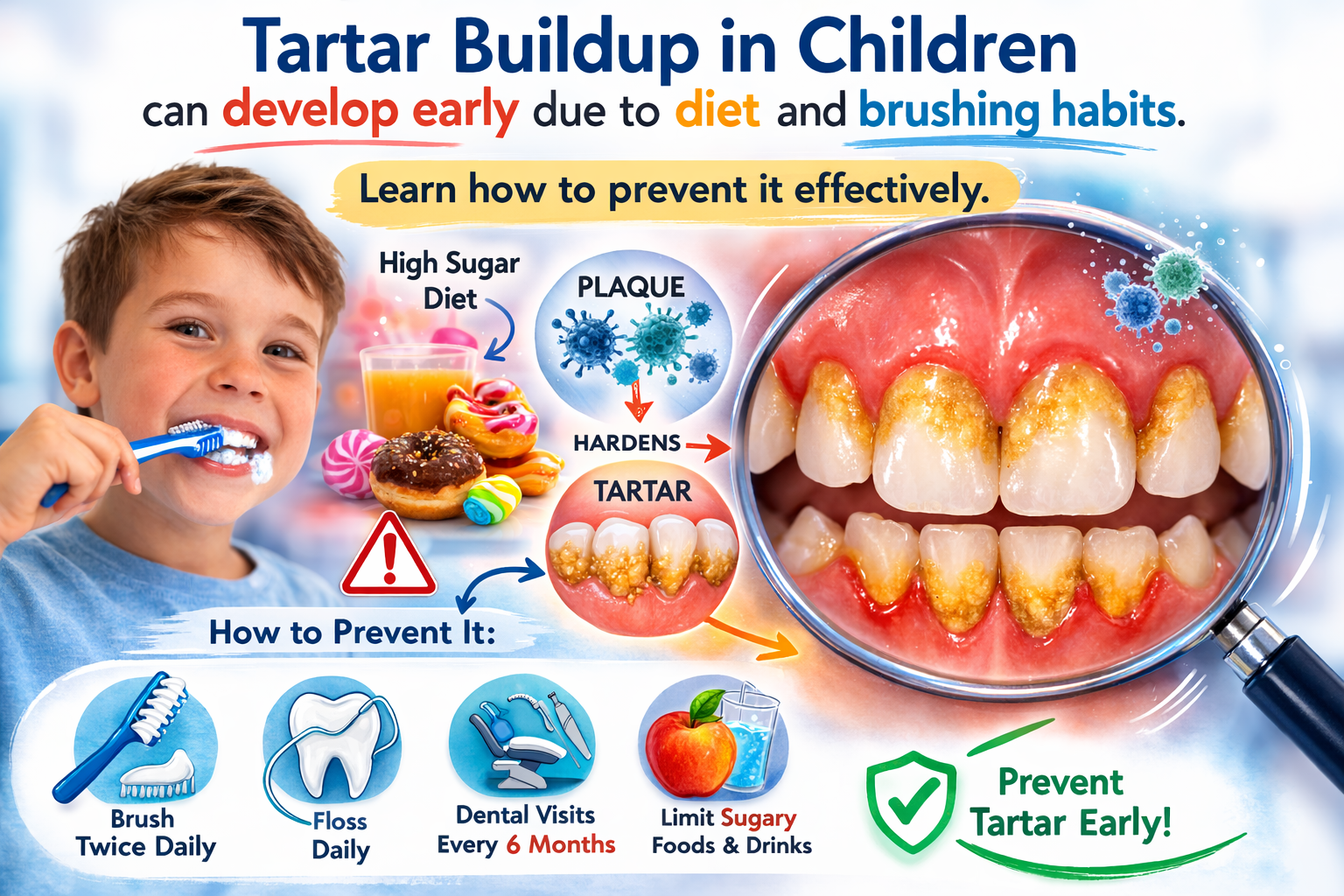
Tartar buildup in children can begin earlier than many parents expect. When plaque is not removed consistently, it can harden into tartar within just a few days. Even baby teeth are susceptible to plaque accumulation and mineralization. Because oral health habits develop during childhood, early prevention plays a crucial role in long-term dental wellness.
Plaque is a sticky layer of bacteria that forms naturally on teeth. If brushing and flossing are inconsistent, plaque combines with minerals in saliva and hardens into tartar. Once tartar forms, it cannot be removed with a regular toothbrush and requires professional cleaning.
Why Children Develop Tartar
There are several reasons tartar buildup in children occurs. Young children are still learning proper brushing techniques and often lack the manual dexterity needed for thorough cleaning.
Common causes include:
Inconsistent or rushed brushing
High sugar intake from snacks and drinks
Poor flossing habits
Limited parental supervision
Frequent snacking throughout the day
Children’s diets often include sugary cereals, juice, candy, and processed snacks. These foods feed bacteria that produce plaque. Without daily removal, plaque mineralizes quickly, increasing the risk of tartar formation along the gumline.
Baby Teeth and Gum Health
Some parents assume that because baby teeth eventually fall out, tartar buildup in children is not a serious concern. However, gum health is critical at every stage of development.
Tartar around primary teeth can lead to:
Gum inflammation (gingivitis)
Bleeding during brushing
Discomfort or tenderness
Early periodontal changes
Healthy gums support the proper eruption of permanent teeth. If gum disease develops early, it can affect overall oral development and increase the likelihood of ongoing dental issues.
The Role of Parents
Preventing tartar buildup in children requires active parental involvement. Young children typically need assistance with brushing until around age 7 or 8, when their coordination improves.
Parents should:
Supervise brushing twice daily
Use a pea-sized amount of fluoride toothpaste
Assist with flossing once teeth touch
Encourage regular dental visits
Limit sugary snacks and beverages
Habits formed during childhood often last a lifetime. Teaching consistent oral hygiene early reduces future complications.
Professional Cleanings and Early Intervention
Pediatric dental cleanings are essential for removing early tartar deposits. Even with good home care, small amounts of calculus can form in hard-to-reach areas.
Professional visits help:
Remove hardened tartar safely
Monitor gum health
Detect cavities early
Reinforce brushing education
Most children should see a dentist every six months. For those prone to tartar buildup, more frequent visits may be recommended.
Early intervention prevents more serious dental problems later, including advanced gum disease and tooth decay.
 See How Dental Pro 7 Supports Gum & Plaque Control

If your child shows signs of tartar buildup, gum redness, or bleeding, schedule a pediatric dental cleaning promptly. Early preventive care ensures healthy development and strong lifelong oral habits.
FAQ
1. Can children really get tartar?
Yes. Tartar buildup in children can occur when plaque is not removed regularly.
2. How often should kids see a dentist?
Most children should have dental checkups every six months.
3. Is tartar dangerous for baby teeth?
Yes. Tartar can cause gum inflammation, discomfort, and increase the risk of early dental problems.