Tartar Buildup Behind Front Teeth: Causes, Risks, and Why It Happens
Tartar buildup behind front teeth: Last Updated: September 6, 2026 · 6 min read
It is a common concern during routine dental checkups. It often develops on the inner surface of the lower front teeth, especially near the gumline.
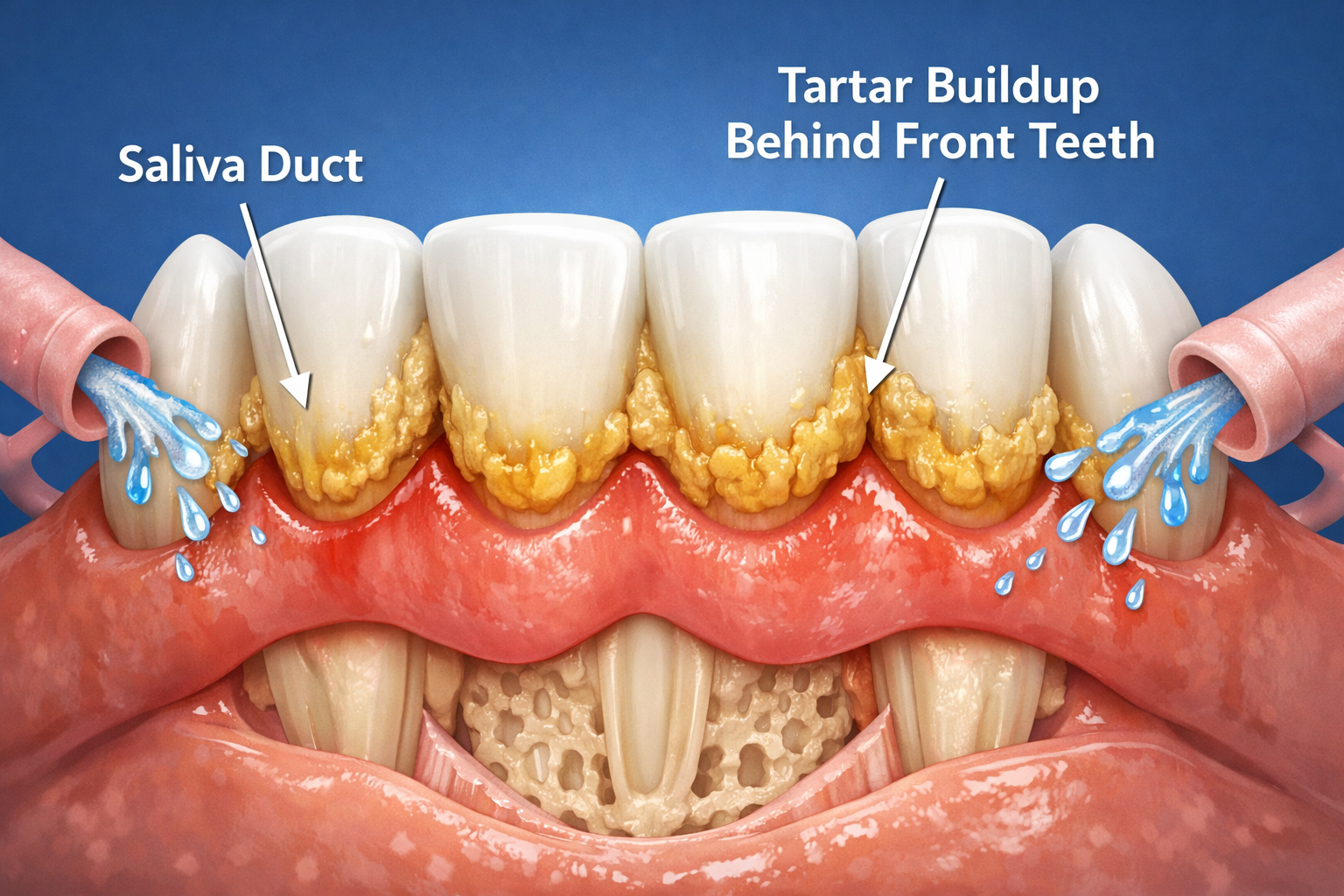
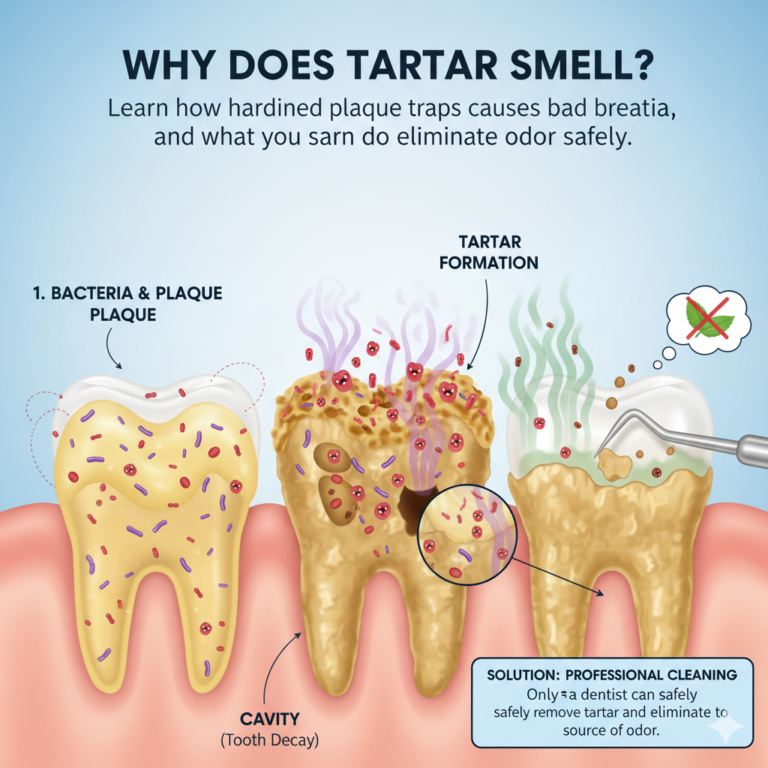
This area receives frequent exposure to saliva from the submandibular and sublingual glands. Saliva contains minerals such as calcium and phosphate. When plaque remains on the teeth, these minerals can combine with the plaque and gradually form tartar, also called dental calculus.
Plaque can begin to harden within a few days when daily cleaning does not remove it effectively. Once tartar forms, professional dental cleaning is the safest way to remove the hardened deposits.
Understanding why this area develops tartar so easily can help you improve daily plaque control and protect your gums.
Why Tartar Builds Up Behind the Lower Front Teeth
The lower front teeth have several features that make them especially prone to tartar accumulation.
Key factors include:
- Direct exposure to mineral-rich saliva
- Brushing angles that can miss the inner surfaces
- Crowded or overlapping teeth that retain plaque
- Plaque accumulation near the gumline
- Difficult access for interdental cleaning
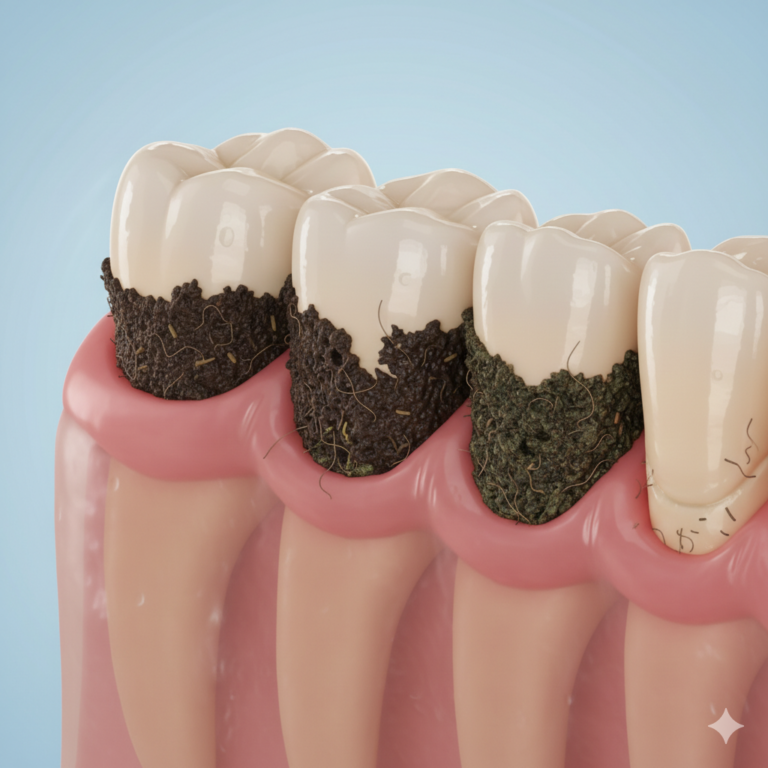
The inner surfaces of the lower front teeth can therefore develop deposits faster than other areas. Tartar may appear yellow, tan, or brown. It can also feel rough when your tongue moves across the teeth.
Saliva mineral content plays an important role in how plaque becomes hardened. Understanding this process explains why tartar often develops quickly behind the lower front teeth.
Risks of Tartar Buildup Behind Front Teeth
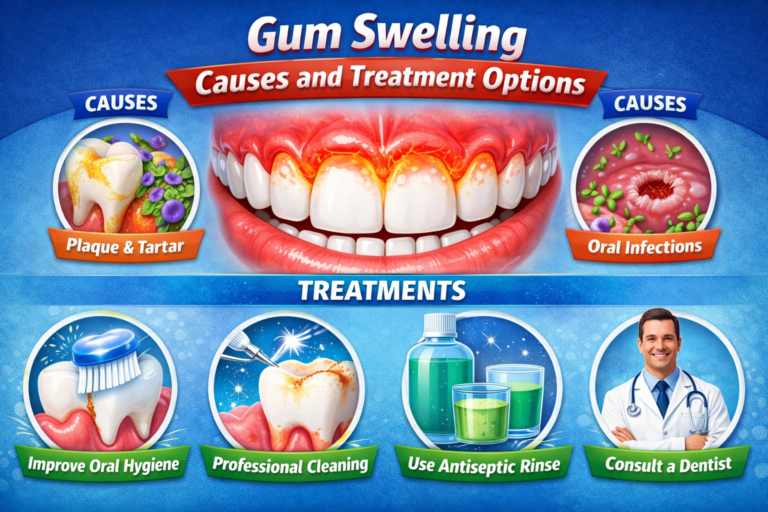
Tartar provides a rough surface that can retain additional plaque. This can increase irritation around the gumline and affect overall gum health.
Possible effects include:
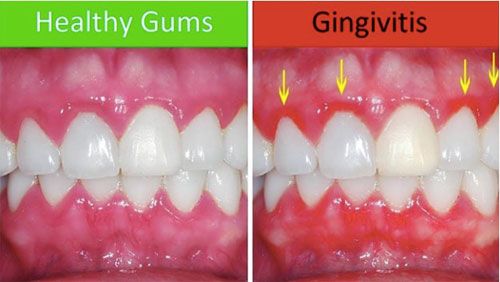
- Gum inflammation or gingivitis
- Bleeding during brushing or flossing
- Persistent bad breath
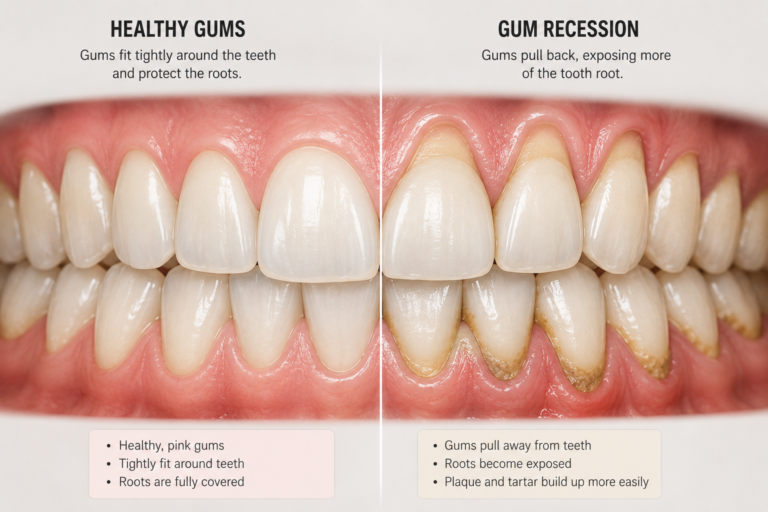
- Gum recession
- Periodontal disease
As tartar grows, plaque can accumulate around the hardened deposit. This creates a cycle of plaque retention and gum irritation.
Age can also influence plaque control and tartar risk. Children, teenagers, and older adults may face different oral hygiene challenges that require age-appropriate prevention.
Learn more about tartar buildup in children and why early prevention can support healthier oral habits.
Teenagers can also experience tartar buildup in teenagers due to changing oral hygiene habits, diet, and plaque accumulation.
Older adults can learn about tartar buildup in seniors and why tartar risk may increase with age.
Support Your Daily Plaque-Control Routine
A consistent oral care routine can help control plaque before it hardens. Dental Pro 7 may complement regular brushing, interdental cleaning, and professional dental care as part of a daily routine.
Discover Dental Pro 7 for cleaner tooth surfaces and daily gum and plaque-control support.
Explore Dental Pro 7 →
You can also explore similar dental health supplements and oral care products on Amazon.
How to Prevent Tartar Buildup Behind Front Teeth
Preventing tartar starts with effective daily plaque control. Give the inner surfaces of the lower front teeth extra attention during every brushing session.
Try these strategies:
- Hold the toothbrush vertically when cleaning the lower front teeth.
- Use gentle movements along the gumline.
- Spend extra time on the inner surfaces.
- Clean between teeth every day.
- Use an antimicrobial mouth rinse when recommended by your dentist.
- Drink water regularly.
- Schedule professional dental cleanings based on your dentist’s advice.
A few additional seconds of careful brushing can improve plaque removal in this high-risk area.
Certain health conditions can also influence gum inflammation and tartar risk. People with diabetes may need extra attention to their oral health and plaque control.
Learn more about diabetes and tartar buildup and how blood sugar management and oral care can work together to support gum health.
Professional Tartar Removal: Why It Matters
Once plaque hardens into tartar, professional cleaning is the appropriate method for removal. Dentists and dental hygienists use specialized scaling instruments or ultrasonic devices to remove hardened deposits.
Professional cleaning can address tartar around the gumline and other difficult-to-reach areas. It also allows your dental team to evaluate your gums and identify early signs of periodontal problems.
Avoid using sharp objects or homemade scraping tools on your teeth. These methods can injure the gums or scratch tooth surfaces.
When to See a Dental Professional
Consider scheduling a dental examination if you notice:
- Rough deposits behind the lower front teeth
- Frequent gum bleeding
- Swollen or tender gums
- Persistent bad breath
- Visible yellow or brown tartar
- Gum recession
- Changes around the gumline
Early professional care can remove hardened deposits and help protect the surrounding gum tissue.
Autoimmune conditions can also affect gum health and the body’s inflammatory response. People with these conditions may benefit from discussing oral symptoms with their dental and medical care teams.
Learn more about autoimmune disease and tartar buildup risk and the relationship between systemic health and oral care.
FAQ: Tartar Buildup Behind Front Teeth
1. Why does tartar build up behind the lower front teeth?
Saliva ducts release mineral-rich saliva near the lower front teeth. When plaque remains in this area, minerals can contribute to faster tartar formation.
2. Can I remove tartar behind my front teeth at home?
Daily brushing and interdental cleaning help control plaque. Hardened tartar requires professional dental cleaning for safe removal.
3. How often should I check behind my front teeth?
Check the area during your regular brushing routine. Pay attention to rough surfaces, visible deposits, and changes around the gumline.
4. Why does tartar return quickly in this area?
Frequent exposure to saliva minerals and plaque retention can contribute to recurring buildup. Your dentist can recommend a cleaning schedule based on your individual risk.
5. Can tartar behind front teeth affect my gums?
Yes. Tartar can retain plaque around the gumline and contribute to inflammation, bleeding, gum recession, and periodontal problems.
Taking proactive steps can help control plaque and reduce tartar accumulation behind the front teeth. Consistent home care and regular professional cleaning provide the strongest foundation for long-term oral health.

2 Comments