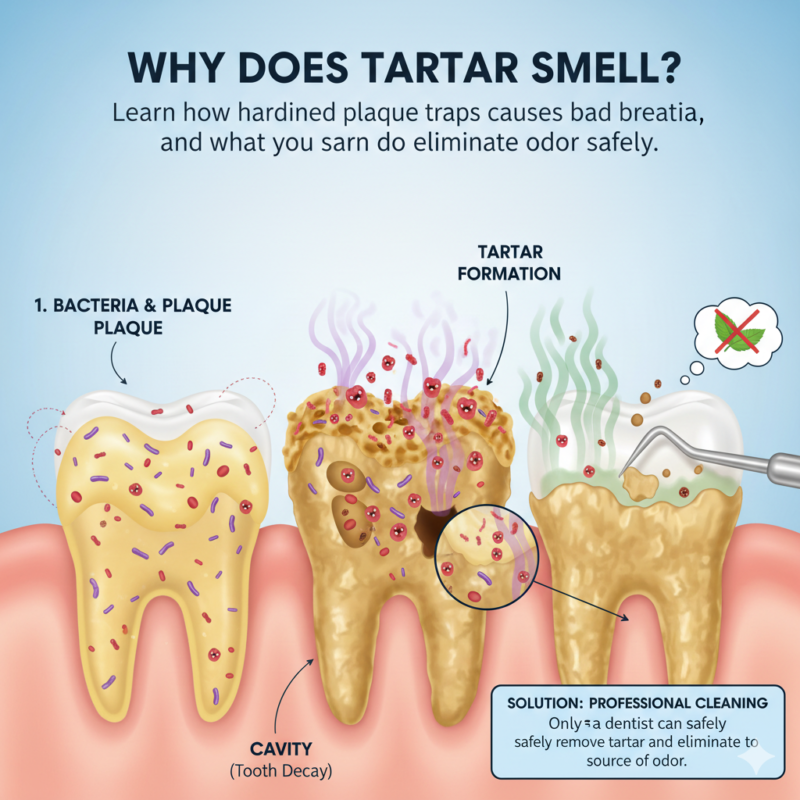
Why does tartar smell?
Many people notice persistent bad breath even after brushing. In some cases, the cause is tartar buildup.
Tartar creates a rough surface where bacteria collect. These bacteria can produce unpleasant odors.
Understanding this connection helps you manage oral hygiene more effectively.
What Causes the Odor?
Tartar itself does not have a strong smell.
The odor comes from bacteria trapped within hardened plaque.
These bacteria release sulfur compounds. Sulfur compounds produce a noticeable unpleasant smell.
The longer tartar remains, the more bacteria accumulate.
💡 You can also explore similar dental health supplements and oral care products on Amazon.
Why Tartar Makes Bad Breath Worse
This leads to:
Trapped food particles
Bacterial growth
Reduced oxygen flow around gumline
Increased inflammation
Low-oxygen environments allow odor-producing bacteria to thrive.
Where Smelly Tartar Commonly Forms
Odor-related buildup often appears:
Behind lower front teeth
Along the gumline
Between molars
Around dental restorations
These areas are harder to clean thoroughly.
Can Mouthwash Remove the Smell?
Mouthwash may temporarily reduce odor.
Professional cleaning is often necessary for lasting improvement.
Can Tartar Cause Chronic Bad Breath?
Yes.
If odor does not improve with brushing and flossing, hardened deposits may be contributing.
How to Eliminate Odor from Tartar
The most effective solution is professional scaling.
After tartar removal:
Bacterial levels decrease
Gum inflammation improves
Breath freshness returns
Daily plaque control helps prevent recurrence.
Why Does Tartar Smell? – Prevention Tips
Brush twice daily
Clean your tongue
Stay hydrated
Visit your dentist regularly
Consistency reduces odor-causing bacteria.
Dental Professional Recommendation (Dental Pro 7)
If you notice persistent bad breath that does not improve with brushing, schedule a professional dental cleaning. Removing tartar eliminates bacterial buildup and helps restore fresh breath safely and effectively.
Routine dental evaluations ensure hidden deposits are detected early and managed properly.
FAQ – Why Does Tartar Smell?
1. Why does tartar smell so bad?
The smell comes from bacteria trapped inside hardened plaque. These bacteria produce sulfur compounds that cause bad breath.
2. Can brushing remove odor from tartar?
Professional cleaning is required to eliminate the source fully.
3. Is tartar the only cause of bad breath?
No. A dental evaluation helps identify the cause.
4. Will removing tartar permanently fix bad breath?
Maintaining daily hygiene prevents recurrence
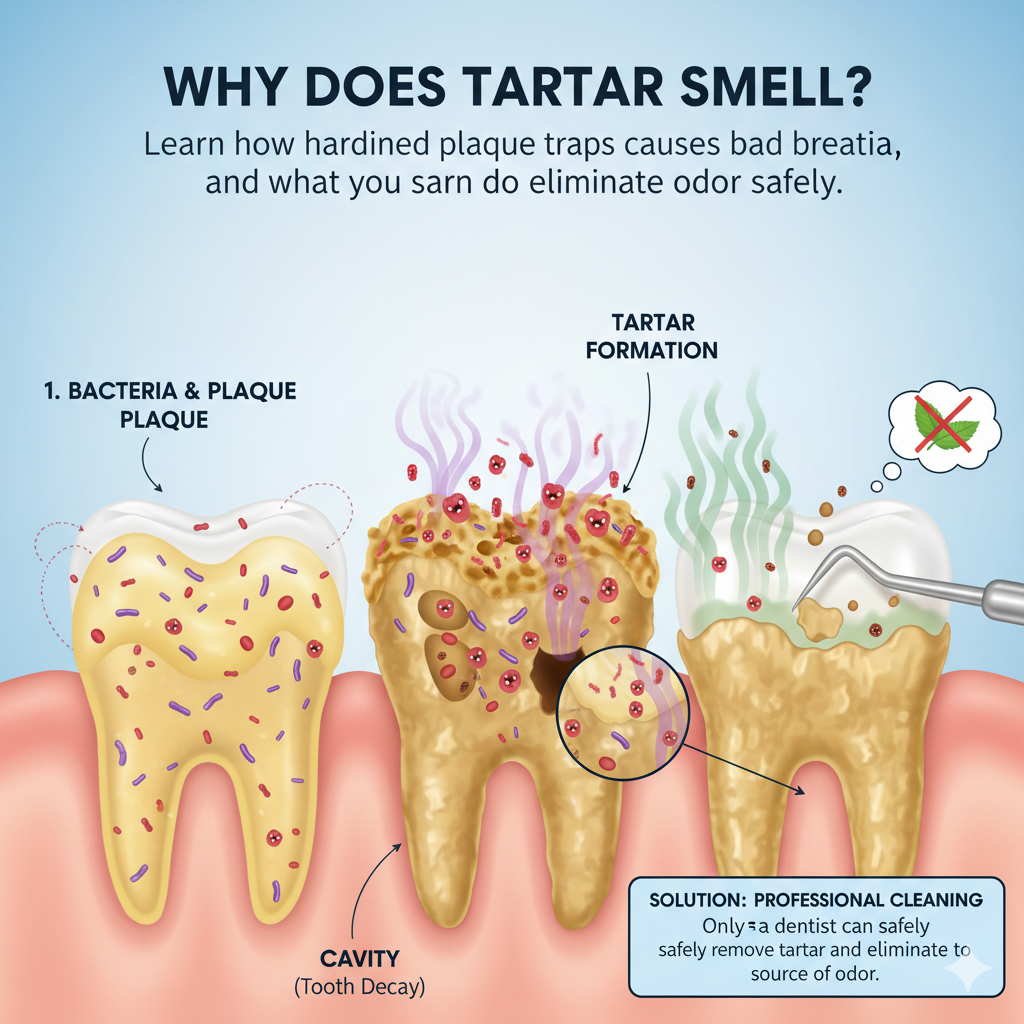
Why Does Tartar Smell?
Why Tartar Smells
- Bacterial “Hotspots”: The rough and porous surface of tartar acts like a sponge, trapping food debris and bacteria that cannot be reached by a toothbrush.
- Sulfur Gas Production: As bacteria within the tartar digest proteins from food and saliva, they release volatile sulfur compounds (VSCs). These compounds are the primary chemicals responsible for the “rotten egg” smell associated with bad breath.
- Periodontal Pockets: Tartar often builds up below the gumline, causing the gums to pull away and form deep “pockets”. These pockets trap even more bacteria and decaying organic matter, creating a potent and constant source of odor that brushing alone cannot fix.
- Professional Scaling: Once plaque has mineralized into tartar, it is physically bonded to the tooth enamel. The only safe way to remove it and the associated odor is through professional dental scaling, where a dentist uses specialized tools to chip or vibrate the deposits away.
- Avoid DIY Removal: Attempting to scrape tartar off at home with metal tools can permanently damage your tooth enamel and cause severe gum infections.
- Preventive Care: To stop the smell from returning, the American Dental Association recommends brushing twice daily with fluoride toothpaste and flossing once a day to remove plaque before it can harden into smelly tartar.
This is not professional medical advice. If you’re experiencing persistent bad breath or significant tartar buildup, consider consulting with a dentist for professional cleaning and personalized oral care recommendations.