Tartar Buildup and Bad Breath: Why Persistent Odor Won’t Go Away
Tartar buildup and bad breath: Last Updated: September 6, 2026 · 6 min read
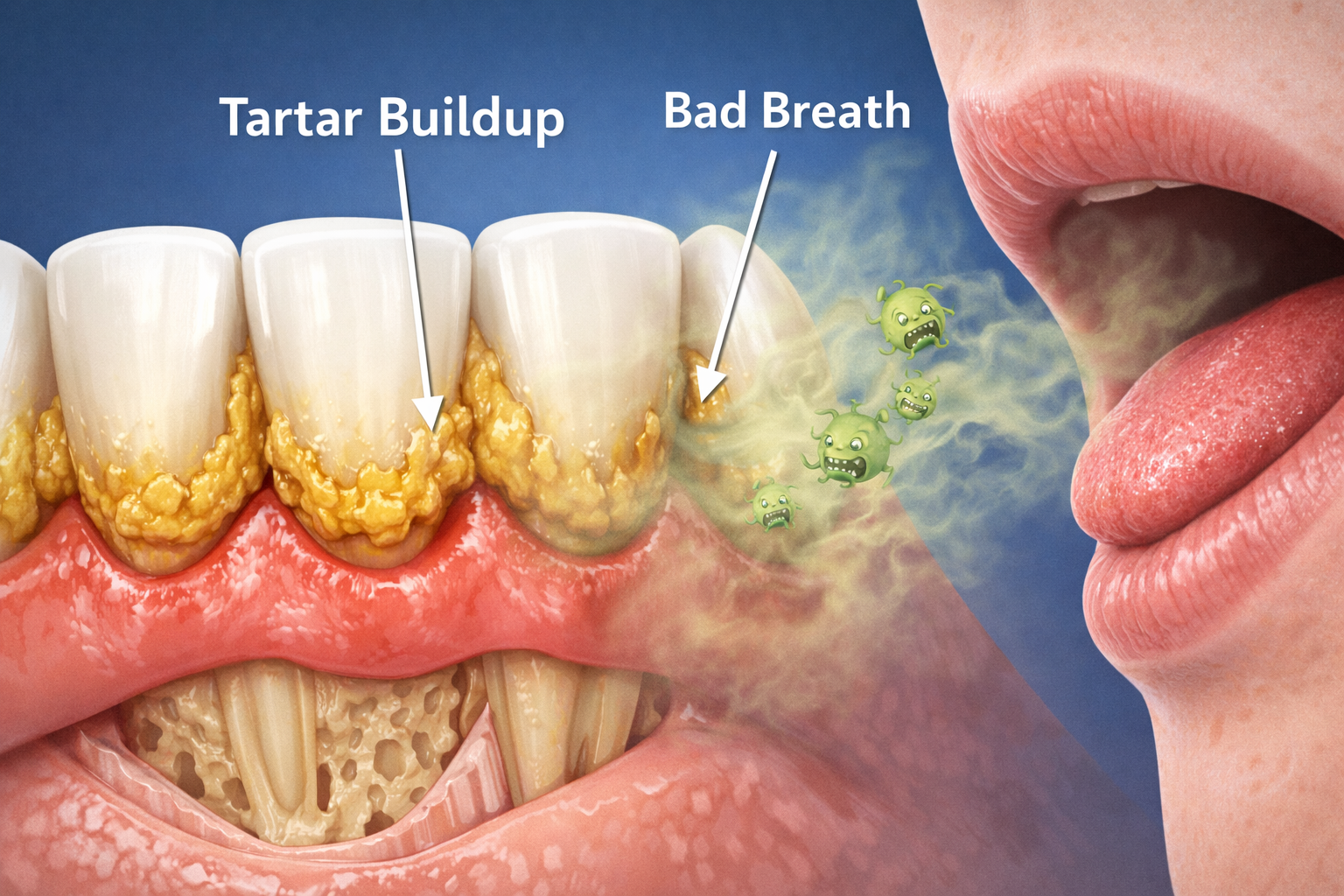
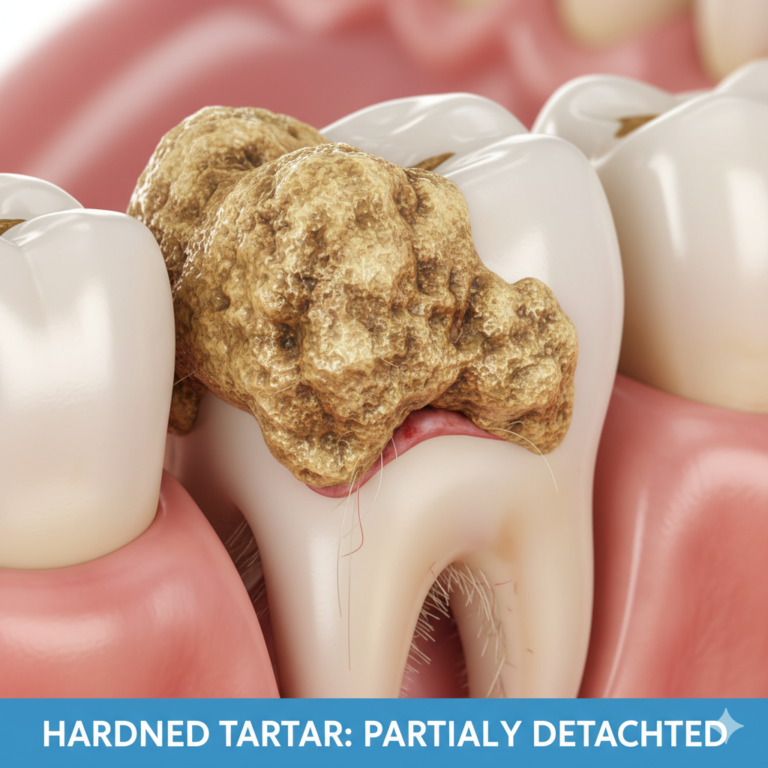
It often occur together. Plaque can absorb minerals from saliva and gradually harden into tartar. This process may begin within a few days when plaque remains on tooth surfaces.
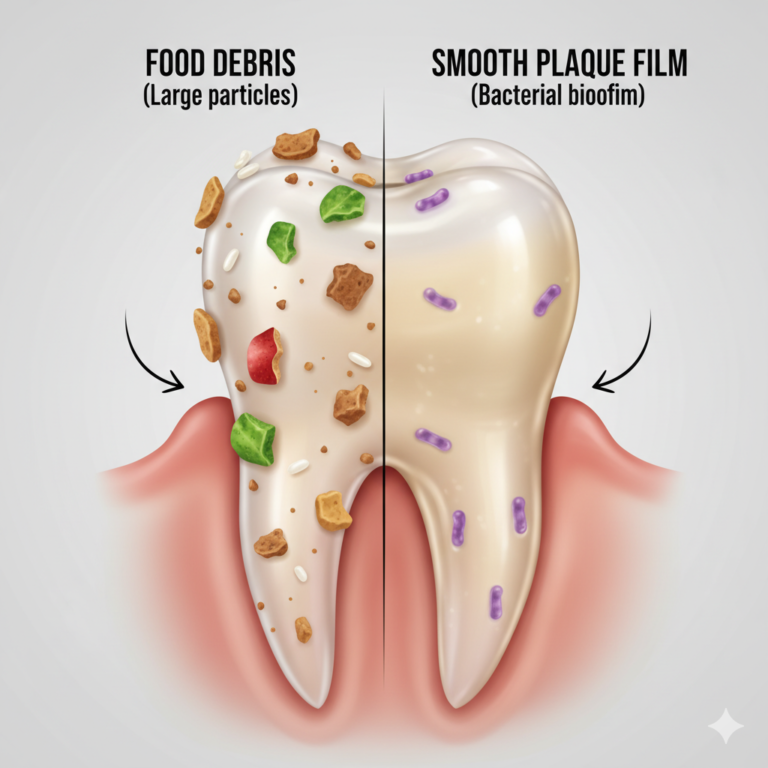
Tartar creates a rough, porous surface that can retain plaque, food particles, and bacteria. Some bacteria produce volatile sulfur compounds (VSCs), which are strongly associated with unpleasant breath odor.
When tartar remains around the gumline, it can also contribute to gum inflammation. This makes professional dental care and consistent daily plaque control important for maintaining fresh breath and healthy gums.
Why Tartar Buildup and Bad Breath Are Linked
Tartar can contribute to persistent odor through several related processes. Its rough surface gives bacteria more areas to attach and makes plaque control more difficult.
1. Rough Surfaces Trap Debris
Unlike smooth tooth enamel, tartar has a coarse texture. Food particles and plaque can collect around these deposits. Bacteria then have more material available to support their growth.
2. Bacteria Thrive Around Gumline Deposits
Tartar often accumulates near the gumline and between teeth. These areas can retain plaque and create conditions where odor-producing bacteria become more active.
3. Gum Inflammation Can Increase Odor
Tartar can irritate gum tissue and contribute to gingivitis. Inflamed gums may bleed during brushing or flossing. Bacterial buildup around irritated tissue can also contribute to unpleasant breath.
Tartar can appear in different areas of the mouth. Deposits behind the front teeth are especially common because saliva ducts are located nearby.
Learn more about tartar buildup behind front teeth and why deposits often develop in this area.
Get Dental Care Products on Amazon
Looking for oral health products to complement your daily routine? Explore available options on Amazon and compare products based on your oral care needs.
Signs Your Bad Breath May Be Tartar-Related
Not every case of halitosis comes from tartar. However, several signs may suggest that tartar and gum health are contributing to persistent odor.
Watch for:
- Breath that remains unpleasant after regular brushing
- Bleeding gums during brushing or flossing
- Yellow or brown deposits near the gumline
- A rough feeling when your tongue touches the teeth
- A persistent metallic or sulfur-like taste
- Plaque that seems to return quickly
Age can also influence tartar risk and oral hygiene needs. Children, teenagers, and older adults may require different preventive strategies based on their stage of life.
Parents can learn more about tartar buildup in children and why early prevention matters for long-term oral health.
Teenagers can also benefit from understanding tartar buildup in teenagers and the habits that may increase plaque accumulation.
Older adults can explore tartar buildup in seniors and why the risk may increase with age.
Treatment: Removing Hardened Tartar
Professional dental cleaning is the standard method for removing hardened tartar. Dentists and dental hygienists use specialized instruments or ultrasonic devices to remove deposits from tooth surfaces.
Professional cleaning can address tartar above and below the gumline. It also gives the dental team an opportunity to evaluate gum health.
After tartar removal, patients may notice:
- Less plaque retention
- Reduced gum irritation
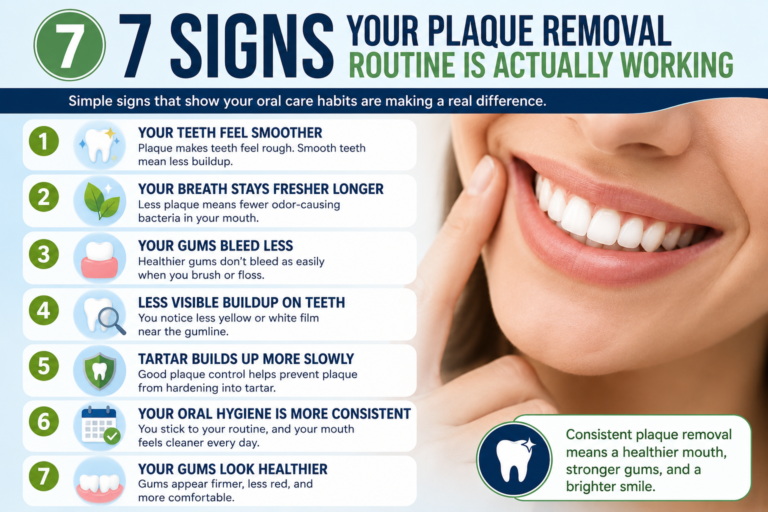
- Fresher breath
- Cleaner-feeling teeth
- Improved gum comfort
The improvement in breath varies by person. Other causes of halitosis may require additional evaluation.
Certain health conditions can also influence gum inflammation and tartar risk. People with autoimmune conditions may benefit from discussing their oral health with both their dentist and healthcare provider.
Learn more about autoimmune disease and tartar buildup risk and how systemic health may relate to oral care.
Prevention Tips to Reduce Tartar and Bad Breath
Daily plaque control helps reduce the material that can eventually harden into tartar.
Follow these habits:
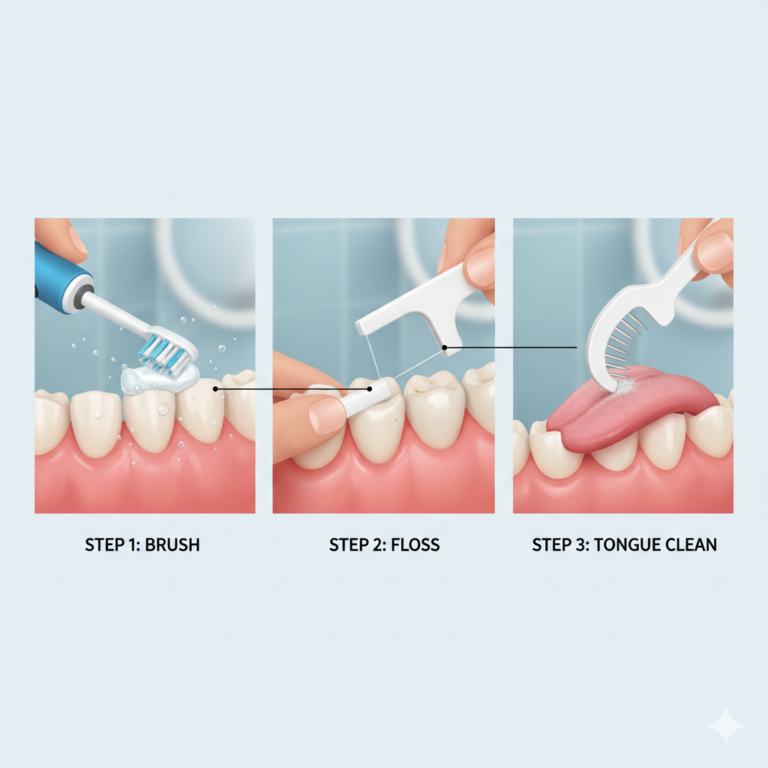
- Brush twice daily for at least two minutes
- Brush carefully along the gumline
- Clean between teeth every day
- Drink water regularly
- Clean your tongue as part of your oral hygiene routine
- Use an appropriate antimicrobial mouth rinse when recommended
- Schedule professional dental cleanings based on your dentist’s advice
Consistency matters because plaque can mineralize when it remains on the teeth. A regular routine helps keep tooth surfaces cleaner between professional appointments.
Dental Pro 7 can also complement a daily oral care routine focused on plaque and gum health.
See How Dental Pro 7 Supports Gum & Plaque Control →
When to See a Dental Professional
Persistent bad breath deserves attention when regular oral hygiene does not improve the problem.
Schedule a dental evaluation if you notice:
- Persistent bad breath
- Frequent gum bleeding
- Swollen or tender gums
- Visible tartar deposits
- Loose or sensitive teeth
- Changes around the gumline
Tartar can develop beneath the gumline, where it may be difficult to see during normal self-checks. Professional evaluation can identify deposits and signs of gum disease.
Learn more about tartar under the gums and the symptoms that deserve professional attention.
If tartar and gum inflammation are contributing to bad breath, professional cleaning can address hardened deposits. Your dentist can also investigate other possible causes of persistent odor.
FAQ: Tartar Buildup and Bad Breath
1. Can mouthwash remove tartar-related bad breath?
Mouthwash can temporarily reduce or mask odor. Professional cleaning is needed to remove hardened tartar.
2. How quickly can bad breath improve after professional cleaning?
Many people notice fresher breath within several days after tartar removal. The timing depends on the amount of buildup and other possible causes of odor.
3. Is bad breath always caused by tartar buildup?
Bad breath can have several causes. Dry mouth, diet, oral infections, gum disease, and other health conditions may also contribute to halitosis.
4. Can tartar develop behind the front teeth?
Yes. Tartar commonly develops behind the lower front teeth because saliva ducts in this area can contribute minerals that help plaque harden.
5. Can children and teenagers develop tartar?
Yes. Children and teenagers can develop tartar when plaque remains on the teeth and mineralizes. Good brushing, interdental cleaning, and regular dental visits help reduce the risk.
Addressing tartar early can improve oral cleanliness and support healthier gums. A consistent daily routine, combined with professional dental care, also helps maintain fresher breath over time.

One Comment