Tartar Buildup in Seniors: Causes, Risks, and Why Risk Increases With Age
Tartar buildup in seniors: Last Updated: September 7, 2026 · 6 min read
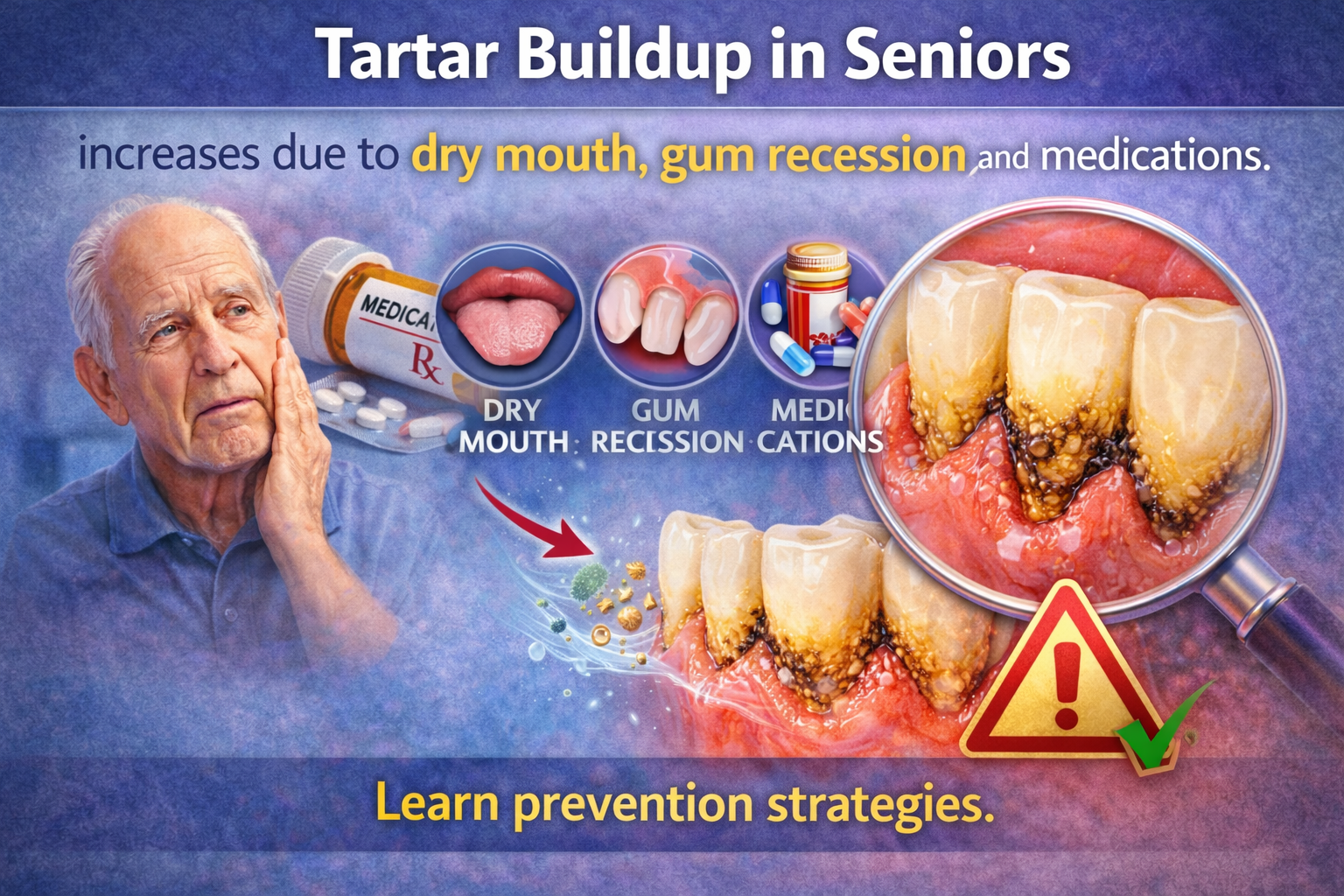
It can become more common with age. Changes in saliva production, gum health, physical ability, medication use, and overall health can make plaque control more challenging.
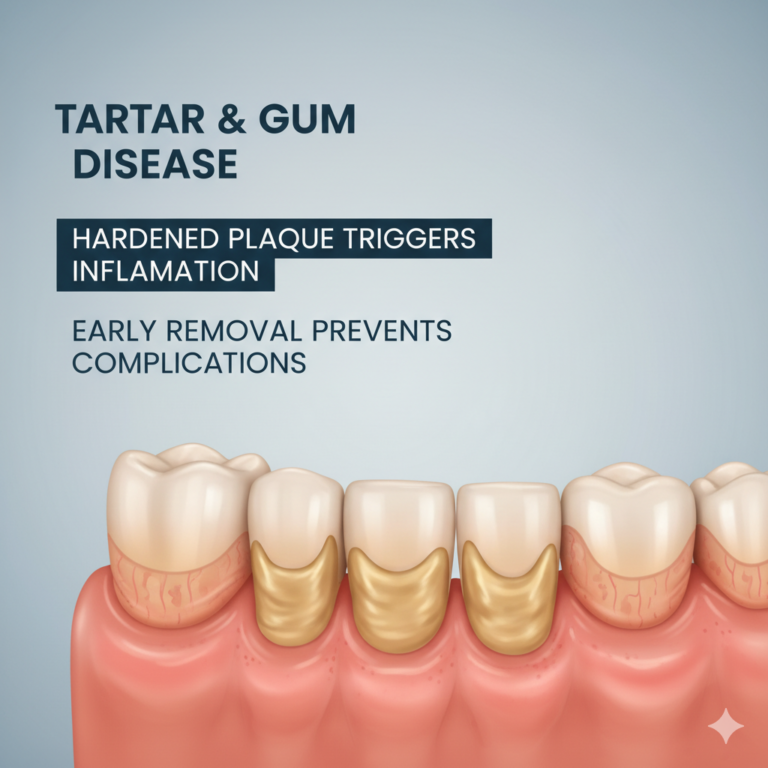
Plaque can absorb minerals from saliva and gradually harden into tartar, also called dental calculus. Hardened tartar can retain additional plaque around the gum-line and contribute to gum inflammation.
As people age, oral tissues may become more vulnerable to irritation. Changes in immune response can also affect how the gums respond to plaque bacteria.
Understanding these age-related factors can help seniors maintain cleaner teeth, healthier gums, and better daily oral hygiene.
Gum Recession and Exposed Tooth Roots
Gum recession is a common factor associated with tartar buildup in seniors. As gum tissue recedes, parts of the tooth root become exposed.
Root surfaces differ from enamel. They are softer and more vulnerable to plaque accumulation and decay.
Exposed roots may:
- Retain plaque more easily
- Develop generalized deposits
- Become more sensitive
- Face a higher risk of root decay
Tartar near exposed roots can contribute to gum irritation and periodontal problems. Regular professional cleaning helps manage hardened deposits around these vulnerable areas.
Gum recession can also cause bleeding, tenderness, and sensitivity. Addressing these symptoms early helps protect exposed root surfaces and maintain healthier gum tissue.
Learn more about effective bleeding gums treatment and practical ways to support stronger gum health.
Get Dental Care Products on Amazon
Looking for oral health products to complement your daily routine? Explore available options on Amazon and compare products based on your oral care needs.
Dry Mouth and Medication-Related Tartar Risk
Dry mouth is another important factor in tartar buildup in seniors. Many older adults use medications for blood pressure, heart health, diabetes, anxiety, and other conditions.
Some medications can reduce saliva production. Lower saliva flow can affect the mouth’s natural cleansing process.
Saliva helps:
- Wash away food particles
- Neutralize acids
- Support oral moisture
- Control bacterial activity
- Reduce plaque retention
When saliva flow decreases, plaque can remain on tooth surfaces longer. This creates more opportunity for plaque to mineralize and form tartar.
Medication-related dry mouth can make daily plaque control more challenging. Understanding which medications may affect saliva helps seniors discuss appropriate oral care strategies with their healthcare team.
Learn more about medications that cause tartar buildup and how medication-related dry mouth can influence plaque accumulation.
Support Your Daily Oral Care Routine
Seniors can benefit from a consistent oral hygiene routine that focuses on plaque control and gum health. Dental Pro 7 may complement brushing and inter dental cleaning as part of a daily oral care routine.
Discover Dental Pro 7 for cleaner tooth surfaces and daily gum and plaque-control support.
Explore Dental Pro 7 →
Limited Dexterity and Daily Oral Hygiene Challenges
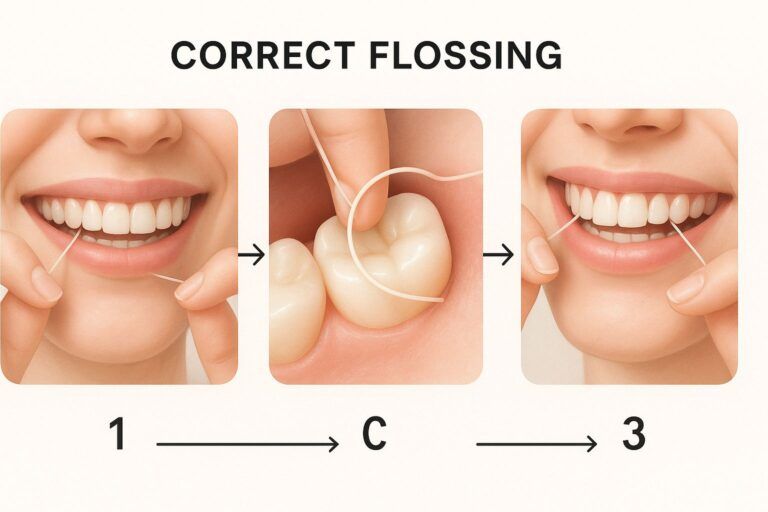
Physical changes can make daily brushing and inter dental cleaning more difficult. Arthritis, reduced grip strength, and some neurological conditions may affect hand coordination.
These challenges can leave plaque behind. Over time, retained plaque can contribute to hardened calculus and gum inflammation.
Helpful tools include:
- Electric toothbrushes
- Large-handle toothbrushes
- Interdental brushes
- Water flossers
- Floss holders
Choosing an appropriate tool can make daily oral hygiene easier and more consistent.
Teenagers face different tartar risks. Their changing routines, diet, orthodontic treatment, and brushing habits can influence plaque accumulation in different ways.
Learn more about tartar buildup in teenagers and common factors that affect oral hygiene during adolescence.
Diabetes and Tartar Risk in Older Adults
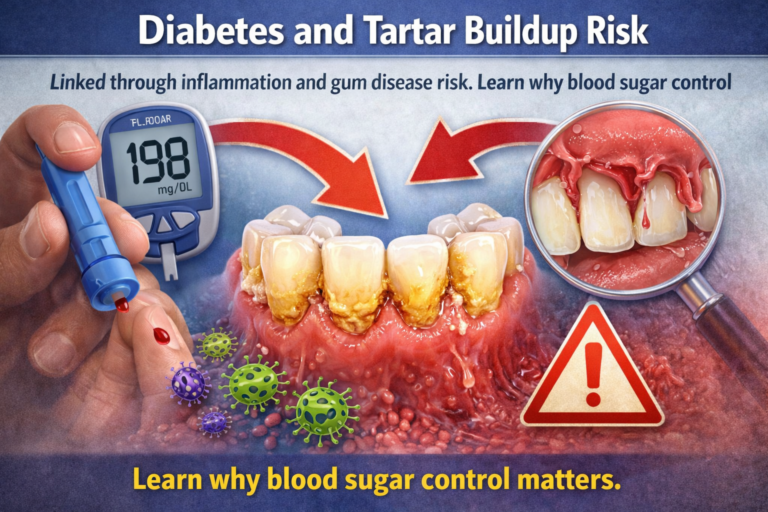
Diabetes can affect gum health and increase the importance of consistent plaque control. Older adults with diabetes may need additional attention to their daily oral hygiene routine.
High blood sugar levels can affect the body’s response to oral bacteria and may increase susceptibility to gum problems.
Good oral hygiene supports overall preventive care for people with diabetes. Regular dental visits can help identify gum inflammation and tartar before complications develop.
Learn more about diabetes and tartar buildup and how diabetes management relates to oral health.
Hormonal Changes and Oral Health With Age
Hormonal changes can influence gum tissue and saliva throughout different stages of life. Menopause, in particular, can be associated with changes in oral moisture and gum sensitivity.
Dry mouth can increase plaque retention. Sensitive gums may also require a gentler and more consistent brushing technique.
Learn more about hormonal changes and tartar buildup and how changes in hormone levels can influence gum health.
Prevention Strategies for Seniors
Preventing tartar buildup in seniors requires consistent daily care and regular professional monitoring.
Useful strategies include:
- Brush twice daily with fluoride toothpaste
- Use an electric toothbrush when appropriate
- Clean between teeth every day
- Stay hydrated
- Clean the tongue regularly
- Monitor dry mouth symptoms
- Schedule professional dental cleanings
- Follow your dentist’s recommended cleaning interval
Some seniors may benefit from professional cleanings every four to six months. The ideal schedule depends on tartar accumulation, gum health, dry mouth, and individual risk factors.
Frequent exposure to sugary foods and drinks can also support plaque formation. Reducing frequent sugar exposure can make daily plaque control easier and support healthier gums.
Learn more about sugar and tartar buildup on teeth and how dietary habits can influence plaque accumulation.
Selecting a toothpaste without SLS, perfumes, or unnecessary fillers may provide a gentler cleaning experience for people with sensitive gums.
Understanding the natural ingredients that support gum health can also help seniors evaluate oral care products that complement daily brushing and professional cleaning.
When Seniors Should See a Dental Professional
Schedule a dental evaluation when you notice:
- Increasing tartar deposits
- Persistent gum bleeding
- Swollen or tender gums
- Gum recession
- Persistent bad breath
- Tooth sensitivity
- Loose teeth
- Changes around the gum-line
Professional cleaning can remove hardened tartar and allow the dental team to evaluate gum and root health.
Early attention helps reduce the risk of periodontal complications and supports better long-term oral health.
FAQ: Tartar Buildup in Seniors
1. Why does tartar buildup increase with age?
Age-related changes in saliva, gum tissue, medication use, and manual dexterity can make plaque control more challenging.
2. Can dry mouth increase tartar risk?
Yes. Reduced saliva can allow plaque to remain on teeth longer. This can increase the opportunity for plaque to mineralize into tartar.
3. Can electric toothbrushes help seniors?
Yes. Electric toothbrushes can improve plaque removal and may be easier to use for people with limited hand strength or coordination.
4. How often should seniors have dental cleanings?
Many people benefit from twice-yearly dental visits. Seniors with periodontal disease, heavy tartar, or chronic dry mouth may need more frequent appointments.
5. Can diabetes affect tartar and gum health?
Diabetes can influence gum health and the body’s response to oral bacteria. Consistent plaque control and regular dental care are especially important.
6. Can seniors use Dental Pro 7?
Seniors should review product directions and ingredients and consider discussing new oral care products with their dentist, especially when taking multiple medications.
Maintaining oral health becomes increasingly important with age. Consistent brushing, inter dental cleaning, hydration, and professional dental care can help seniors control plaque and manage tartar risk.