Tartar Buildup Behind Front Teeth: Causes, Risks, and Why It Happens
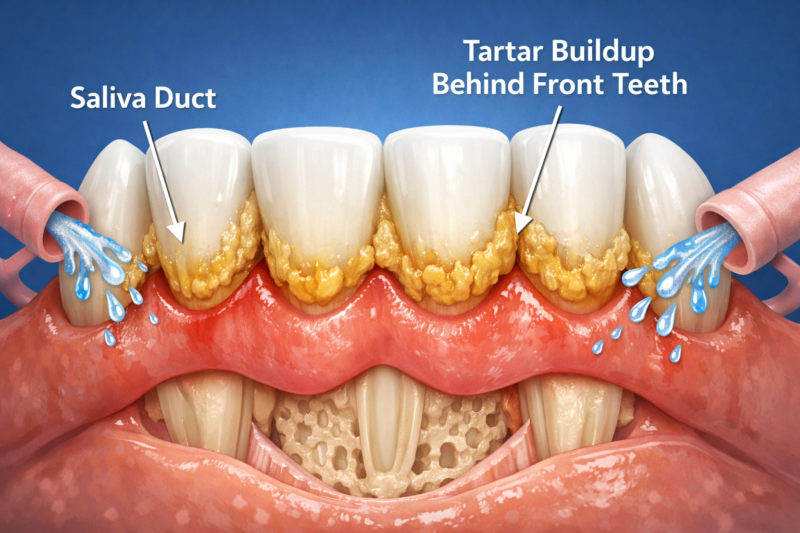
Tartar buildup behind front teeth is one of the most common dental concerns dentists see during routine checkups. This stubborn deposit typically forms on the inner surface of the lower front teeth, especially near the gumline.
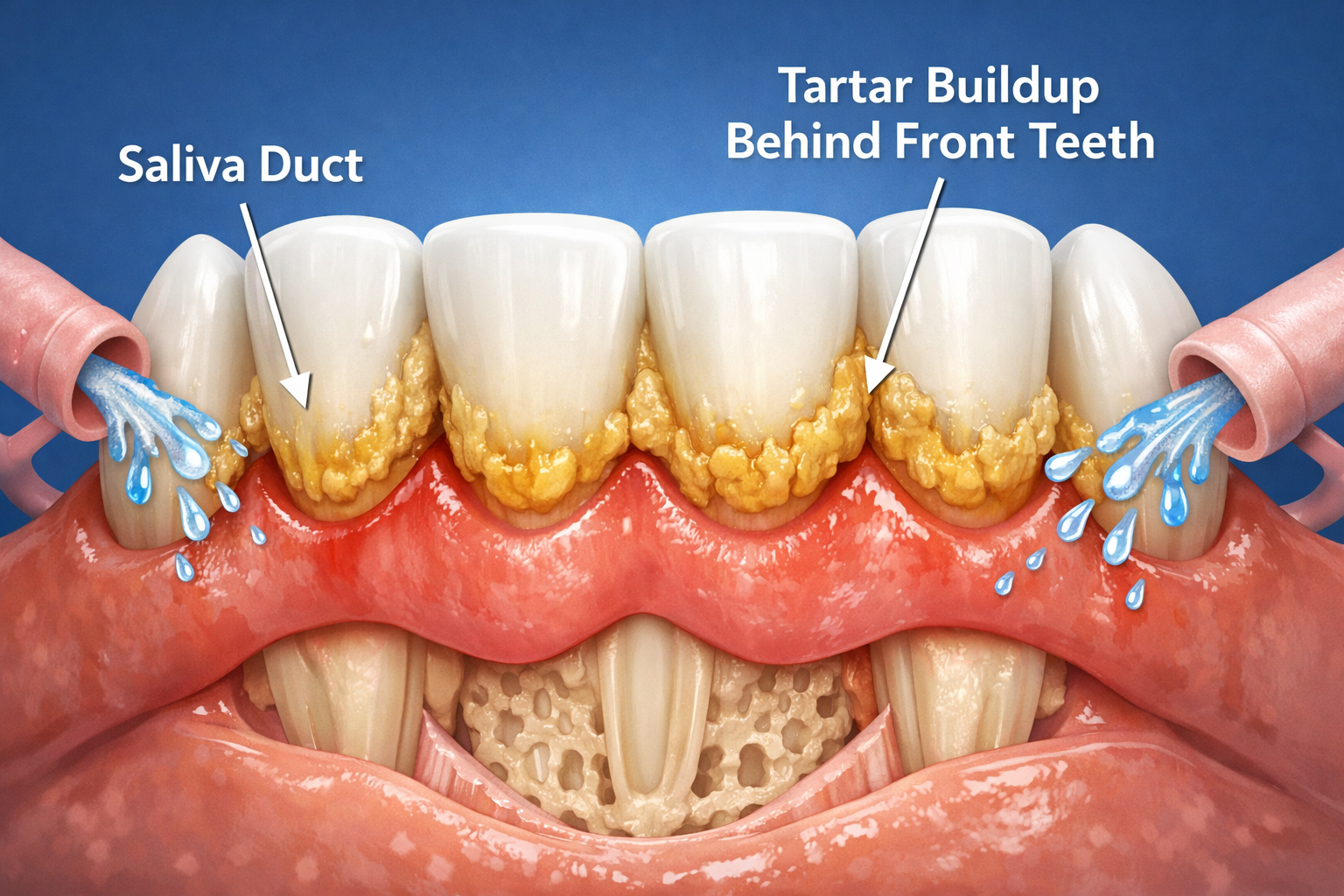
The primary reason? Saliva ducts from the submandibular and sublingual glands open directly behind the lower front teeth. Saliva contains minerals such as calcium and phosphate. When dental plaque sits undisturbed in this area, these minerals combine with bacteria and harden the plaque into tartar (also called calculus) — sometimes within just 24 to 72 hours.
Once tartar buildup behind front teeth develops, it cannot be removed by brushing alone.
Why This Area Is High Risk
The lower front teeth are especially vulnerable to tartar accumulation for several reasons:
Constant exposure to mineral-rich saliva
Tongue movement that spreads bacteria rather than fully removing plaque
Brushing angles that often miss the inner surfaces
Crowded lower front teeth that trap plaque easily
Over time, tartar buildup behind front teeth appears as a yellow, tan, or brown deposit. It often feels rough when touched with the tongue and can gradually thicken if not professionally removed.
💡 You can also explore similar dental health supplements and oral care products on Amazon.
Risks of Ignoring Tartar Buildup Behind Front Teeth
Leaving tartar untreated can lead to significant oral health problems. Because the gum tissue behind the lower front teeth is thin and delicate, damage can progress quickly.
Potential risks include:
Gum inflammation (gingivitis)
Bleeding during brushing or flossing
Persistent bad breath
Gum recession
Early periodontal disease
As tartar buildup behind front teeth grows, it creates a rough surface that attracts even more plaque — accelerating the cycle of buildup and gum irritation.
How to Prevent Tartar Buildup Behind Front Teeth
Preventing tartar starts with consistent plaque control. Since plaque hardens quickly in this area, daily cleaning is essential.
Follow these prevention tips:
Hold your toothbrush vertically when cleaning the lower front teeth.
Use gentle circular motions along the gumline.
Spend extra time brushing the inner surfaces.
Floss daily to remove plaque between teeth.
Use an antimicrobial mouth rinse if recommended by your dentist.
Schedule routine professional cleanings every six months.
Pay special attention to this area every time you brush. A few extra seconds can significantly reduce tartar buildup behind front teeth.
Professional Removal: Why It’s Necessary
Once plaque hardens into tartar, it cannot be removed at home. Dental professionals use specialized scaling instruments or ultrasonic tools to safely break apart and remove hardened deposits without damaging enamel.
Attempting to scrape tartar buildup behind front teeth at home with sharp objects can lead to enamel scratches, gum injury, and infection. Professional cleaning ensures safe and complete removal.
See How Dental Pro 7 Supports Gum & Plaque Control
When to See a Dental Professional
If you notice rough deposits behind your lower front teeth, bleeding gums, or persistent bad breath, it may indicate tartar buildup behind front teeth.
Early intervention prevents gum recession and long-term damage. Scheduling a professional cleaning allows your dentist or hygienist to remove tartar safely and assess your gum health before more serious problems develop.
FAQ
1. Why does tartar buildup behind front teeth occur mostly in this spot?
Because saliva ducts release mineral-rich fluid directly behind the lower front teeth, plaque hardens more quickly there.
2. Can I scrape tartar off at home?
No. DIY removal can damage enamel and gums. Professional scaling is required.
3. How often should I check this area?
Inspect it every time you brush to prevent tartar buildup behind front teeth from hardening.
Taking proactive steps today can help you maintain healthier gums and prevent complications caused by tartar buildup behind front teeth.