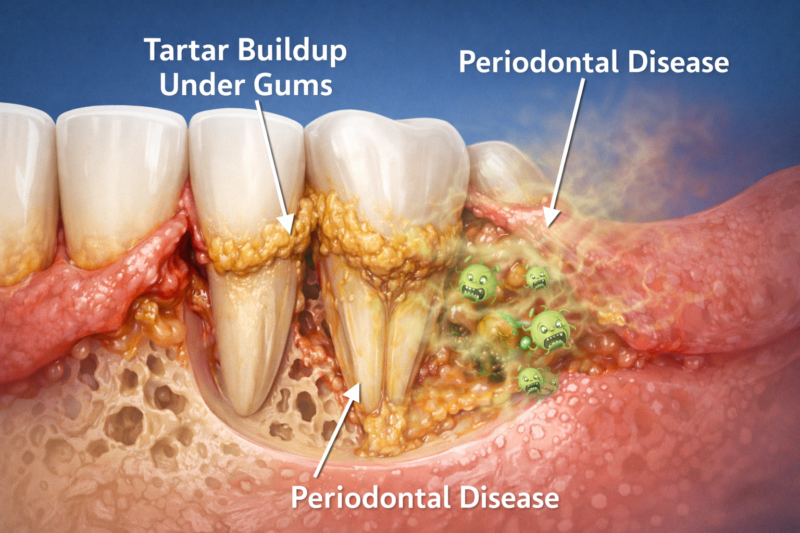
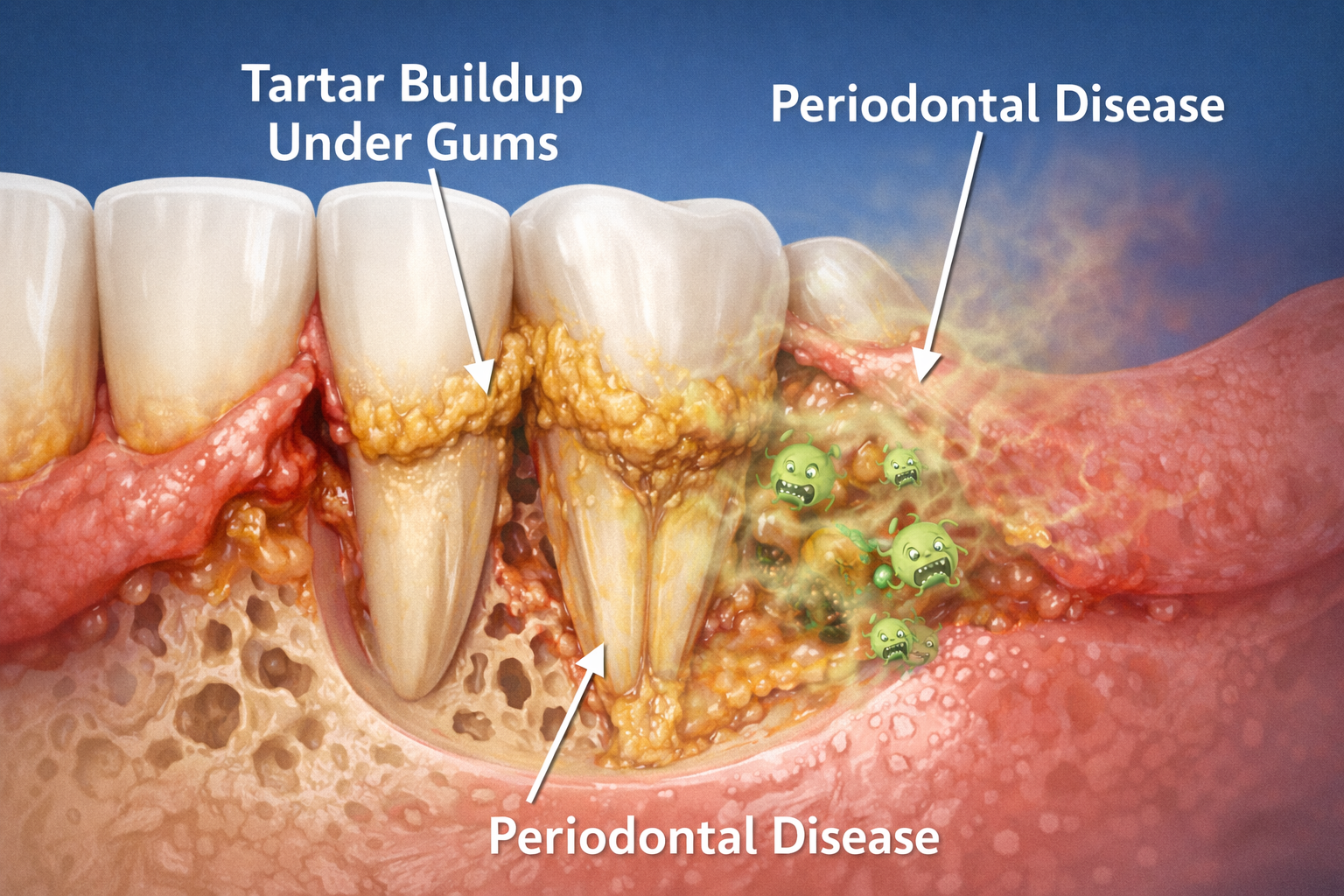
Tartar buildup under gums — also known as subgingival calculus — is more dangerous than the visible tartar you may notice on your teeth. Because it forms below the gumline, it often develops unnoticed until symptoms become more serious.
Unlike supragingival tartar (above the gumline), tartar buildup under gums hides in periodontal pockets. It creates a protected environment where harmful bacteria multiply and trigger chronic inflammation. Without treatment, this condition can silently progress to advanced gum disease.
Why Tartar Buildup Under Gums Is Risky
Subgingival tartar poses a significant threat to both gum tissue and supporting bone. Once hardened plaque forms below the gumline, it becomes nearly impossible to remove without professional treatment.
Here’s why tartar buildup under gums is especially dangerous:
1. Harbors Harmful Bacteria
The rough surface of tartar allows bacteria to attach firmly to tooth roots. These bacteria release toxins that irritate gum tissue.
2. Triggers Chronic Inflammation
As bacteria accumulate, the body responds with inflammation. This leads to swollen, tender, and bleeding gums — early signs of periodontal disease.
3. Leads to Pocket Formation
Inflammation causes the gums to pull away from the teeth, creating deeper periodontal pockets. These pockets trap more bacteria and accelerate tartar buildup under gums.
4. Contributes to Bone Loss
If untreated, the infection can spread to the jawbone that supports the teeth. Over time, bone deterioration may occur, increasing the risk of tooth mobility and loss.
Because it develops out of sight, tartar buildup under gums is often called a “silent threat.”
Symptoms of Tartar Buildup Under Gums
Since subgingival tartar is not easily visible, symptoms may be the first warning sign. Watch for:
Bleeding when brushing or flossing
Swollen or tender gums
Gum recession
Persistent bad breath
A bad taste in the mouth
Loose teeth in advanced stages
If these symptoms are present, tartar buildup under gums may already be affecting deeper tissues.
Treatment Options
Once tartar forms beneath the gumline, brushing and flossing alone cannot remove it. Professional intervention is required.
Deep Cleaning (Scaling and Root Planing)
The most common treatment for tartar buildup under gums is scaling and root planing. This non-surgical deep cleaning procedure involves:
Removing hardened tartar from below the gumline
Smoothing tooth root surfaces
Reducing bacterial accumulation
Encouraging gum reattachment
In more advanced cases, additional periodontal therapies may be necessary.
Ongoing Maintenance Is Essential
After treatment, maintenance appointments are critical. Patients with a history of tartar buildup under gums may require periodontal cleanings every three to four months instead of the standard six-month schedule.
Daily oral hygiene also plays a vital role:
Brush twice daily
Floss consistently
Use interdental cleaners if recommended
Follow your dentist’s maintenance plan
Preventing recurrence is far easier than treating advanced periodontal disease.
 See How Dental Pro 7 Supports Gum & Plaque Control

When to Seek Professional Care
If you suspect tartar buildup under gums, do not delay evaluation. Early treatment can prevent irreversible bone damage and tooth loss.
A periodontal examination includes measuring pocket depths and possibly dental X-rays to assess bone levels. The sooner tartar buildup under gums is addressed, the better the long-term outcome.
FAQ
1. Can I see subgingival tartar?
Usually not. Tartar buildup under gums requires dental tools and examination to detect.
2. Is tartar under the gums painful?
It may cause mild discomfort initially, but pain can increase as inflammation worsens.
3. Can tartar buildup under gums cause tooth loss?
Yes. In advanced cases, bone loss and gum recession can lead to loose teeth and eventual tooth loss.
Addressing tartar buildup under gums early protects your gums, preserves bone health, and helps maintain a confident, healthy smile for years to come.