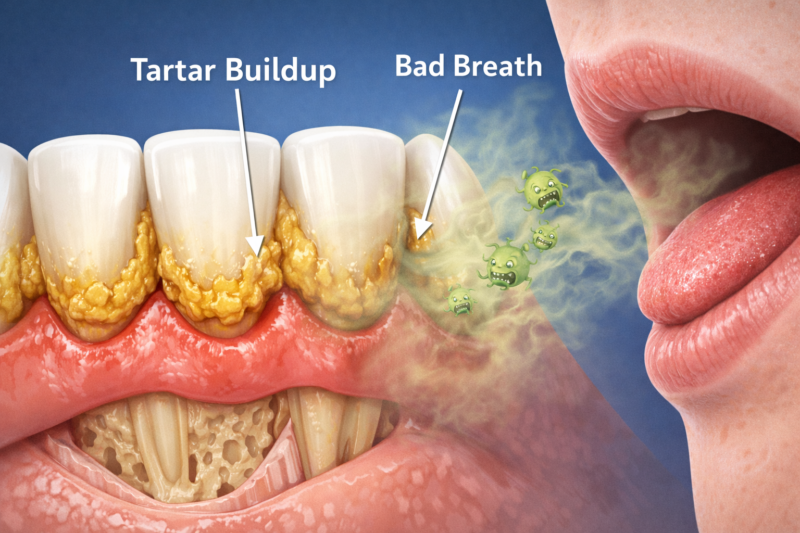
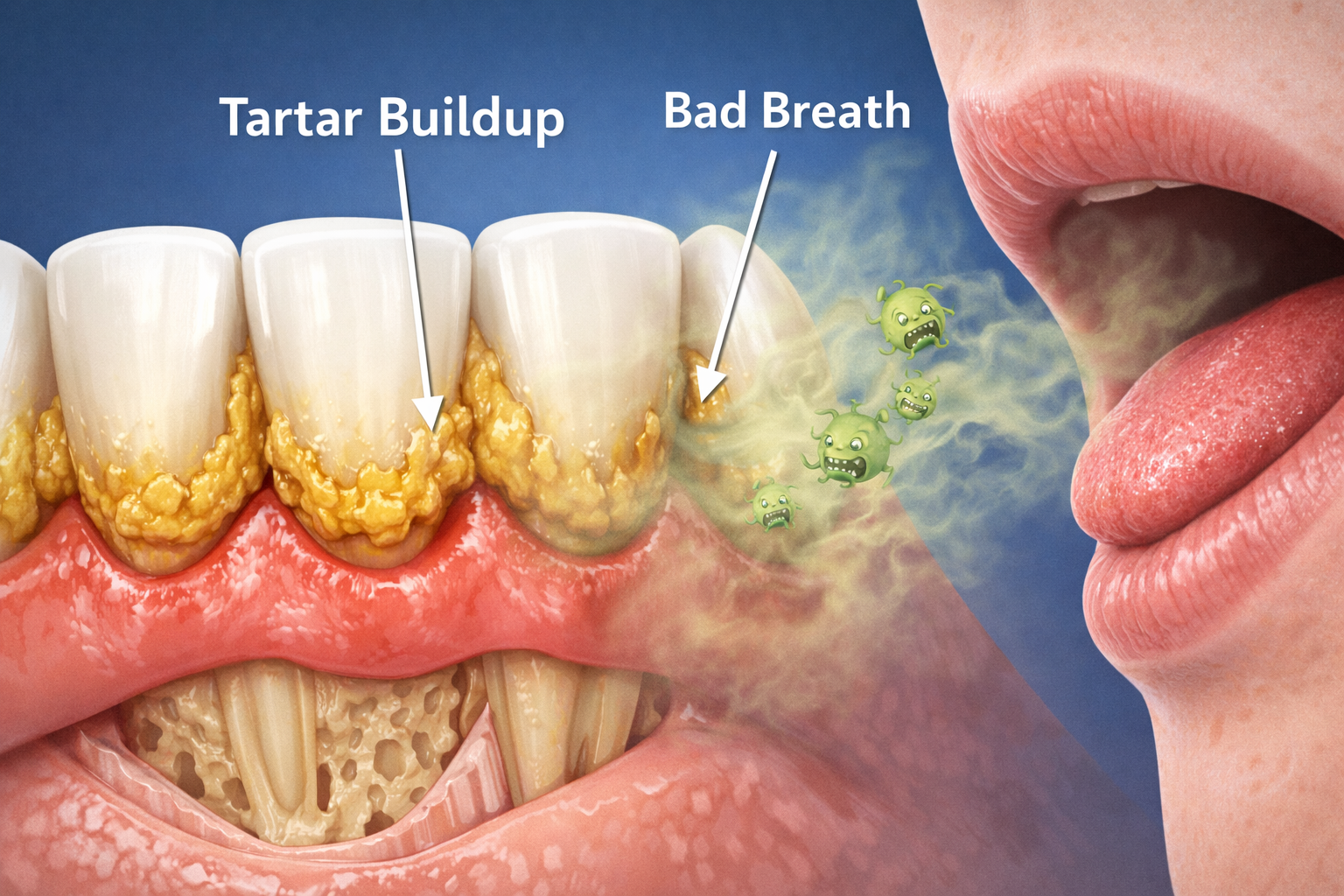
Tartar buildup and bad breath: Within 24 to 72 hours, plaque absorbs minerals from saliva and hardens into a rough, porous deposit on teeth. Once tartar buildup develops, it creates an ideal environment for odor-producing bacteria to thrive.
These bacteria release volatile sulfur compounds (VSCs) — the chemicals responsible for the unpleasant smell associated with chronic bad breath.
Why Tartar Buildup and Bad Breath Are Linked
Tartar contributes to bad breath in several important ways:
1. Rough Surface Traps Debris
Unlike smooth enamel, tartar has a coarse texture. This rough surface traps food particles and plaque, allowing bacteria to multiply more easily.
2. Bacteria Thrive in Crevices
As tartar accumulates along the gumline, it forms small pockets where oxygen levels drop. Anaerobic bacteria flourish in these areas and produce stronger sulfur odors.
3. Gum Inflammation Increases Odor
Tartar irritates gum tissue, leading to gingivitis. Inflamed gums bleed more easily and create additional bacterial buildup — further worsening tartar buildup and bad breath.
Because brushing cannot remove hardened tartar, bacteria remain attached even with good daily hygiene.
Signs Your Bad Breath May Be Tartar-Related
Not all halitosis is caused by tartar, but certain signs suggest a connection:
Breath does not improve after brushing or using mouthwash
Bleeding gums during brushing or flossing
Visible yellow or brown deposits near the gumline
A rough feeling when you run your tongue over your teeth
Persistent metallic or sulfur-like taste
Tartar buildup and bad breath are likely linked.
Treatment: Removing the Root Cause
The only effective way to eliminate tartar buildup is through professional dental cleaning. Dentists and dental hygienists use specialized scaling instruments or ultrasonic devices to safely remove hardened deposits from above and below the gumline.
Once tartar buildup and bad breath are addressed at the source:
Bacterial levels decrease
Gum inflammation improves
Odor typically reduces within days
Breath feels noticeably fresher
Many patients report significant improvement in breath shortly after a thorough cleaning.
Prevention Tips to Stop Recurrence
After professional removal, maintaining daily oral care is essential to prevent tartar buildup and bad breath from returning.
Follow these steps:
Brush twice daily for at least two minutes
Focus on the gumline
Floss every day to remove plaque between teeth
Consider using an antimicrobial mouth rinse
Schedule cleanings every six months
Consistency is key. Since plaque hardens quickly, daily disruption prevents tartar formation.
 See How Dental Pro 7 Supports Gum & Plaque Control

When to See a Dental Professional
If you notice persistent bad breath that does not respond to brushing, it may indicate tartar buildup beneath the gumline. Ignoring it can allow bacteria to spread and potentially lead to periodontal disease.
FAQ
1. Can mouthwash fix tartar-related bad breath?
Mouthwash may temporarily mask odor, but it does not remove hardened tartar — the root cause.
2. How fast does odor improve after professional cleaning?
Many people notice improvement within a few days as bacterial levels decrease.
3. Is bad breath always caused by tartar buildup?
No. Dry mouth, diet, sinus infections, and digestive issues can also cause halitosis — but tartar buildup and bad breath are commonly connected.
Addressing tartar buildup early not only improves your breath but also protects your long-term gum health and overall oral wellness.