Tartar under gums is more serious than visible surface buildup.
Tartar under gums: Unlike deposits you can see near the gumline, subgingival tartar hides below the gum tissue. Because it stays out of sight, many people do not notice it until symptoms appear.
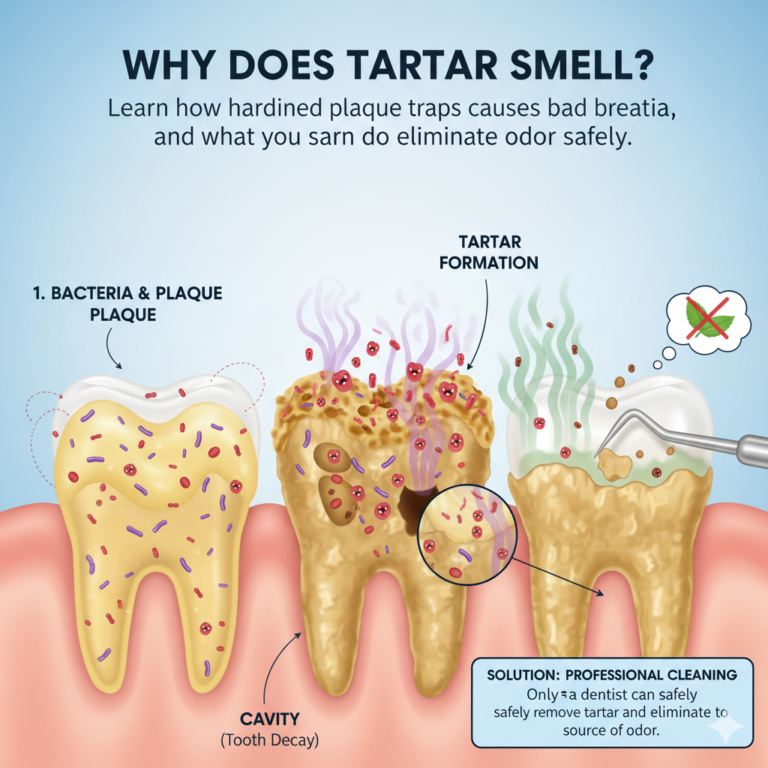
Tartar under gums forms when plaque spreads below the gumline and hardens there. Over time, this hardened layer traps bacteria deep inside gum pockets. As a result, inflammation becomes chronic and harder to control.
In this guide, you will learn what subgingival tartar is, why it is dangerous, and how to remove tartar under gums safely.
What Is Subgingival Tartar?
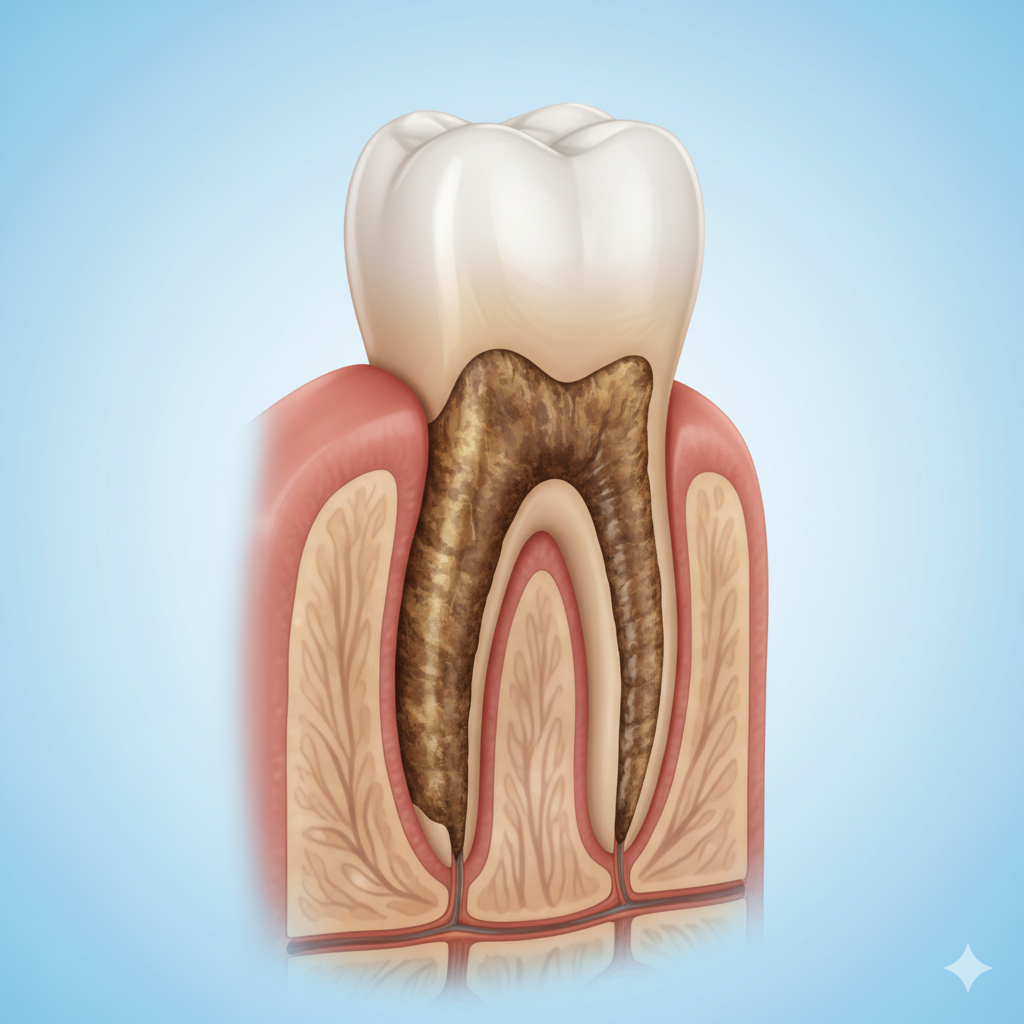
Subgingival tartar means hardened plaque located below the gumline. “Subgingival” simply means under the gums.
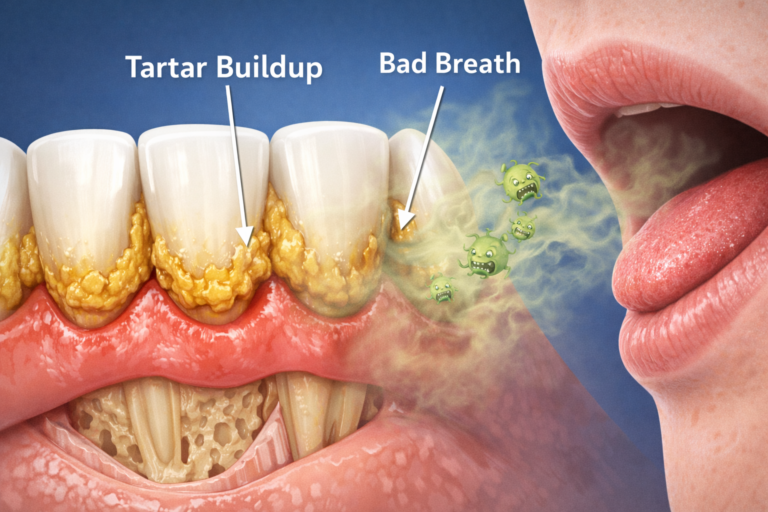
Above the gumline, tartar looks yellow or brown. Below the gumline, it often appears darker because it mixes with blood pigments and inflamed tissue fluids.
This hidden deposit:
attaches firmly to tooth roots
irritates soft tissue
traps aggressive bacteria
deepens gum pockets
Because it sits below the surface, brushing cannot reach it.
💡 You can also explore similar dental health supplements and oral care products on Amazon.
How Tartar Forms Beneath the Gumline
The process begins with plaque at the gum edge. If plaque remains undisturbed, inflammation develops. Gums swell slightly and create small pockets.
Inside those pockets:
Bacteria multiply.
Oxygen levels drop.
Plaque thickens.
Minerals harden the deposit.
Tartar forms below the gumline.
Meanwhile, the rough surface attracts more bacteria. Therefore the infection cycle continues.
Without intervention, pockets deepen over time.
Tartar that develops beneath the gumline may become harder to detect during daily brushing routines.
Why Tartar Under Gums Is Dangerous
Tartar under gums causes more damage than surface buildup. That is because it directly affects the attachment between teeth and bone.
Major risks include:
chronic gum inflammation
persistent bleeding
bad breath
gum recession
bone loss
loose teeth
Subgingival tartar supports bacteria that release toxins. These toxins break down tissue slowly. As a result, the foundation of the tooth weakens.
Early treatment prevents long-term damage.
👉Learn how Dental Pro 7 supports targeted gumline care
Signs You May Have Tartar Under Gums
Since subgingival tartar is hidden, symptoms become important warning signals.
Many people focus only on tartar buildup while overlooking other gum disease symptoms that may develop at the same time. Persistent bleeding, swelling, bad breath, gum tenderness, and gum recession often serve as early warning signs that inflammation may already be affecting the tissues beneath the gumline.
Watch for:
gums that bleed easily
swollen or tender gums
persistent bad breath
gum recession
sensitivity near roots
teeth that feel slightly loose
Sometimes pain is minimal at first. Therefore bleeding gums should never be ignored.
If symptoms persist despite brushing, deeper buildup may exist.
Why Hidden Tartar Often Leads to Delayed Treatment
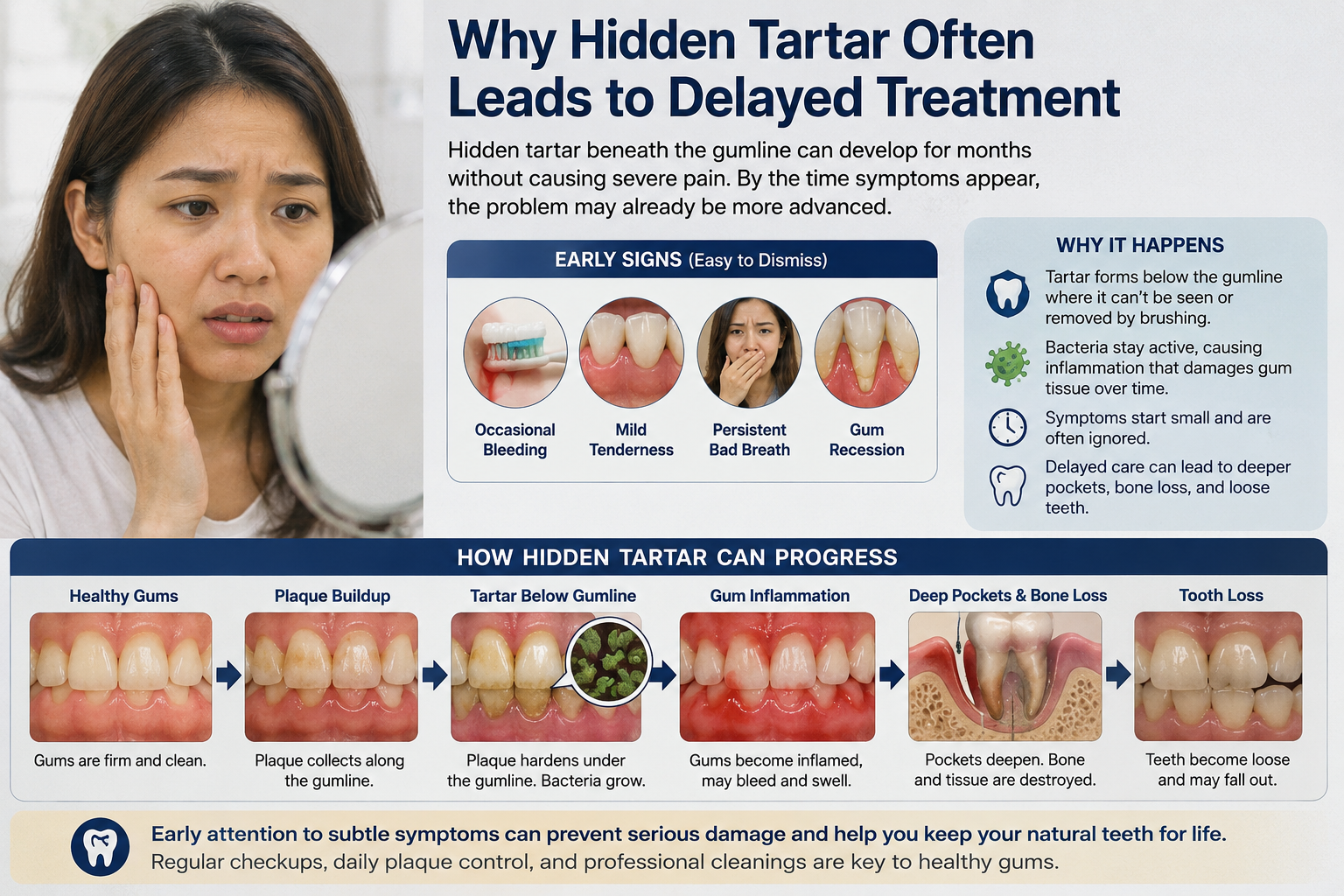
One of the biggest challenges with subgingival tartar is that it often develops without causing severe pain in the beginning. Because the deposits remain hidden beneath the gumline, many people assume their oral health is in good condition when the problem is actually progressing below the surface.
Unlike visible tartar that can be seen in a mirror, hidden tartar may continue accumulating for months before noticeable symptoms appear. During this time, bacteria can remain active around the gums, triggering inflammation that gradually affects surrounding tissue.
Many individuals first notice small changes such as occasional bleeding while brushing, mild tenderness, or bad breath that seems to return shortly after cleaning their teeth. These symptoms are easy to dismiss because they often appear minor and inconsistent.
However, inflammation that continues unchecked may eventually contribute to deeper gum pockets, increased bacterial accumulation, gum recession, and more advanced periodontal concerns.
This is one reason why early attention to subtle gum changes is important. Recognizing warning signs before significant damage develops may help support healthier gums and reduce the likelihood of more complex treatment later.
How Tartar Under Gums Increases the Risk of Gingivitis
Many people do not realize that Tartar Under Gums often creates an environment where gum inflammation can persist for extended periods. Because these hardened deposits remain hidden beneath the gumline, bacteria can continue accumulating without being easily detected during daily oral care routines.
One reason Tartar Under Gums is concerning is that it provides a rough surface that allows bacterial biofilms to remain attached close to sensitive gum tissue. As bacterial activity continues, the body’s immune response may trigger redness, swelling, tenderness, and bleeding around the gums.
In many cases, these symptoms are associated with gingivitis, which is considered the earliest stage of gum disease. While gingivitis is often reversible, it becomes more difficult to manage when plaque and tartar remain present beneath the gumline for long periods.
Individuals experiencing recurring bleeding during brushing, persistent bad breath, or gum tenderness may benefit from learning more about gingivitis treatment for healthier gums. Understanding early treatment options and preventive care strategies may help reduce inflammation before deeper periodontal complications develop.
Another important consideration is that Tartar Under Gums may continue affecting gum health even when visible tooth surfaces appear relatively clean. This hidden nature is one reason routine dental examinations remain valuable for identifying problems that cannot easily be seen at home.
By addressing plaque accumulation early and seeking professional care when symptoms appear, individuals can help support healthier gums and reduce the long-term effects of chronic inflammation.
Can You Remove Tartar Under Gums at Home Safely?
Remove tartar under gums safely requires professional care in most cases. Home brushing cannot reach deep pockets.
Trying to scrape under the gumline with sharp objects can cause:
tissue injury
infection
root damage
increased recession
Therefore home removal of subgingival tartar is not recommended.
However, you can slow progression with better daily plaque control above the gumline.
Before introducing any new oral care product into your routine, reviewing its safety information and potential side effects can help you make informed decisions.
Professional Treatment for Tartar Under the Gums
Professional removal involves scaling and sometimes root planing.
Scaling
Dentists use ultrasonic and manual instruments to break hardened deposits. These tools reach below the gumline safely.
Root Planing
If buildup is deeper, the dentist smooths the root surface. A smooth root reduces bacterial attachment. As a result, gums can reattach more easily.
In some cases, local anesthesia improves comfort during deeper cleaning.
After treatment, gums often heal within days or weeks.
Understanding Professional Treatment Costs for Hidden Tartar
Many patients diagnosed with Tartar Under Gums wonder how much professional treatment may cost. The final expense often depends on factors such as the severity of buildup, the depth of gum pockets, the number of teeth affected, and whether root planing is required. Learning more about Tartar Removal Cost can help individuals prepare for treatment and make informed decisions about long-term gum care. For a detailed breakdown, see tartar removal cost pricing factors and treatment options.
Comparing oral care product options and pricing may also help you build a preventive routine that matches your long-term oral health goals and budget.
Preventing Tartar Below the Gumline with Daily Oral Care
Prevention focuses on stopping plaque before it spreads under the gums.
Clean the Gumline Daily
Angle the brush toward the gum edge. Use gentle circular motions.
Floss Consistently
Floss removes plaque between teeth and just below the gum margin.
Avoid Skipping Night Brushing
Bacteria multiply faster during sleep. Night cleaning reduces risk.
Schedule Regular Dental Exams
Routine checkups detect early pocket formation before deep tartar develops.
Use Targeted Plaque Disruption Tools
Precision cleaning devices help reduce plaque survival near the gumline. As a result, plaque is less likely to move below the gums.
Daily discipline protects long-term gum health.
Understanding the natural ingredients that support gum health can help you choose oral care products that complement daily plaque control and regular dental checkups.
What Happens If It Is Left Untreated?
If tartar under gums remains untreated, pockets deepen. Bone supporting the teeth may begin to shrink. Over time, teeth can loosen.
Advanced gum disease can affect overall health. Chronic inflammation may contribute to systemic conditions.
Therefore early removal protects both oral and general wellness.
Do not wait for severe pain before seeking care.
Recovery and Long-Term Care After Subgingival Tartar Removal
After scaling, gums may feel tender for a few days. Mild sensitivity is common. However, inflammation usually decreases quickly.
To support healing:
brush gently
avoid aggressive flossing for a few days
rinse with warm salt water if recommended
follow your dentist’s care instructions
Many people also explore natural gum health support options after professional cleanings to complement healthy daily oral hygiene and long-term gum maintenance.
As gums heal, bleeding should reduce. Breath freshness often improves as bacteria decline.
Tartar under gums develops when plaque stays too long at the gumline.
Daily precision plaque disruption helps reduce the risk of hidden subgingival buildup.
👉Learn how Dental Pro 7 supports targeted gumline care
FAQ – Tartar Under Gums
What is the difference between tartar above and below gums?
Above-gum tartar is visible. Below-gum tartar hides in pockets and is more dangerous.
Can tartar under gums cause bone loss?
Yes. Chronic infection can weaken the bone supporting teeth.
Is removal painful?
Most procedures are comfortable. Dentists may use local anesthesia if needed.
How often should I check for gum pockets?
Routine dental exams every six months help detect early changes.
About the Dental Pro 7 Ingredients Editorial Team
The Dental Pro 7 Ingredients Editorial Team develops educational content focused on oral health, gum care, dental hygiene, and preventive wellness. Our goal is to provide readers with clear, research-based information that helps them better understand common dental concerns, including plaque accumulation, tartar formation, gingivitis, and periodontal health. All content is reviewed for accuracy and written to support informed conversations between readers and qualified dental professionals. Educational articles are regularly updated to reflect current understanding of oral care practices and gum health management.
Disclaimer
This article is intended for informational and educational purposes only and should not be considered medical, dental, or professional healthcare advice. Information provided on Dental Pro 7 Ingredients is not intended to diagnose, treat, cure, or prevent any disease. Individuals experiencing symptoms such as persistent bleeding gums, severe pain, loose teeth, or suspected periodontal disease should seek evaluation from a licensed dental professional. Always consult a qualified healthcare provider regarding questions about your individual oral health condition and treatment options.