Why Tartar Build up Behind Lower Teeth Is So Common
Why Tartar Build up Behind Lower Teeth: Last Updated: July 20, 2026. Reading Time: 10 min read
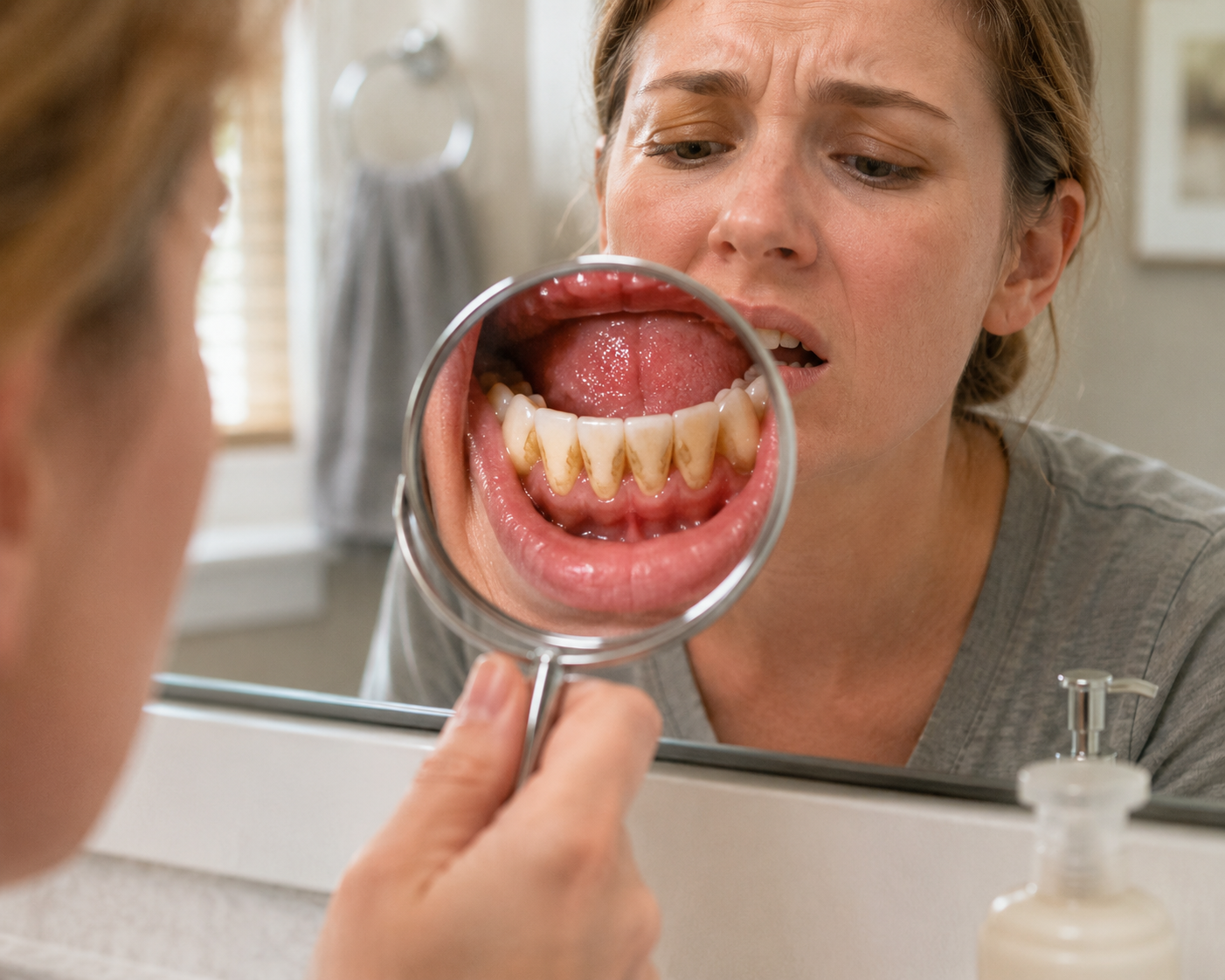
Most people notice tartar in the same place first: the inside of the lower front teeth.
Even people who brush every day are often surprised when their dentist points out hardened buildup there during a cleaning appointment. It can feel frustrating, especially when the rest of the mouth seems relatively clean.
The truth is, this area is naturally more vulnerable to tartar accumulation than almost anywhere else in the mouth.
Dentists and dental hygienists see this pattern constantly. The lower front teeth sit close to major saliva glands, are harder to clean thoroughly than many people realize, and tend to collect plaque quietly over time. Once plaque hardens into tartar, regular brushing can no longer remove it.
Understanding why this happens can make prevention much easier — and far less stressful.
The lower front teeth are among the most common areas where tartar accumulates due to saliva gland placement
Why Tartar Builds Up More Easily Behind Lower Teeth
There is a biological reason this specific area accumulates tartar so quickly.
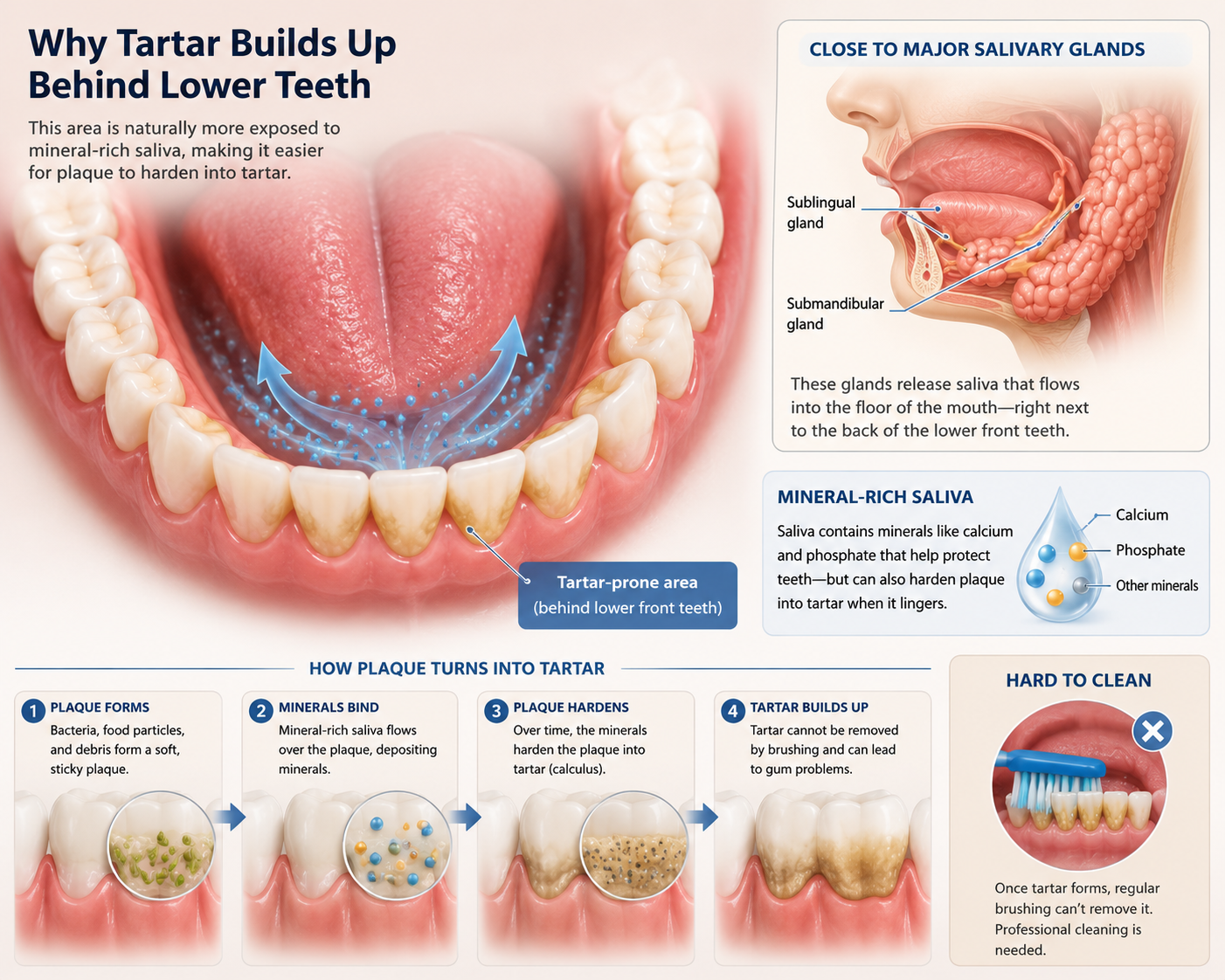
The inside surface of the lower front teeth sits directly near the submandibular and sublingual salivary glands. These glands continuously release saliva into the floor of the mouth throughout the day.
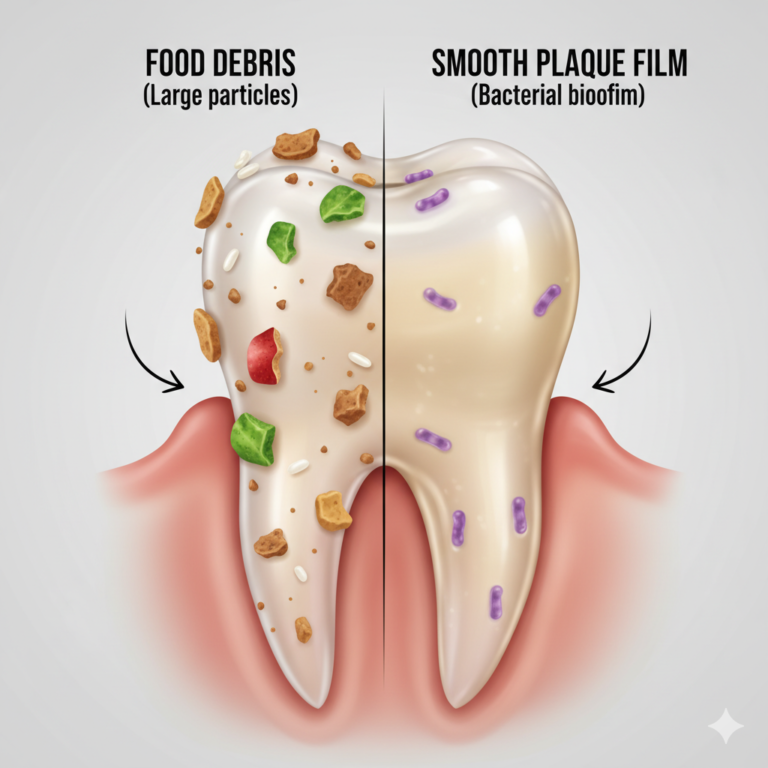
Saliva is essential for oral health because it helps neutralize acids and wash away food particles. However, saliva also contains minerals like calcium and phosphate. When plaque remains on teeth for too long, those minerals can harden the plaque into tartar, also called calculus.
That mineral-rich saliva tends to pool behind the lower front teeth, which is why dentists frequently remove thick tartar deposits there during professional cleanings.
Since saliva minerals play an important role in tartar formation, learn how saliva mineral content affects tartar formation and why some people accumulate tartar faster.
Many people assume tartar only develops because of poor hygiene. In reality, anatomy plays a major role.
Support Your Gum Health Naturally
Healthy gums begin with consistent daily care. Discover how Dental Pro 7 fits into a balanced oral hygiene routine.
👉 Explore Dental Pro 7
The Lower Front Teeth Are Harder to Clean Than People Think
One of the biggest misconceptions about brushing is that “feeling clean” means teeth are actually plaque-free.
The lower front teeth are small, crowded together, and positioned close to the tongue and saliva ducts. Even careful brushers often miss the inner surfaces.
A few common habits contribute to buildup:
Brushing the Outer Teeth More Than the Inner Teeth
Most people naturally focus on the visible front surfaces while brushing. The inside surfaces receive much less attention, especially during rushed morning routines.
Using Brushes at the Wrong Angle
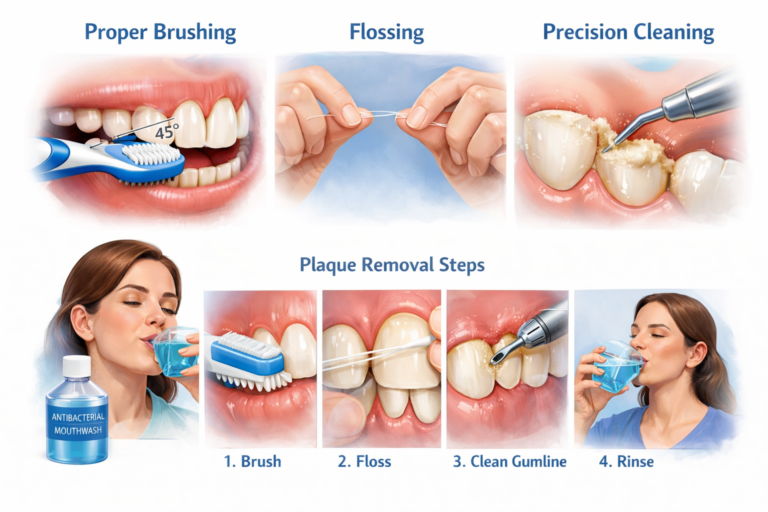
Dental hygienists often notice that patients scrub horizontally instead of angling bristles toward the gumline. Plaque tends to accumulate exactly where the teeth meet the gums.
Skipping Flossing Around Tight Lower Teeth
The lower incisors are often tightly packed together. Small plaque deposits between teeth can gradually harden into tartar when they are not disrupted regularly.
Consistent flossing helps disrupt plaque before it hardens. Learn whether flossing helps prevent tartar between teeth as part of an effective daily routine.
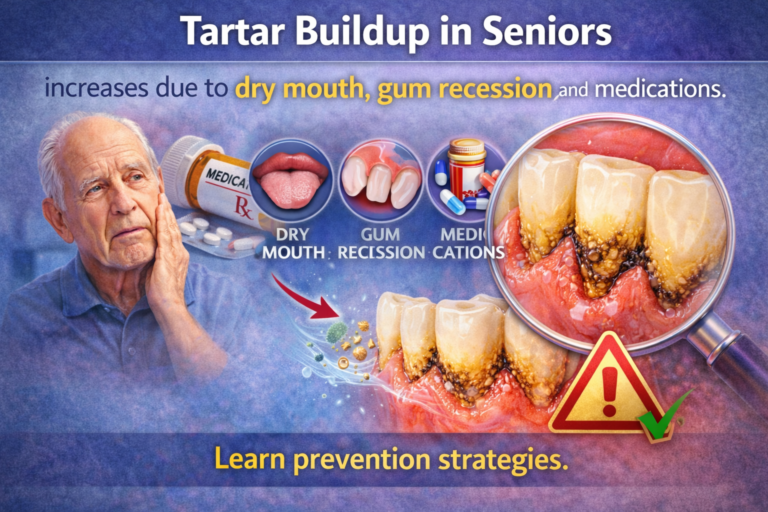
Dry Mouth Can Make Tartar Worse
Many people associate dry mouth with cavities or bad breath, but it can also contribute to tartar problems.
When saliva flow becomes unbalanced, plaque bacteria can multiply more easily. Some people experience thick or sticky saliva that leaves residue on teeth more quickly, especially overnight.
This becomes more noticeable in people who:
- Sleep with their mouth open
- Drink a lot of coffee
- Use tobacco products
- Take certain medications
- Rarely drink water throughout the day
If dry mouth is part of the problem, this related article may help explain the connection in more detail: Dry Mouth and Tartar Buildup: The Hidden Connection
Early Tartar Can Look Harmless at First
One reason tartar becomes severe is that it usually develops gradually and painlessly.
At first, it may appear as:
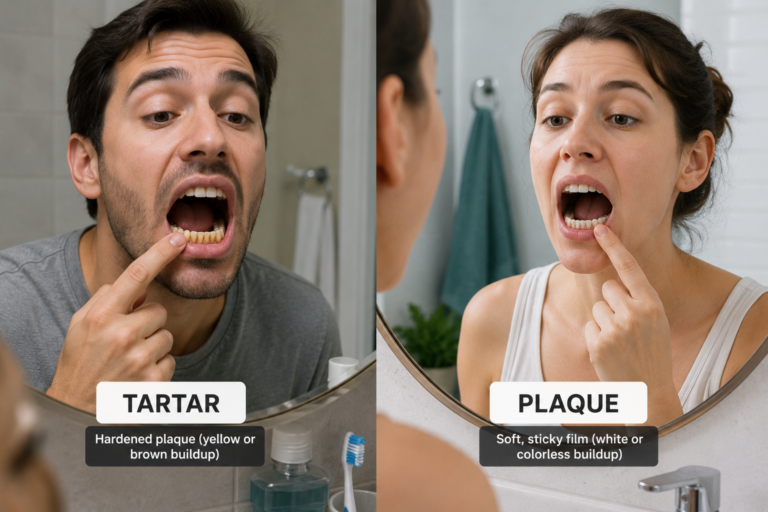
- Slight yellowing behind the teeth
- A rough feeling near the gums
- Persistent bad breath
- Mild gum irritation while flossing
Because the buildup often hides behind the lower teeth, many people do not notice it until a dental cleaning appointment.
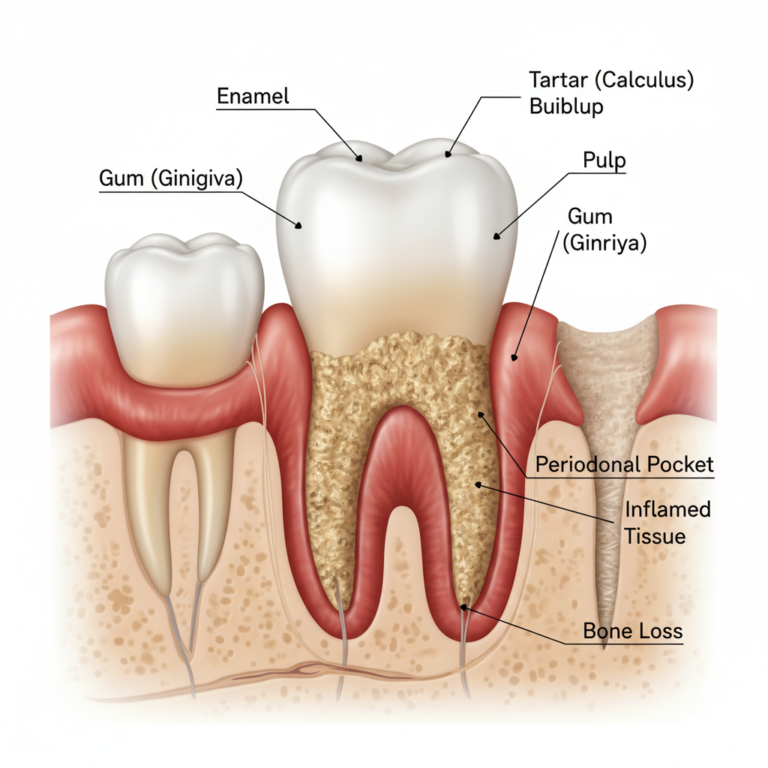
Over time, tartar creates a rough surface that traps even more plaque. This can irritate gum tissue continuously and increase the risk of gingivitis.
Some warning signs should never be ignored, especially bleeding gums, swelling, or persistent inflammation.
Related reading: Gum Disease Symptoms You Should Never Ignore
Why Professional Cleanings Matter
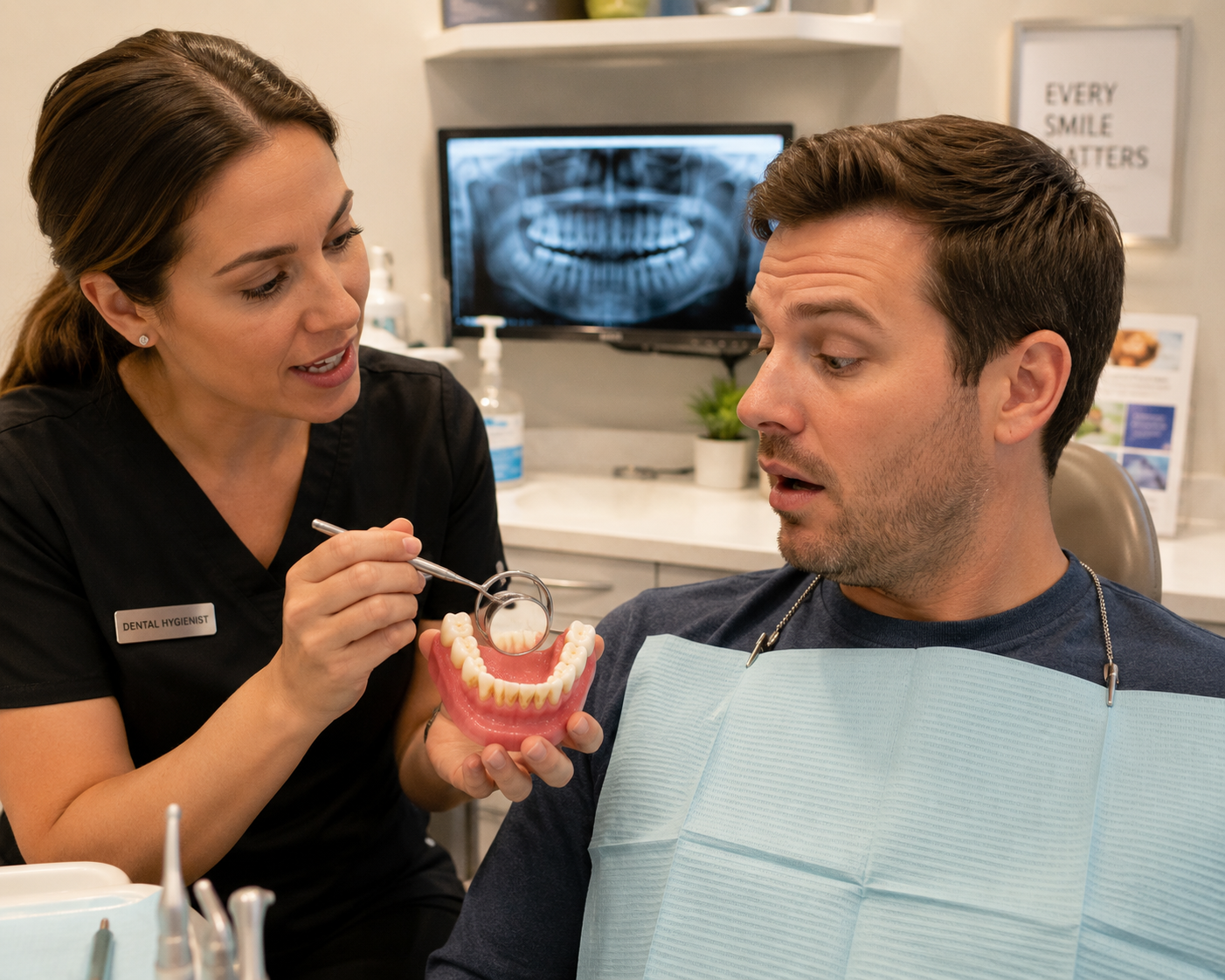
Once plaque hardens into tartar, toothbrushes and floss cannot remove it safely at home.
Professional dental cleanings use specialized instruments designed to break apart hardened calculus without damaging enamel.
Dental hygienists commonly find that patients with otherwise healthy mouths still accumulate tartar behind the lower front teeth surprisingly fast. Some people naturally produce more mineral-rich saliva than others, which can accelerate buildup despite reasonable hygiene habits.
This is one reason regular cleanings matter even for people who brush consistently.
For some patients, tartar buildup progresses quietly for years before gum recession or deeper periodontal issues begin appearing.
In more advanced cases, tartar accumulation can contribute to serious periodontal disease and tooth-supporting bone loss.
Advanced Periodontal Disease From Tartar: Final Stage Risks
Daily Habits That Help Prevent Tartar Buildup
There is no perfect way to prevent tartar completely, but consistent habits make a noticeable difference over time.
A consistent evening routine also helps reduce overnight plaque buildup. Explore the best night routine for plaque control to strengthen your daily prevention habits.
Spend Extra Time Behind the Lower Teeth
Many dental professionals recommend deliberately slowing down when brushing the inside lower front teeth rather than treating them as an afterthought.
Small circular motions near the gumline usually work better than aggressive scrubbing.
Stay Hydrated Throughout the Day
Water helps rinse away food particles and reduces dry-mouth conditions that can worsen plaque accumulation.
Pay Attention to Diet
Frequent sugary snacks and acidic drinks may increase plaque formation.
A gum-friendly diet rich in crunchy vegetables, fiber, and nutrient-dense foods may support healthier oral conditions overall.
Gum Health Diet for Stronger Teeth and Gums
Choosing Oral Care Products to Support Tartar Prevention
Some people prefer adding probiotic or natural-support oral products to their routine, especially when dealing with recurring bad breath or gum sensitivity.
Products like Callnature
or carefully selected oral care products on Amazon are sometimes explored as supportive additions alongside normal brushing, flossing, hydration, and professional dental care.
However, no supplement or oral product replaces proper dental cleaning or periodontal treatment when tartar is already present.
People seeking gentler formulations may also explore Dental Pro 7 with no SLS, perfumes, or fillers, which explains its clean ingredient approach.
The Real Issue Is Consistency, Not Perfection
One interesting thing dental professionals observe is that tartar buildup behind lower teeth happens to people across almost every hygiene level.
Some people with excellent routines still develop buildup there simply because of anatomy, saliva composition, crowding, or dry-mouth tendencies.
Readers comparing everyday gum care options may also find Dental Pro 7 Review useful for understanding ingredients, user experiences, and realistic expectations.
The goal is not perfection.
The goal is reducing the conditions that allow plaque to remain undisturbed long enough to harden.
Small improvements repeated consistently usually matter far more than aggressive cleaning attempts done occasionally.
Final Thoughts – Why Tartar Build up Behind Lower Teeth
Tartar behind the lower teeth is extremely common for a reason.
The location sits directly near saliva glands, tends to trap plaque easily, and is often missed during normal brushing routines. Most people experience some level of buildup there at some point.
The encouraging part is that understanding the cause makes prevention more realistic.
Gentle daily cleaning, hydration, routine dental visits, and paying closer attention to the lower inner teeth can significantly reduce long-term buildup and gum irritation.
And if tartar continues returning quickly despite good habits, it may be worth discussing saliva flow, dry mouth, gum health, or cleaning frequency with a dental professional rather than simply brushing harder.
Better Gum Care Starts With Better Information
Learn about the botanical ingredients behind Dental Pro 7 and how they may support your long-term oral care goals.
👉 View the Ingredients Guide
Frequently Asked Questions – Why Tartar Build up Behind Lower Teeth
Why does tartar always form behind my lower front teeth?
Because this area sits close to major saliva glands. Minerals in saliva can harden plaque faster there than in other parts of the mouth.
Can brushing remove tartar behind lower teeth?
No. Once plaque hardens into tartar, it usually requires professional dental cleaning for safe removal.
Is tartar behind lower teeth a sign of poor hygiene?
Not always. Even people with good oral hygiene can develop tartar there due to anatomy, saliva composition, crowding, or dry mouth.
How quickly can plaque turn into tartar?
Plaque can begin hardening into tartar within 24 to 72 hours if it is not removed effectively.
Can dry mouth increase tartar buildup?
Yes. Dry mouth may change saliva balance and allow plaque bacteria to accumulate more easily, especially overnight.
Does tartar cause gum disease?
Tartar itself does not directly cause gum disease, but it creates rough surfaces that trap bacteria and irritate gum tissue, increasing the risk of gingivitis and periodontal disease.
About the Author — Dental Pro 7 Ingredients Editorial Team
The Dental Pro 7 Ingredients Editorial Team researches oral health topics related to gum care, plaque buildup, bad breath, tartar prevention, and daily dental hygiene habits. Our content is created through extensive review of dental publications, preventive care guidelines, clinical oral health resources, and real-world patient concerns commonly discussed in dental settings.
We aim to publish educational content that is practical, readable, and grounded in evidence-based oral health principles rather than fear-driven marketing. Articles are regularly reviewed and updated to improve clarity, accuracy, and usefulness for readers seeking better long-term oral hygiene habits.
Disclaimer – Why Tartar Build up Behind Lower Teeth
This article is for informational and educational purposes only and does not constitute medical or dental advice. It should not replace professional diagnosis, examination, or treatment from a licensed dentist or healthcare provider.
Individual oral health conditions vary significantly. Always consult a qualified dental professional regarding symptoms such as persistent tartar buildup, bleeding gums, gum recession, tooth pain, or suspected periodontal disease.
Some links in this article may be affiliate links. If a purchase is made through these links, the website may earn a small commission at no additional cost to the reader. Product mentions do not replace professional dental care recommendations.

5 Comments