
Dental Pro 7: Ingredients, Benefits, Safety, and Oral Health Guide
Dental Pro 7 Natural Dental Product: Last Updated, October 27, 2026 | Min Read: 8 minutes
Dental Pro 7 is a botanical oral care product featuring selected essential oils, herbal extracts, and other ingredients. People researching the product may want to understand its formulation, intended use, safety considerations, and place in a daily oral hygiene routine.
This guide reviews the ingredients described in available product information. It also explains what readers should know about plaque, tartar buildup, and tooth sensitivity.
What Is Dental Pro 7?
Dental Pro 7 is marketed as a plant-based oral care formula. Its ingredient list includes several botanical oils and extracts associated with traditional use and ongoing scientific research.
The product is intended for oral care. However, the presence of botanical ingredients does not establish that the complete formula prevents gum disease, removes tartar, or treats sensitive teeth.
When evaluating any oral care product, consider its complete formulation, directions, safety information, and supporting evidence.
Why Do Dental Pro 7 Ingredients Matter?
Understanding a product’s ingredients helps consumers make informed choices. Each ingredient has its own characteristics, and research findings can vary depending on the preparation and concentration.
For example, laboratory studies of an essential oil do not automatically prove that a finished oral care product provides the same effect in people. Product-specific clinical evidence is important when evaluating claims about oral health.
Explore a Natural Approach to Everyday Oral Care
Dental Pro 7 combines botanical oils, herbal extracts, and antioxidant-rich ingredients in a plant-based oral care formula.
If you are exploring natural oral care options, learning about the ingredients and formulation can help you decide whether this approach fits your daily routine.
👉 Explore the Dental Pro 7 Natural Oral Care Formula
Explore Dental Pro 7 Before Choosing Your Oral Care Routine
If you are considering a botanical oral care product, review its ingredients and directions before adding it to your routine.
Explore the Dental Pro 7 ingredients and formulation review to learn more about the product’s ingredients, the available scientific context, and realistic expectations.
Dental Pro 7 should be considered only as a potential component of everyday oral care. It does not replace brushing with fluoride toothpaste, cleaning between teeth, or professional dental treatment.
Dental Pro 7 Ingredients: A Closer Look
The source article describes several botanical ingredients. Their properties and evidence should be evaluated individually.
Helichrysum italicum (Immortelle Oil)
Helichrysum italicum is an aromatic plant used in some botanical preparations. Researchers have investigated compounds from this plant for potential biological effects.
Evidence for specific oral health benefits remains limited. Its presence in a formula does not prove that the finished product treats gum conditions.
Leptospermum scoparium (Manuka Oil)
Manuka oil comes from a plant native to New Zealand and Australia. Some studies have investigated its antimicrobial activity under laboratory conditions.
These findings do not establish that a manuka oil formulation prevents oral infections or removes plaque in everyday use.
Punica granatum (Pomegranate Seed Oil)
Pomegranate seed oil contains fatty acids and other naturally occurring compounds. Research on pomegranate-derived ingredients has explored several biological properties.
Evidence concerning pomegranate extracts should not automatically be applied to pomegranate seed oil or to a complete oral care product.
Mentha arvensis and Mentha piperita (Cornmint and Peppermint Oils)
Cornmint and peppermint oils provide characteristic mint aromas and flavors. These ingredients may contribute to the sensory experience of an oral care product.
Their presence alone does not establish that a formula prevents gum disease or treats tooth sensitivity.
Mentha spicata (Spearmint)
Spearmint oil is commonly used for its fresh aroma and flavor. Its suitability depends on the formulation and intended application.
People with sensitivities to fragrances or essential oils should review the ingredient list before use.
Eugenia caryophyllus (Clove Bud Oil)
Clove oil contains eugenol, a compound studied for several biological properties. Certain dental preparations use eugenol under professional guidance.
Concentrated clove oil can irritate oral tissues when used improperly. Do not apply concentrated essential oils directly to gums or teeth unless specifically directed by a qualified professional.
Commiphora myrrha (Myrrh)
Myrrh is a resin obtained from trees in the Commiphora genus. It has a history of traditional use in various preparations.
Its traditional use does not establish that it treats gum inflammation or other dental conditions. More evidence is needed to confirm specific benefits in finished oral care products.
Vitis vinifera (Grapeseed Oil)
Grapeseed oil contains fatty acids and other plant compounds. In product formulations, oils may serve different functions depending on the overall composition.
Claims about antioxidant activity should be distinguished from evidence of improved oral health in people.
Alpha-Tocopherol (Vitamin E)
Alpha-tocopherol is a form of vitamin E. It functions as an antioxidant in biological systems and is used in some cosmetic and personal care formulations.
Its role in a particular oral care product depends on the formulation. The ingredient’s presence alone does not establish a specific dental benefit.
For a broader explanation of the listed ingredients, see the Dental Pro 7 ingredients breakdown guide. This resource can help readers compare individual ingredients with the overall formulation.
How Does the Formula Fit into Everyday Oral Care?
The product’s botanical ingredients may appeal to people who prefer plant-derived formulations. However, a botanical formula should be evaluated by the same standards as other oral care products.
A practical oral hygiene routine includes:
- Brushing twice daily with fluoride toothpaste.
- Cleaning between teeth every day.
- Drinking water regularly.
- Limiting frequent exposure to sugary foods and drinks.
- Attending routine dental examinations and cleanings.
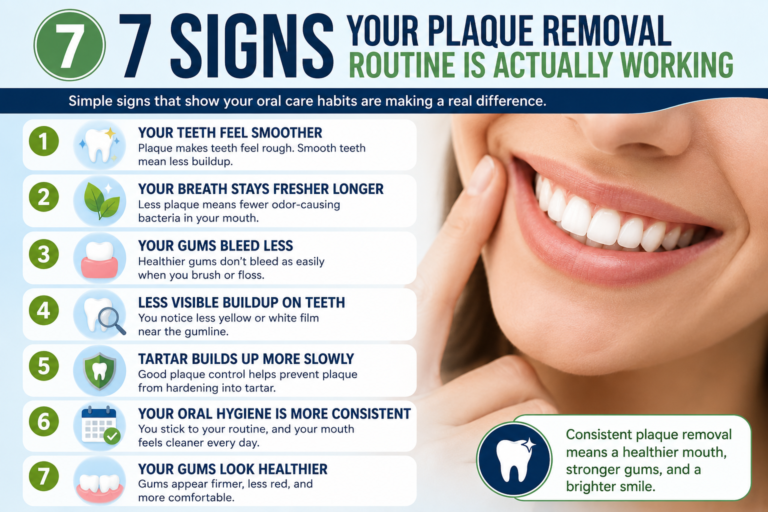
These habits help control plaque and support gum health. Product choice should complement, rather than replace, these practices.
Tartar Buildup and Tooth Sensitivity: What Should You Know?
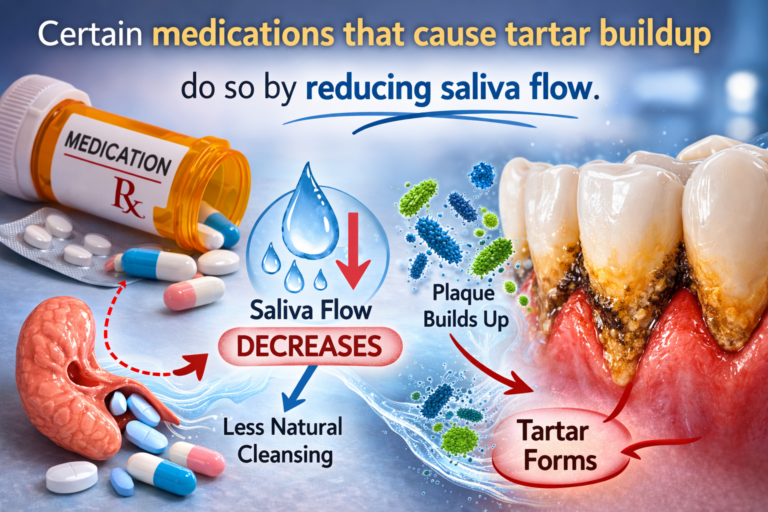
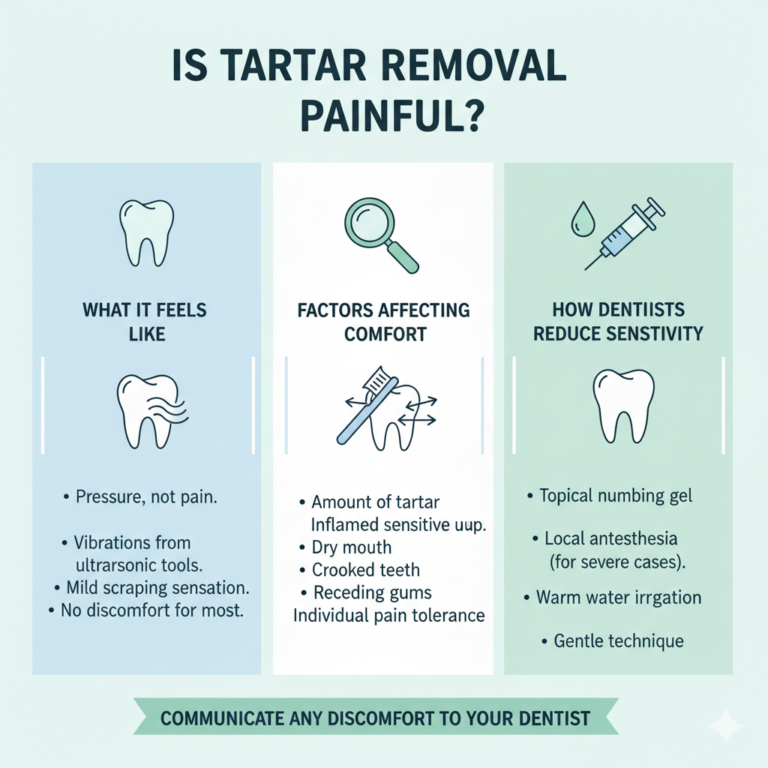
Plaque is a soft bacterial film that forms continuously on teeth. When plaque remains on tooth surfaces, minerals in saliva can cause it to harden into tartar.
Tartar can accumulate along the gum-line and in areas that are difficult to clean. Once hardened, it generally requires removal by a dentist or dental hygienist.
Tooth sensitivity has several possible causes, including:
- Gum recession and exposed dentin.
- Enamel wear or erosion.
- Tooth decay.
- Cracked or damaged teeth.
- Recent dental procedures.
Tartar may occur alongside gum inflammation or recession, but it is not the only cause of sensitivity.
Dental Pro 7 should not be described as a treatment for tooth sensitivity or as a product that dissolves hardened tartar. Daily home care helps control plaque, while professional cleaning removes established deposits.
Readers who want to understand these concerns in more detail should review our guide to tartar buildup and tooth sensitivity. It explains common causes of sensitivity and why professional assessment may be needed.
Dental Pro 7 Without Artificial Chemicals: Understanding Product Claims
Some consumers prefer oral care products marketed around botanical ingredients or formulations that exclude selected additives. These preferences can guide product comparisons.
However, terms such as “natural,” “clean,” and “chemical-free” do not independently establish safety or effectiveness. All ingredients are chemicals in the scientific sense, including those derived from plants.
When reviewing a product, check the complete ingredient list, intended use, directions, and available evidence. Consider any personal sensitivities before introducing a new product.
Our guide to Dental Pro 7 without artificial chemicals provides additional context about the product’s positioning and ingredient claims. Read product descriptions critically and distinguish marketing language from independently supported findings.
Dental Pro 7 Without SLS, Perfumes, or Fillers
Some consumers look for products without particular surfactants, fragrances, or additional formulation ingredients. Their preferences may relate to taste, irritation, allergies, or personal choice.
The absence of a particular ingredient does not automatically make a product safer or more effective for everyone. Suitability depends on the complete formulation and the needs of the individual.
Learn more in our guide to Dental Pro 7 without SLS, perfumes, or fillers. Use the information to compare formulation details and determine which questions to ask before choosing a product.

How to Use Dental Pro 7 Responsibly
Always follow the current manufacturer’s directions for the specific product you purchase. Do not assume that instructions from another product or an older article apply to your bottle.
Keep these considerations in mind:
- Review all ingredients before use.
- Follow the labeled application method and frequency.
- Avoid swallowing products unless they are specifically intended for ingestion.
- Stop using the product if irritation or an allergic reaction occurs.
- Ask a dentist or healthcare professional about suitability if you have persistent oral symptoms or known ingredient sensitivities.
If the product’s directions are unclear, consult the manufacturer or a dental professional before use.

What Does the Scientific Evidence Tell Us?
Scientific evidence must be interpreted carefully. Research on an individual ingredient may involve laboratory experiments, animal studies, or human clinical trials.
These study types provide different levels of evidence. A result observed in a laboratory does not necessarily predict the effect of a finished product in everyday use.
When assessing Dental Pro 7, distinguish among three questions:
- What is known about each individual ingredient?
- Is there reliable clinical research on the complete formula?
- Does the evidence support the specific benefit being claimed?
These distinctions help readers avoid drawing conclusions that the available evidence cannot support.
For general oral health guidance, consult the Centers for Disease Control and Prevention (CDC) and the American Dental Association (ADA). Their educational resources explain the importance of plaque control, gum health, and preventive dental care.

Frequently Asked Questions
What is Dental Pro 7?
Dental Pro 7 is marketed as a botanical oral care product containing selected essential oils and other ingredients. Review the current label and product documentation for its exact formulation and intended use.
What ingredients are discussed in this guide?
The source article describes helichrysum, manuka oil, pomegranate seed oil, cornmint, peppermint, spearmint, clove bud oil, myrrh, grapeseed oil, and alpha-tocopherol.
Can Dental Pro 7 remove hardened tartar?
There is insufficient evidence presented here to establish that Dental Pro 7 removes hardened tartar. Established tartar requires professional cleaning by a dentist or dental hygienist.
Can Dental Pro 7 treat tooth sensitivity?
This article does not establish that Dental Pro 7 treats tooth sensitivity. Sensitivity may result from several dental conditions, so persistent symptoms should be assessed by a dental professional.
Can botanical ingredients replace brushing and flossing?
No. Brushing with fluoride toothpaste and cleaning between teeth remain central to everyday oral hygiene. Botanical products should not replace these practices.
Are natural oral care products always safer?
No. Plant-derived ingredients can still cause irritation, allergic reactions, or other adverse effects. Safety depends on the ingredient, concentration, formulation, and method of use.
Where can I learn more about the ingredients?
Read the product’s ingredient information and consult the Dental Pro 7 ingredients guide for further product-specific details.
Final Thoughts
Dental Pro 7 is marketed as a botanical approach to everyday oral care. Understanding its ingredients can help readers evaluate the formulation and compare it with their needs.
However, the presence of botanical ingredients does not establish that a product treats gum disease, removes tartar, or resolves tooth sensitivity. Evidence for individual ingredients and evidence for a complete formulation are different.
For healthy teeth and gums, prioritize consistent brushing, daily inter-dental cleaning, and regular professional dental care. If you notice persistent sensitivity, bleeding gums, swelling, or hardened deposits, arrange a dental examination.
Editorial and Medical Disclaimer
This article is for educational purposes only. It does not provide medical or dental advice and does not establish that Dental Pro 7 treats, cures, or prevents disease. Consult a qualified dental professional for diagnosis and treatment.
The publisher may receive commissions from qualifying purchases through affiliate links. Affiliate relationships do not replace the need for independent evidence or professional dental guidance.


4 Comments